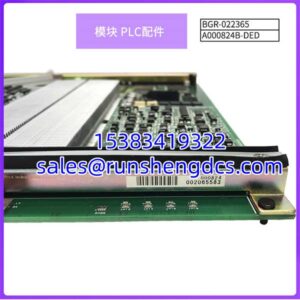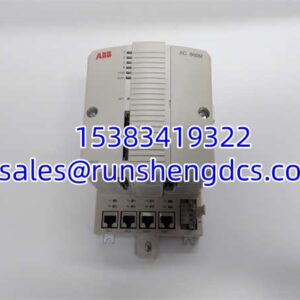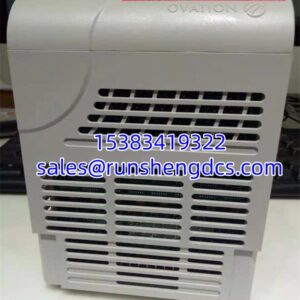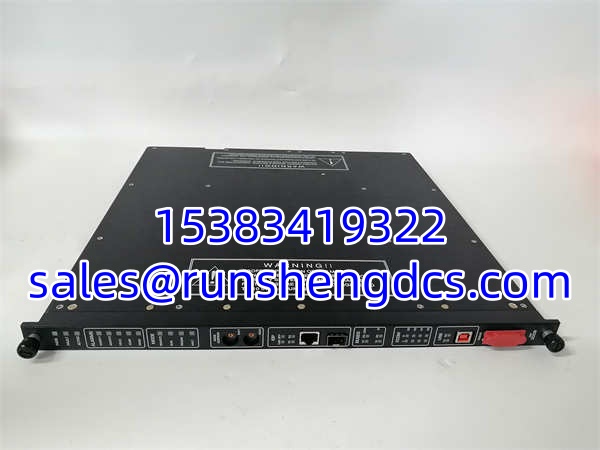

Description
Key Technical Specifications
- Architecture: Triple Modular Redundant (TMR), 2oo3 hardware voting
- Backplane supply: 5 VDC from chassis backplane
- Typical power draw: 18 W; max 22 W
- Internal bus: TriBus proprietary Tricon backplane
- Safety certification: IEC 61508 SIL 3
- Operating temperature: 0 °C to +60 °C
- Storage temperature: −40 °C to +85 °C
- Humidity: 5–95% non‑condensing
- Front panel indicators: PASS, FAULT, COMM status LEDs
- Typical MTBF: 310,000 hours at 40 °C ambient
- Mounting: Standard Tricon 3000 rack slot
- Weight: 2.7 kg
Product Introduction
Process safety teams know the risk. A failed main processor takes down the entire SIS subsystem, and Schneider no longer builds new 3009 units. Migration projects take months of planning, so most sites keep spare UMP modules on hand to extend existing Tricon runs. This processor hosts safety application logic, scans I/O data, runs cross‑channel comparison, and sends voted outputs to field modules. It does not serve as a standalone controller; it must operate inside a Tricon TMR chassis with matching triplet hardware.
Surplus units often hold latent faults from long shelf storage, especially electrolytic capacitor degradation. The TMR voting circuit catches single‑channel errors before they propagate to outputs. Within rated temperature limits, logic execution jitter stays below 120 µs. Bottom line — it works, but run a full continuous burn‑in before installing into a live safety rack.
QA/QC Transparency SOP
- Intake & Origin Verification. Match serial numbers against source documentation. Inspect PCB for bulging capacitors, burn traces, or connector corrosion. Photograph labels and component side for traceability. Reject units showing any fluid intrusion.
- Live Functional Testing (Comms, I/O, Load). Install the module in a Tricon test chassis with paired processor triplet. Apply chassis power, load site‑representative safety logic. Run 4‑hour continuous cycle testing. Inject simulated single‑channel faults; confirm 2oo3 voting holds and fault LEDs trigger correctly.
- Electrical Parameter Tests (Megger, Continuity). De‑energize rack. Use 500 V Megger between logic circuits and chassis ground. Insulation resistance must exceed 100 MΩ. Check every backplane pin path with a Fluke 87V.
- Firmware/Config Verification (Readout & Backup). Read onboard firmware revision over TriBus. Save firmware binary to offline archive. Flag revisions known to cause bus sync loss; cross‑reference against the site’s existing system firmware matrix.
- Final QC & Anti‑Static Packaging. Recheck LED operation and connector retention. Seal module inside conductive ESD bag, add rigid foam supports, pack in heavy‑duty carton. Attach unique burn‑in test report ID to outer packaging.
Field Engineer Gotchas
- Firmware Rev Mismatch. Risk: Mismatched firmware across the three processors breaks TMR synchronization. System may not go to RUN mode, with only vague COMM fault alarms. Solution: All three UMPs in the triplet must run identical firmware. One site swapped one processor without checking revisions; they spent 5 hours troubleshooting a system that refused to transition out of PROGRAM state.
- Backplane pin oxidation. Risk: Dirty gold edge pins create intermittent TriBus drops. Faults appear randomly, often under vibration or cabinet temperature swings. Solution: Clean connector contacts with approved contact cleaner before insertion. Never use sandpaper or abrasive pads.
- ESD risk during hot‑swap. Risk: Tricon supports hot replacement for spare UMPs, but static discharge can damage one voting channel silently. The system still runs on the other two channels until a second fault appears, creating a dangerous single‑point condition. Solution: Ground wrist strap to rack chassis, maintain continuous contact while inserting.
- Capacitor aging on surplus hardware. Risk: Years of shelf life dry out onboard electrolytics. Module powers up fine for hours, then crashes under sustained thermal load. No obvious visual damage. Solution: All refurbished 3009 units require extended burn‑in. Do not rely solely on a quick power‑on check.
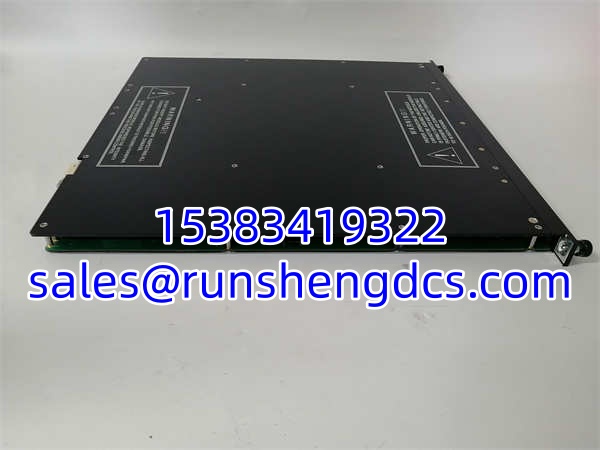
TRICONEX 3009
Application Scenarios
Offshore oil production platforms rely on Tricon 3009 SIS for emergency shutdown (ESD) logic. TMR voting prevents spurious trips from single hardware faults. Refinery hydrocracker units deploy these UMP modules for high‑pressure reactor trip protection. SIL3 compliance meets API safety requirements for process hazard mitigation. LNG storage terminals use Tricon 3009 racks to control burner management systems, where unplanned shutdowns create large product losses.
Case study: A 120,000 bpd refinery saw random SIS trip requests once every 7–14 days. Techs initially suspected field transmitters. Bench testing later found degraded capacitors inside one 3009 processor. The fault only surfaced after 3+ hours of thermal soak. Replacing the triplet’s aging UMP set eliminated all spurious trips.
FAQ
Q: Does Triconex 3009 support hot‑swap? A: Hot replacement is allowed per Tricon chassis design. The remaining two processors maintain safety logic execution during swap. Still perform pre‑swap isolation checks; hot‑swap does not eliminate ESD exposure.
Q: My Tricon system runs Tricon V9.2 software. Will this drop in? A: Compatibility ties directly to the UMP firmware. Some newer 3009 firmware builds cannot boot on V9.2 hosts. Request firmware revision before purchase. Verify with OEM datasheet before installation.
Q: Can I run only one 3009 processor instead of three for TMR? A: No. Safety voting requires three synchronized processors. A single UMP will not execute safety logic in certified SIL3 mode.
Q: What lead time applies for tested surplus stock? A: Pre‑burned, tested units ship 2–5 business days. Units needing capacitor rework and full burn‑in require 10–15 days. No new factory builds exist.
Q: Are refurbished modules safety‑validated after repair? A: Every refurbished unit completes multi‑channel voting verification and extended thermal burn‑in. Our test report captures fault‑injection results. Site functional safety witness testing is still required per local safety procedures.
Q: Can 3009 communicate directly to DCS over Ethernet? A: Ethernet ports exist for diagnostics and HMI links. Safety voting and I/O scanning travel over the internal TriBus backplane. Safety logic does not run across Ethernet.
Q: Can 3009 replace older 3006 or 3008 processors? A: Physical form factor fits the same rack slots. Firmware and system software compatibility must be validated. Direct drop‑in is not guaranteed without revision matching.