
Description
Key Technical Specifications
| Parameter | Value / Notes |
|---|---|
| Manufacturer | Schneider Electric / Modicon |
| Primary Model | 140CRA93200 |
| Product Family | Modicon Quantum 140 series |
| Module Type | RIO branch adapter module |
| RIO Protocol | S908 RIO |
| Communication Connectors | 2× F-type 75 Ω coax, redundant cable |
| Transmission Rate | 1.544 Mbps |
| Dynamic Range | 35 dB |
| Isolation Voltage | 500 VDC, coax center to ground |
| Max I/O Expansion Modules | ≤ 27 Quantum I/O modules per drop |
| Power Consumption | 3.8 W (2-channel) |
| Bus Current Draw | 750 mA (2-channel) |
| Operating Temperature | 0 °C to 60 °C |
| Storage Temperature | −40 °C to 85 °C |
| Humidity | 95% non-condensing |
| Altitude | ≤ 5000 m |
| Status Indicators | 4 LEDs: Ready, Communication, Error A, Error B |
| Standards | UL 508, cUL, CSA C22.2 No. 142 |
| ESD Immunity | 4 kV contact / 8 kV radiated per IEC 801-2 |
| EMI Immunity | 10 V/m, 80–1000 MHz per IEC 801-3 |
Product Introduction
Remote I/O drops on legacy Quantum systems fail in ways that look like field wiring problems but are actually adapter-level issues. The Schneider 140CRA93200 is a Modicon Quantum RIO branch adapter for the S908 protocol. It sits in a remote drop chassis and bridges the Quantum controller to up to 27 local I/O modules over redundant 75 Ω coax cable at 1.544 Mbps.
This is not an Ethernet module. It is a coax-based S908 RIO adapter, and that distinction matters. The 140CRA93200 is commonly found in older process, utility, water/wastewater, and manufacturing installations where the control architecture was built around Modicon Quantum with remote I/O drops. The practical value is keeping an existing S908 RIO network alive without ripping out the I/O topology. Bottom line — if the plant already has S908 coax runs and Quantum remote drops, this part number is relevant, but only after confirming cable type, drop configuration, and firmware compatibility.
QA/QC Transparency SOP
- Intake & Origin Verification
Check the nameplate for 140CRA93200. Confirm the label is original, legible, and matches the purchase order. Reject units with cracked housings, bent F-type coax connectors, corroded terminals, missing mounting hardware, or evidence of board-level repair. - Visual & Mechanical Inspection
Inspect the backplane connector, coax F-type connectors, mounting latch, and enclosure. Look for heat discoloration, damaged pins, loose connectors, or signs of liquid exposure. The F-type coax connectors are a common mechanical weak point on pulled surplus units. - Live Functional Testing
Power the module in a known-good Quantum rack or test chassis. Verify that the CPU recognizes the adapter, the Ready LED behaves normally, and the Error A / Error B LEDs are not latched. If a test drop is available, confirm that the adapter communicates with a known-good S908 head adapter (e.g., 140CRP93200) and that I/O data updates across the drop. - Electrical Parameter Tests
Perform continuity checks on the backplane connector and coax center conductors where safe. Verify isolation where the OEM procedure permits. Do not apply high-voltage megger tests to the coax connectors or backplane pins unless Schneider documentation explicitly allows it. - Final QC & Anti-Static Packaging
Record the exact part number, date code, physical condition, LED status, and test results. Package in ESD-safe materials, protect the F-type coax connectors and backplane connector, and include a note to verify cable type, drop address, and firmware compatibility before energizing.
Field Engineer Gotchas
140CRA93200 is not an Ethernet module
Risk: Confusing the 140CRA93200 with Ethernet-based Quantum adapters like the 140CRA31200.
Fix: Confirm the network is RIO over 75 Ω coax, not Ethernet. If the plant is running Modbus TCP or EtherNet/IP, this is the wrong module.
Blunt warning: Same “CRA” prefix does not mean same protocol.
Coax cable type mismatch
Risk: Using standard RG-6 or non-75 Ω coax, then seeing intermittent comm faults or Error A/B LEDs.
Fix: Use 75 Ω coax rated for RIO service. Verify cable length, termination, and connector torque per Schneider documentation.
War story: A remote drop kept dropping comm every few hours. The cable looked fine visually, but someone had substituted a non-75 Ω coax run during a previous maintenance job. Swapping to the correct cable cleared the fault.
Drop address and head-adapter pairing
Risk: Installing a replacement 140CRA93200 without matching the drop address or verifying the head adapter (e.g., 140CRP93200) configuration.
Fix: Confirm the drop address, head adapter model, and firmware expectations before powering the remote drop.
Bottom line — the adapter can be good, but the wrong drop address will still block communication.
Backplane slot and chassis compatibility
Risk: Assuming any Quantum module fits any slot or any Quantum chassis without checking hardware revision and firmware support.
Fix: Confirm the CPU, backplane, rack power, and firmware level support the 140CRA93200 before installation.
Surplus listing confusion
Risk: Suppliers may list 140CRA93200 alongside Ethernet adapters or generic “Quantum communication modules.”
Fix: Require a clear photo of the nameplate and confirm the exact part number before purchase. If the listing cannot show the full label, treat it as unverified stock.
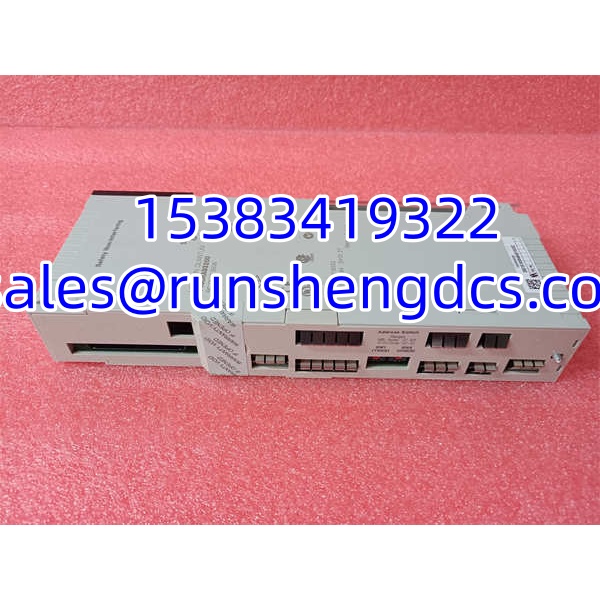
Schneider 140CRA93200
Application Scenarios
- Legacy Modicon Quantum remote I/O drops using RIO over 75 Ω coax cabling.
- Water/wastewater pump stations with distributed Quantum racks and remote analog/digital I/O.
- Process control systems in chemical, oil and gas, or power generation plants running older Modicon architectures.
- Manufacturing lines where remote I/O drops serve field instruments, valves, and motor controls across a plant floor.
- Maintenance spares for facilities that cannot migrate off Quantum RIO hardware without a full control-system redesign.
Anonymized Field Case
A chemical plant had a remote I/O drop that kept cycling between Ready and Error A states. The maintenance team checked field wiring, power supply, and I/O modules first. Everything local to the drop tested fine. The issue was traced to the 140CRA93200 adapter itself — the coax connectors had intermittent contact from years of vibration, and the adapter’s internal comm circuitry was degrading. After replacing the adapter with a verified 140CRA93200 and re-terminating the coax connections to spec, the drop stabilized. The takeaway: on RIO drops, the adapter module and its coax connections are just as likely to fail as the field I/O.
FAQ
Is the 140CRA93200 an Ethernet adapter?
No. It is an RIO branch adapter using 75 Ω coax cabling at 1.544 Mbps. It is not an Ethernet module. If you need Modbus TCP or EtherNet/IP, look at Ethernet-based Quantum adapters instead.
What is the difference between 140CRA93200 and 140CRP93200?
The 140CRA93200 is the RIO branch adapter that sits in the remote drop. The 140CRP93200 is typically the RIO head adapter on the controller side. They work together but are not interchangeable.
How many I/O modules can one 140CRA93200 support?
Up to 27 Quantum I/O expansion modules per remote drop. Verify the exact capacity against the Schneider documentation for your specific configuration.
Will this work with any Quantum CPU?
Generally it is intended for Modicon Quantum platforms, but CPU model, firmware revision, backplane type, and drop configuration must be verified before installation.
Can I use standard coax cable?
Use 75 Ω coax rated for RIO service. Non-standard cable can cause intermittent communication faults, signal reflection, or Error A/B LED indications.
How do I know if a surplus unit is usable?
Check the nameplate, physical condition, coax connector condition, backplane connector, and test documentation. For communication adapters, visual inspection alone is not enough — live functional testing against a known-good head adapter is the real check.
Where should I verify exact specs?
Use the Schneider Electric / Modicon datasheet, the unit nameplate, or official Schneider technical support. Third-party listings often repeat part numbers without confirming firmware, revision, or compatibility details.