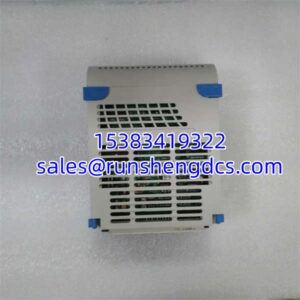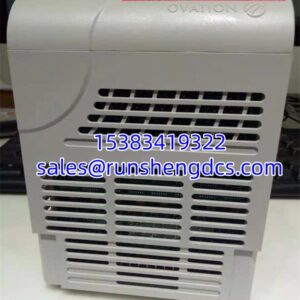

Description
Key Technical Specifications
| Parameter | Detail |
|---|---|
| Manufacturer | JDS Uniphase (JDSU) |
| Part Number | 2213-75TSLKTB |
| Laser Type | Ion laser (blue) |
| Wavelength | 457.9 nm |
| Output Power | Up to 75 mW |
| Wavelength Stability | <0.1 nm |
| Noise | <2% RMS |
| Operating Temperature | 10°C to 40°C |
| Storage Temperature | -20°C to 60°C |
| Humidity | <85% RH |
| Weight | ~16.82 lb (~7.63 kg) |
| Typical Use | OEM integration, inspection, precision optical systems |
Product Introduction
Blue-wavelength ion lasers are not something you casually swap into a control cabinet. The 2213-75TSLKTB is a precision 457.9 nm source, and that wavelength alone tells you it was intended for applications where spectral purity and stability matter more than raw power.
This unit delivers up to 75 mW at 457.9 nm with noise below 2% RMS and wavelength stability better than 0.1 nm, which is why it shows up in inspection, metrology, and OEM optical subsystems rather than general-purpose illumination. Because JDSU no longer exists as a single brand, procurement needs to treat this as surplus or refurbished stock. The mechanical fit, power supply interface, and warm-up behavior must be confirmed before it replaces a failed module in an existing system.
QA/QC Transparency SOP
- Intake & Origin Verification: Record full model number, serial number, and any OEM revision codes. Inspect for beam-path contamination, housing damage, connector corrosion, and signs of prior repair.
- Live Functional Testing: Operate on a verified compatible power supply in a controlled test area. Confirm laser start sequence, output stability, interlock response, and beam presence using a calibrated power meter.
- Electrical Parameter Tests: Measure supply voltage, current draw, interlock continuity, and chassis grounding. Check for abnormal ripple or overheating during steady-state operation.
- Output Verification: Measure output power at 457.9 nm with a calibrated optical power meter. Verify noise behavior and short-term stability against the <2% RMS / <0.1 nm claims where test equipment allows.
- Final QC & Packaging: Document measured output, operating hours if available, and any deviations. Pack with beam-cap protection, anti-static materials, and shock-absorbing cushioning. Include a test report with the unit.
Field Engineer Gotchas
- Power Supply Mismatch: Ion lasers often need specific startup sequences, interlocks, and regulated supplies. Fix: Use only the matched PSU or a verified equivalent. I have seen “dead” lasers that were actually starved by an undersized or incorrect supply.
- Warm-Up / Stabilization Time: Output at 457.9 nm may drift until the tube and optics reach thermal equilibrium. Fix: Allow adequate warm-up before taking measurements. Do not judge stability in the first few minutes.
- Beam Safety and Reflections: 75 mW at blue wavelengths is absolutely not eye-safe. Fix: Treat it as a Class 3B/4-class hazard until proven otherwise. Use proper eyewear, beam blocks, and controlled access.
- Connector / Pinout Uncertainty: Legacy JDSU modules may use proprietary connectors. Fix: Do not guess pin assignments. Trace the wiring against documentation before applying power.
- Surplus Tube Life Risk: Ion lasers have finite tube life. A unit that powers on may still be near end-of-life. Fix: Request operating hours or run a burn-in test before deploying it in production.

jdsu 2213-75TSLKTB
Application Scenarios
- Machine-vision illumination: Blue wavelength improves contrast on certain coatings, adhesives, and surface defects where visible green/red sources underperform.
- Optical alignment and metrology: 457.9 nm provides a stable visible reference for bench alignment, interferometry support, and calibration fixtures.
- OEM integration: Embedded in inspection stations, semiconductor test fixtures, or laboratory instruments requiring a narrow, stable blue source.
- Legacy system maintenance: Replacement for failed ion lasers in older test rigs where redesigning the optical path is not practical.
FAQ
Q: Is this still in production?
A: No. JDSU split into Lumentum and Viavi Solutions in 2015, so this should be considered legacy stock.
Q: Can I substitute another wavelength?
A: Not without revalidating the optical path. The 457.9 nm line is specific; changing wavelength affects filters, detectors, and optics.
Q: What is the actual output power?
A: Up to 75 mW at 457.9 nm, but actual output depends on tube age and drive conditions.
Q: Does it need a special power supply?
A: Almost certainly. Ion lasers typically require matched supplies with interlocks. Do not apply generic DC power.
Q: Is it safe for open-bench use?
A: No. Treat it as a high-risk visible laser. Use enclosures, interlocks, and appropriate eyewear.
Q: Can I use this in a PLC-controlled station?
A: Only as an externally controlled optical source. It is not a PLC module, and its power/interlock circuitry must be handled separately.
Q: What should I check before buying surplus?
A: Serial number, operating hours, output test report, power supply availability, and physical condition of the beam window and connectors.