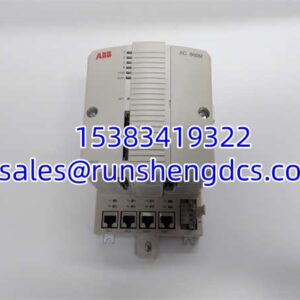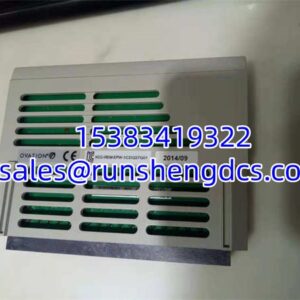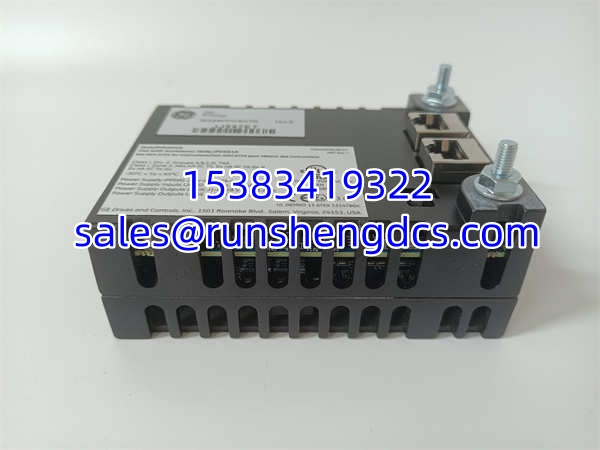

Description
Key Technical Specifications
| Parameter | Specification |
|---|---|
| GE Part Number | IS220PPDAH1B |
| Internal Reference | 336A5026ADP14 |
| Manufacturer | GE (General Electric) |
| Product Series | Speedtronic Mark VIe Turbine Control |
| Product Type | PPDA (Power Distribution Feedback) I/O Pack |
| Power Supply | 24VDC, overvoltage/reverse connection protection |
| Power Consumption | Max 5W |
| Communication Interface | Dual 100M full-duplex Ethernet ports (RJ45), supporting IONet/Modbus TCP redundant links |
| Monitoring Channels | Up to 6 PDM component feedback channels (JPDM/JPDC/JPDS backplane compatible) |
| Inter-Channel Isolation | 2500Vrms |
| Single-Channel Rated Current | 1.5A |
| Operating Temperature | -30°C to +65°C |
| Storage Temperature | -40°C to +85°C |
| Dimensions | 110mm × 70mm × 35mm |
| Weight | 0.5 kg |
| Mounting | Direct plug-in to JPDM/JPDC/JPDS power distribution backplane; mechanical fixation via threaded studs at Ethernet ports |
| Hazardous Area Certification | UL Class 1 Div 2, Groups A, B, C, D, T4A; ATEX Zone 2 |
| Conformal Coating | Yes — chemical protective coating for moisture, dust, and corrosion resistance |
| LED Indicators | PWR (power), ATTN (attention/fault), ENET1 Tx/RX, ENET2 Tx/RX, LINK status |
| Configuration Software | ToolboxST / ControlST |
| Product Status | Legacy / Discontinued — spare/replacement only |
Product Introduction
When a GE Speedtronic Mark VIe turbine control system needs to know what’s happening in the power distribution layer, the IS220PPDAH1B (336A5026ADP14) is the module that provides the eyes. This isn’t a generic power monitoring device — it’s a purpose-built PPDA (Power Distribution Feedback) I/O pack designed specifically for GE’s Mark VIe turbine control architecture, serving as the critical bridge between the power distribution hardware (PDM modules, circuit breakers, branch circuits) and the control layer that makes operational decisions.
The IS220PPDAH1B sits in the power distribution module ecosystem, mounted directly on JPDM, JPDC, or JPDS backplanes. Its job is to collect status signals from the power distribution system — ground fault conditions, bulk power supply health, power bus voltage levels, and branch circuit breaker status — and report that data back to the Mark VIe controller via dual redundant IONet Ethernet links. The controller uses this information to detect power distribution problems before they cause turbine trips, enable predictive maintenance, and ensure that critical loads (fuel valves, lube oil pumps, ignition systems) have reliable power.
What sets the PPDA apart from standard power distribution methods is its complete system feedback capability. While a typical power distribution panel simply routes power to loads, the IS220PPDAH1B provides real-time visibility into the health of every monitored circuit. It can detect a ground fault developing on a branch circuit before it becomes a hard fault, identify a power supply that’s drifting out of spec, and report a breaker that’s tripped — all to the control system, which can then take corrective action or alert operators. Importantly, the PPDA board reports and diagnoses — it does not issue protective trip commands itself. That distinction matters: the PPDA is a monitoring and feedback device, not a protective relay.
The dual Ethernet ports provide redundant communication via IONet or Modbus TCP protocols. In a typical Mark VIe installation, ENET1 connects to the R (primary) controller network and ENET2 connects to the S (secondary) controller network, ensuring that power distribution status data reaches the controller even if one network link fails. The 2500Vrms inter-channel isolation protects the sensitive Ethernet communication circuitry from voltage transients on the power distribution side — a critical feature in turbine hall environments where large motor starts and breaker operations generate significant electrical noise.
The IS220PPDAH1B uses electronic ID to identify the connected PDM components and populate the correct IONet output data. This means the module auto-configures based on what it’s connected to, reducing commissioning time and eliminating manual configuration errors. When installed with ToolboxST/ControlST software, the PPDA can be monitored in real time, with channel status and link quality visible to operators.
Why it matters: in a turbine control system, power distribution reliability is foundational. If a fuel valve loses power, the turbine can’t control fuel flow. If a lube oil pump loses power, bearings can be destroyed in minutes. The IS220PPDAH1B gives the control system visibility into the power distribution layer, enabling early detection of problems that could otherwise lead to catastrophic failures. Having a tested spare on the shelf means you can replace a failing PPDA module during a planned outage rather than operating blind to power distribution status until a replacement can be sourced for a discontinued product.
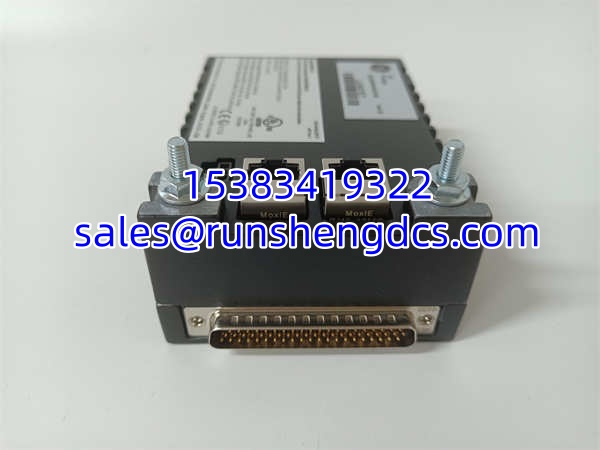
QA/QC Transparency SOP
Every (336A5026ADP14) goes through a five-step verification process:
- Intake & Origin Verification: We cross-check the GE part number label () and the internal reference number (336A5026ADP14) against GE’s known production records for the Mark VIe series. We verify the serial number and revision code to confirm authenticity — counterfeit PPDA modules are a known problem in the surplus market. We verify the conformal coating is intact and matches GE’s original application pattern.
- Visual & Mechanical Inspection: We inspect the PCB for burnt components, cracked solder joints, or corrosion under the conformal coating. We verify that the Ethernet ports (RJ45) are intact and undamaged, with all pins straight. We check the DC power connector and the backplane connector for bent pins or corrosion. We verify that the threaded mounting studs at the Ethernet ports are present and thread correctly.
- Power-Up & Self-Test: We apply 24VDC power and verify that the module powers up correctly. We verify that the PWR LED illuminates and the ATTN LED is off (no fault condition). We verify that the module completes its internal self-test sequence without errors.
- Communication & Functional Verification: We verify Ethernet communication by connecting both ENET1 and ENET2 ports to a test network and confirming bidirectional IONet/Modbus TCP communication. We verify that the Tx/RX and LINK LEDs indicate active communication on both ports. We simulate power distribution status signals (ground fault, breaker trip, bus voltage) and verify that the module reports them correctly to the test controller. We verify the electronic ID function correctly identifies the connected PDM configuration.
- Final QC & Anti-Static Packaging: After passing all tests, the module is bagged in ESD-safe packaging with a printed test report. No unit ships without a signed-off QC sheet documenting power-up test, self-test results, communication verification, functional testing, and visual inspection.
Field Engineer Gotchas
- PPDA Is a Monitor, Not a Protector: The reports power distribution status — it does not trip breakers or issue protective commands. If you’re troubleshooting a power distribution fault, the PPDA can tell you what happened, but it won’t fix it. Don’t confuse the PPDA with protective relays or breaker trip circuits. War story: A combined-cycle plant in the Gulf Coast had a recurring ground fault on a branch circuit powering the fuel gas control system. The PPDA correctly reported the ground fault to the control system, but the operators assumed the PPDA was causing nuisance trips and replaced it multiple times. The actual problem was degraded insulation on a cable tray exposed to salt air. The PPDA was doing its job — reporting the fault. The real fix was replacing the cable.
- Electronic ID Must Match PDM Configuration: The uses electronic ID to auto-configure based on the connected PDM backplane (JPDM/JPDC/JPDS). If you’re replacing a PPDA module, ensure the replacement is compatible with your specific PDM backplane type. A mismatch can cause the module to report incorrect or no data. Always document your existing PDM configuration before removal.
- Dual Ethernet Redundancy Requires Proper Network Configuration: In a typical Mark VIe installation, ENET1 connects to the R controller network and ENET2 connects to the S controller network. If both ports are connected to the same network segment, you lose the redundancy benefit. If only one port is connected, you’re operating without communication redundancy — a single network cable failure will isolate the PPDA from the controller. Always verify both Ethernet links are active and connected to the correct network segments.
- Conformal Coating Can Mask Developing Problems: While the conformal coating protects against environmental damage, it can also hide developing problems. Corrosion under the coating, cold solder joints, or component lead fractures may not be visible during a casual inspection. If a PPDA module is exhibiting intermittent communication issues or incorrect status reporting, the problem may be under the coating — requiring careful removal of the coating in the affected area for diagnosis.
- Branch Circuit Feedback Is Indirect: The reports branch circuit status, but the branch circuits are not directly connected to the PPDA pack. The status signals come from the PDM backplane (JPDM/JPDC/JPDS), which monitors the breakers. If a breaker’s auxiliary contact fails, the PPDA will report incorrect status. Always verify the breaker auxiliary contacts if the PPDA reports a discrepancy.
- Not Hot-Swappable Without Procedure: While the Mark VIe system supports some level of hot-swap capability, GE’s official guidance is to follow your plant’s specific procedures. Removing a PPDA module while the system is operating will temporarily lose power distribution visibility. In a redundant PDM configuration, the other PPDA modules may continue to provide partial visibility, but you should always follow proper lockout/tagout procedures.
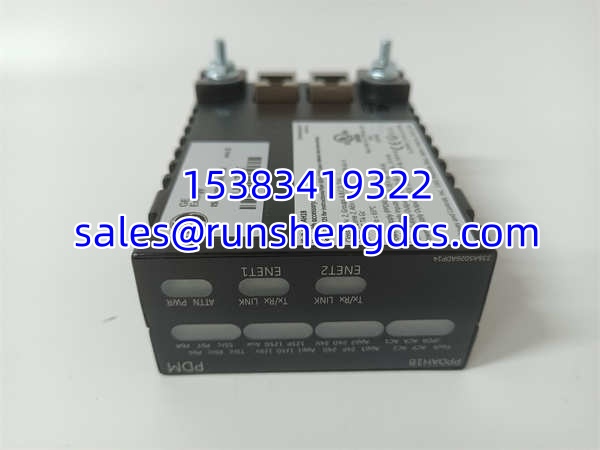
GE IS220PPDAH1B 336A5026ADP14
Application Scenarios
- Gas turbine power distribution monitoring: Monitoring the health of power distribution systems that supply critical turbine loads — fuel gas control valves, lube oil pumps, ignition transformers, cooling fans, and control system power supplies. The reports ground faults, bus voltage levels, and breaker status to the Mark VIe controller, enabling early detection of power distribution problems before they cause turbine trips.
- Steam turbine auxiliary power monitoring: Monitoring power distribution to steam turbine auxiliary systems — feedwater pumps, condensate pumps, gland steam systems, and bearing oil systems. The PPDA provides real-time visibility into the health of these critical power circuits, enabling predictive maintenance and reducing unplanned outages.
- Combined-cycle plant power distribution: In combined-cycle plants with multiple gas turbines, steam turbines, and HRSGs, the PPDA modules monitor the distributed power systems that support all units. The dual Ethernet IONet links provide redundant communication to the plant-wide control system, ensuring that power distribution status is always available to operators.
- Hazardous area power distribution monitoring: The is UL Class 1 Div 2 and ATEX Zone 2 certified, making it suitable for installation in hazardous areas where flammable gases or vapors may be present. This is critical for gas turbine installations where fuel gas leaks are a potential hazard.
- Spare parts for aging Mark VIe installations: Many GE Mark VIe turbine control systems are 10–20 years old. PPDA modules can fail due to component aging, capacitor drying, Ethernet port failure, or conformal coating degradation. Since the product is legacy/discontinued, having a tested spare on the shelf is essential for maintaining power distribution visibility.
FAQ
A: The is the H1B revision of the PPDA board, succeeding the H1A revision. The H1B revision typically includes updated components, improved conformal coating, and enhanced reliability features. Both revisions serve the same function (power distribution feedback monitoring), but the H1B is the preferred replacement for aging H1A boards. Verify your existing PDM backplane compatibility before ordering.
A: These are completely different modules. is a Power Distribution Feedback (PPDA) I/O pack that monitors power distribution system status. IS220PDIAH1B is a 24-channel Discrete Input (PDIA) I/O pack that acquires 24VDC switching signals from field devices. They are not interchangeable — don’t confuse the part numbers.
A: No. The is a monitoring and feedback device only. It reports power distribution status to the Mark VIe controller but does not issue trip commands or control breakers directly. Protective tripping is handled by separate protective relays and the controller’s logic.
A: The #1 cause is Ethernet port (RJ45) connector failure — pin corrosion from humidity and salt air, physical damage from repeated cable insertion/removal, or internal component failure. The second most common issue is power supply component aging (capacitor drying) on older H1A revision boards. Conformal coating degradation leading to corrosion under the coating is also a known failure mode in harsh environments.
A: The is a Mark VIe module. Mark VI systems use different I/O architectures and are not directly compatible with Mark VIe PPDA modules. Verify your system’s series before ordering.
A: Yes. The is configured and monitored via GE’s ToolboxST or ControlST software. The module’s electronic ID auto-configures based on the connected PDM backplane, but you can view real-time channel status, link quality, and diagnostic information through the software. Configuration changes should only be made by qualified technicians familiar with the Mark VIe power distribution architecture.
Q: Is this product still available new from GE?
A: No, the (336A5026ADP14) is a legacy/discontinued product. It is only available through surplus suppliers and aftermarket channels. For new installations, GE has newer turbine control platforms (Mark VIeS) that should be used instead. The is suitable for repair, reuse, and replacement of existing Mark VIe systems only.