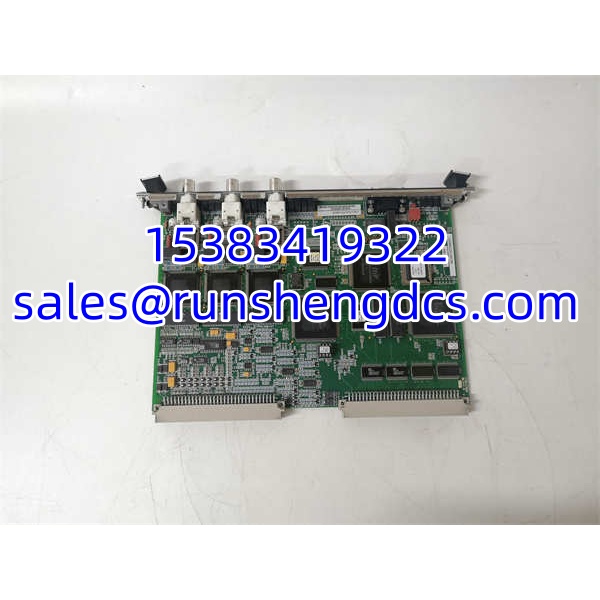

Description
Key Technical Specifications
| Parameter | Specification |
|---|---|
| Part Number | IS215VCMIH2CA / IS200VCMIH2CAA |
| Manufacturer | GE Energy / GE Vernova |
| Product Type | VME Bus Master Controller / Communication Interface Card |
| System Platform | GE Speedtronic Mark VI |
| Processor | Texas Instruments TMS320C32, 32-bit DSP |
| Memory | 32 KB dual-port RAM; SRAM and Flash (capacity varies by revision — verify with OEM datasheet) |
| IONet Ports | 3× 10Base2 (BNC), 10 Mbit/s |
| Serial Port | 1× RS-232C, 9600 baud (D-type connector) |
| Power Input | 24V DC (±10% typical) |
| Operating Temperature | 0°C to 60°C typical; some sources cite up to 70°C — confirm per revision |
| Form Factor | 6U VME board, single-slot |
| Front Panel LEDs | Run, Fail, Status, Reset; TX/RX/CD per IONet port; channel ID LEDs |
Product Introduction
If your Mark VI rack is flashing a comms fault and the turbine control logic has gone dark, the VCMI card is usually the first place you look. It is not a processor that runs the control algorithm itself — it is the traffic cop. The IS215VCMIH2CA sits in slot 1 of the VME rack and arbitrates every data exchange between the I/O boards, the main CPU modules, and the IONet backbone.
Why this board matters: it runs on a TI TMS320C32 DSP and manages three 10Base2 IONet segments simultaneously at 10 Mbit/s, which is the native speed of the Mark VI control network. That is not fast by modern IT standards, but it is deterministic — and in turbine protection, deterministic beats fast every time. The 24V DC input and built-in internal bus monitoring (+5V, +12V, +15V, +28V) give you early warning before a brownout takes the whole rack offline. Bottom line: if you are keeping a Mark VI turbine running, you need at least one tested spare of this card on the shelf.
QA/QC Transparency SOP
- Intake & Origin Verification — Trace the lot code and serial against GE part records. Reject boards with visible burn marks, swollen capacitors, or corroded BNC connectors.
- Live Functional Testing — Seat the card in a powered VME test rack. Verify boot sequence via RS-232C console, confirm IONet link LEDs (TX/RX/CD) on all three ports, and validate VME bus arbitration with a companion I/O board.
- Electrical Parameter Tests — Check 24V DC input draw with a Fluke multimeter. Megger test backplane pins for insulation resistance. Continuity check on all BNC shells and the RS-232C D-sub.
- Firmware/Config Verification — Read back the firmware revision via the serial console. Compare against the site’s installed baseline — a mismatched revision is the most common cause of post-swap comms timeouts. Archive the readout.
- Final QC & Anti-Static Packaging — Apply a QC pass label with test date, firmware revision, and technician ID. Bag in ESD shielding, foam-support the BNC connectors, and ship in a rigid box.
Field Engineer Gotchas
- Firmware Revision Mismatch — The H2CA and H2CB/H2CC revisions do not always carry the same firmware image. Drop in a mismatched card and you will get IONet timeouts or the rack refuses to recognize the bus master. Solution: Read the revision from the existing card before pulling it. If the replacement differs, load the site-standard firmware before installing.
- IONet Termination Errors — 10Base2 coaxial segments need proper termination. A missing or degraded terminator on one IONet leg can take down the entire segment. War story: Saw a unit trip to coast-down because a technician replaced the VCMI and forgot to re-terminate the far end of IONet 2. Took 40 minutes to find.
- RS-232C Console Cable Trap — The serial port is 9600 baud, 8N1, no flow control. Using the wrong cable pinout or a USB-to-serial adapter with a bad FTDI chip will give you garbage on the console. Solution: Use a known-good null-modem cable and a hardware-grade serial adapter.
- ESD and Backplane Pins — The board has components on both sides and over 50 ICs. Touching the backplane pins with bare hands is a one-way ticket to latent failure. Always wear a grounded wrist strap and handle by the front-panel edges.
- Power Rail Monitoring — The card monitors +5V, +12V, +15V, and +28V internally. If your rack power supply is sagging on +28V, the VCMI will flag it before the CPU does. Don’t ignore those alarms — they are often the canary in the coal mine for a failing power module.
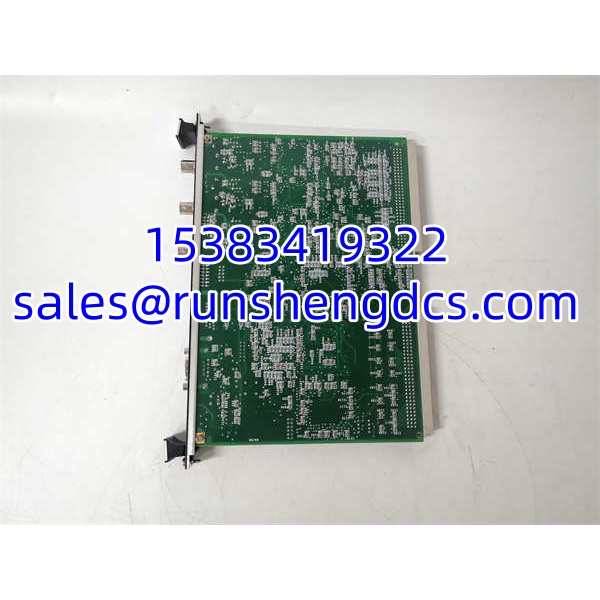
GE IS215VCMIH2CA IS200VCMIH2CAA
Application Scenarios
- Gas turbine combined-cycle plant — The VCMI bridges the turbine CPU rack with remote I/O scattered across the turbine deck. A single IONet segment failure here means lost exhaust temperature readings and a forced trip.
- Steam turbine governing in a cogeneration facility — The card manages communication between the governor servo valves (via downstream I/O packs) and the main controller. Latency spikes on IONet translate directly into hunting on the speed loop.
- Offshore platform gas compressor driver — Harsh environment, salt air, limited spare parts inventory. The VCMI’s 24V DC input and internal rail monitoring are critical because platform power quality is notoriously dirty.
FAQ
Q: Can I use IS200VCMIH2CAA as a direct replacement for IS215VCMIH2CA?
A: In most Mark VI installations, yes — the IS200- prefix typically denotes the functional equivalent or procurement variant of the IS215- PCB. However, always verify the firmware revision and board revision letter against your existing card before swapping.
Q: Does this card support hot-swapping?
A: The Mark VI VME rack is not designed for true hot-swap of the bus master controller. Pulling the VCMI while the rack is live will disrupt IONet communication to all downstream I/O. Plan a controlled outage or coordinate with the turbine in a safe state.
Q: Can I upgrade IONet to 100BaseTX?
A: No. The IS215VCMIH2CA uses 10Base2 (coaxial BNC) at 10 Mbit/s. The RJ-45 Ethernet ports you may see referenced belong to later Mark VIe controllers (e.g., UCVE series), not this VCMI card. Do not confuse the two platforms.
Q: What firmware revision should I run?
A: Match whatever is on your site’s other VCMI cards. GE released multiple revisions (H2CA, H2CB, H2CC) with different memory maps. Mismatched revisions cause IONet handshake failures. Check the GEH-6421 manual or your OEM documentation.
Q: Is this card still in production?
A: Largely discontinued. Most supply comes from surplus or refurbished channels. Lead times vary wildly. Keep at least one tested spare on site if your turbine depends on Mark VI.
Q: What is the power consumption?
A: Exact wattage varies by revision and load. The card runs on 24V DC and monitors internal rails (+5V, +12V, +15V, +28V). Measure actual draw on your test rack before deployment — do not rely on generic datasheet figures.
Q: Can I use this in a Mark VIe system?
A: No. Mark VIe uses a different architecture (UCS/UCVE controllers, Ethernet-based IONet). The IS215VCMIH2CA is specific to the Mark VI VME platform. Mixing the two will not work.