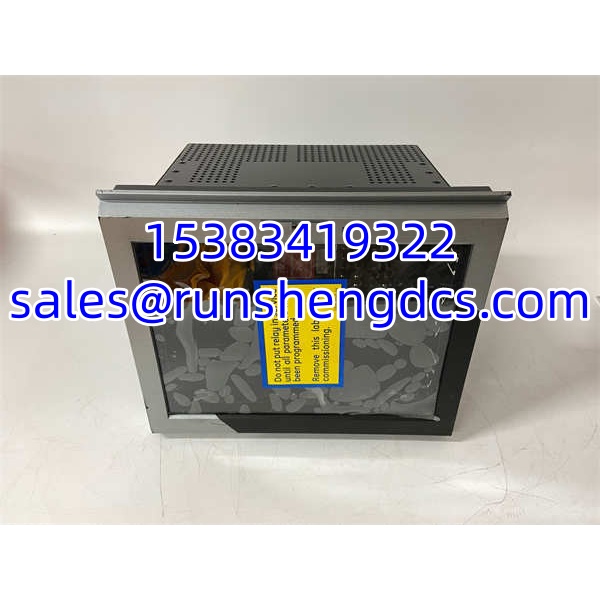

Description
Key Technical Specifications
| Parameter | Specification |
|---|---|
| Product ID | 469-P5-HI-A20-E-H |
| System Family | GE Multilin SR469 Motor Management Relay |
| CT Secondary | 5 A phase CT secondary (P5) |
| Control Power | Universal supply, typically 70–265 VAC / 90–300 VDC |
| Front Panel | Enhanced HMI with large display, status LEDs, keypad, RS-232 service port |
| Analog Outputs | A20 option: isolated 4–20 mA analog outputs for DCS/PLC integration |
| RTD Inputs | Supports multiple RTD channels for stator/bearing temperature monitoring |
| Communication | RS-232 and RS-485 standard; optional Ethernet/DeviceNet depending on configuration |
| Environmental Option | “-H” suffix indicates conformal coating for harsh/chemical environments |
| Construction | Draw-out relay construction for simplified replacement and testing |
| Protection Functions | Thermal overload, stall/jam, unbalance, ground fault, differential, voltage/frequency, start supervision |
| Product Status | Discontinued; successor families are GE 859 / 869 |
Product Introduction
The GE 469-P5-HI-A20-E-H is a configured variant of the Multilin 469 motor management relay. It is not merely a data acquisition module; it is a full motor protection relay that combines thermal modeling, RTD monitoring, metering, event recording, and relay output logic in one draw-out unit.
The ordering code breaks down as follows: P5 means 5 A phase CT secondary; HI indicates the enhanced human interface panel; A20 denotes the 4–20 mA analog output option; E typically indicates an enhanced or extended communication/configuration option; and -H adds conformal coating for corrosive, humid, or chemically aggressive environments. This makes it suitable for offshore platforms, chemical plants, pulp and paper mills, and other harsh installations. Because the 469 family is now discontinued, replacements should be planned against the GE 859/869 roadmap.
QA/QC Transparency SOP
- Intake & Verification: Confirm full part number 469-P5-HI-A20-E-H, serial number, and manufacturing date. Inspect for coating damage, corrosion, or bent draw-out pins.
- Mechanical Inspection: Verify draw-out mechanism, front panel seal, keypad response, display clarity, and terminal block integrity.
- Power-Up Test: Apply rated control power. Confirm boot sequence, firmware version, and absence of internal fault alarms.
- Functional Test: Inject 5 A CT secondary current and verify phase current measurement. Test 4–20 mA analog output scaling. Simulate RTD inputs if channels are configured. Verify relay output operation for trip/alarm channels.
- Communication Check: Test RS-232 service port and RS-485/Ethernet communication as equipped. Confirm Modbus or configured protocol response.
- Configuration Backup: Upload existing settings via EnerVista 469 software. Archive the configuration file before any changes or re-issue.
- Final QC & Packaging: Record test results, firmware revision, and configuration summary. Pack in ESD-safe, moisture-protected packaging. Surplus units are not factory-new unless OEM-certified.
Field Engineer Gotchas
- P5 vs. P1 mismatch: P5 requires 5 A CT secondaries. Installing it on a 1 A CT circuit will produce incorrect current readings and unreliable protection. Verify CT ratios before replacement.
- -H coating is not a seal: Conformal coating protects the PCB from moisture and chemicals, but it does not make the enclosure IP-rated. Cable glands, panel seals, and terminal access still determine ingress protection.
- A20 output scaling: The 4–20 mA outputs must be mapped to specific measurements (current, thermal capacity, kW, temperature). If the DCS expects motor current but the relay is scaled to thermal capacity, trending will be meaningless.
- Discontinued platform: Spare availability will shrink over time. For new projects or critical replacements, evaluate migration to GE 859/869 rather than buying another surplus 469.
- EnerVista version compatibility: Older 469 firmware may require a specific EnerVista release. Confirm software compatibility before attempting configuration changes.
- RTD wiring errors: 3-wire RTDs wired as 2-wire, or mismatched RTD types (Pt100 vs. Ni120), will produce temperature offsets that can bias the thermal model or cause false trips.
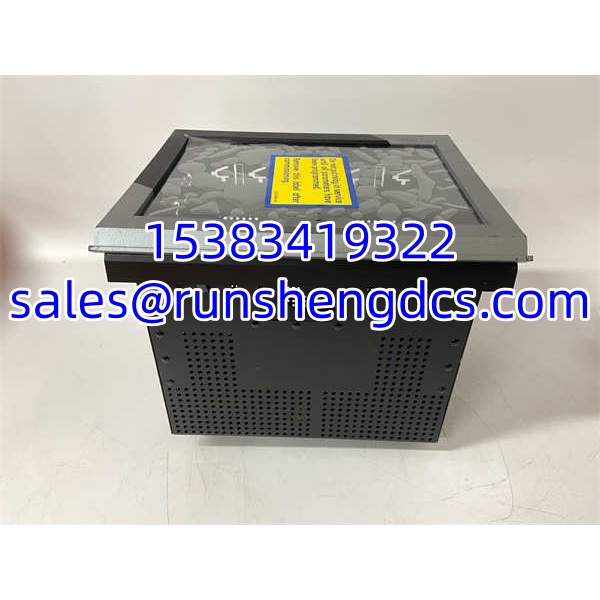
GE 469-P5-HI-A20-E-H
Application Scenarios
- Medium-voltage motor protection: Provides thermal overload, stall, unbalance, and ground fault protection for large induction and synchronous motors.
- Harsh environment installations: The -H conformal-coated version is suited for chemical plants, offshore platforms, and high-humidity switchgear rooms.
- DCS integration: A20 analog outputs retransmit motor current, thermal capacity, or temperature to PLC/DCS systems for trending and alarm management.
- Critical motor diagnostics: Event records, waveform capture, and RTD monitoring support root-cause analysis after trips or abnormal starts.
FAQ
What does the “-H” suffix mean?
It indicates conformal coating for harsh or chemically aggressive environments.
Is 469-P5-HI-A20-E-H still in production?
No. GE has discontinued the 469 series. The recommended successors are the GE 859 or 869 relays.
Can I replace a 469-P5-HI-A20-E with a 469-P5-HI-A20-E-H?
Mechanically and functionally they are similar, but the -H version adds conformal coating. Verify CT rating, control power, analog output configuration, and firmware compatibility before swapping.
Does it support Ethernet?
Some 469 configurations support optional Ethernet. The base unit includes RS-232 and RS-485 ports; Ethernet depends on the specific option build.
What CT rating does P5 indicate?
P5 means the relay is configured for 5 A phase CT secondaries. It is not compatible with 1 A CT circuits without verifying the hardware configuration.
Can it monitor bearing temperature?
Yes. The 469 supports multiple RTD inputs for stator winding and bearing temperature monitoring, which can bias the thermal model and trigger alarms or trips.
What software is used for configuration?
GE EnerVista 469 software is used for configuration, commissioning, and data retrieval.