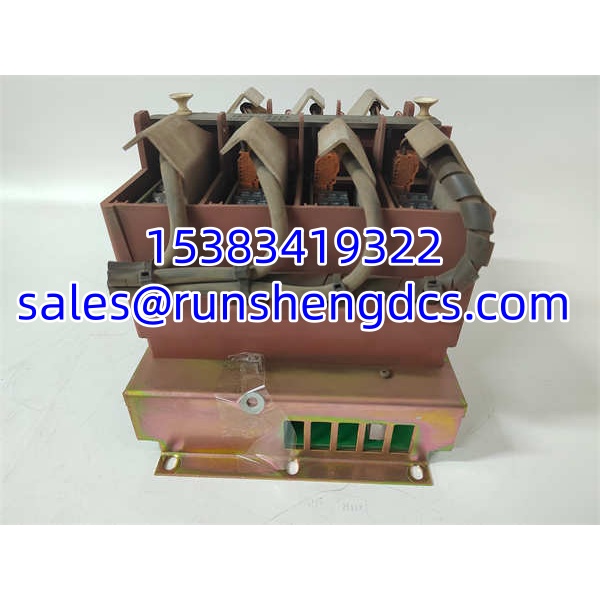

Description
Key Technical Specifications
| Parameter | Detail |
|---|---|
| Manufacturer | ABB |
| Part Number | KUC711AE / KUC711AE01 — 3BHB004661R0001 |
| Product Type | Excitation control unit |
| Application | Synchronous generator excitation systems |
| Control Method | Microprocessor-based excitation regulation |
| Primary Functions | Generator terminal voltage control, reactive power sharing, stability support |
| Mounting | Control-room / panel mounting (module form factor) |
| Typical Environments | Power plants, hydro plants, industrial synchronous generator applications |
| Certifications | CE / UL reported by some distributors; verify on nameplate |
| Weight | Approximately 1.1–2.9 kg reported across listings; confirm exact unit weight |
Product Introduction
Excitation control units are not the kind of module you swap on a guess. The KUC711AE sits inside the generator excitation system, where wrong firmware, incorrect I/O mapping, or a mismatched power unit can turn a routine replacement into a prolonged commissioning event.
This unit is described as an ABB excitation control module for synchronous generators, typically used to regulate terminal voltage, manage reactive power distribution between parallel units, and support grid stability. It uses microprocessor-based control and is intended for integration into larger excitation cabinets rather than standalone operation. Because public OEM documentation is sparse, buyers should treat it as a legacy component. The real risk is not the hardware itself — it is assuming that any “KUC711AE” unit will match the existing system’s configuration.
QA/QC Transparency SOP
- Intake & Origin Verification: Record full model number, suffix, serial number, and PCB revision. Inspect for corrosion, burned components, replaced connectors, or signs of field modification.
- Live Functional Testing: Power the unit from a verified compatible supply. Confirm processor boot, LED diagnostics, communication ports, and basic I/O response. Do not connect to a live generator during bench testing.
- Electrical Parameter Tests: Measure supply voltage tolerance, power draw, ground integrity, and connector continuity. Check isolation between control I/O and power circuits where applicable.
- Firmware/Config Verification: Read firmware version, configuration data, and any stored calibration parameters. Back up existing data before any changes. Compare against the installed unit’s revision.
- Final QC & Anti-Static Packaging: Seal in ESD-safe packaging with desiccant. Include a test report covering firmware revision, measured values, and condition grade.
Field Engineer Gotchas
- Firmware/Configuration Mismatch: Excitation controllers depend heavily on application-specific configuration. Fix: Match firmware and configuration to the existing cabinet. I have seen a replacement unit power up cleanly but refuse to regulate because the parameter set did not match the generator model.
- Wrong Suffix Assumption: KUC711AE, KUC711AE01, and similar variants may not be direct drop-ins. Fix: Verify the full suffix and revision. “Close enough” does not work in excitation systems.
- Excitation Power Unit Compatibility: The control unit must match the excitation power bridge, sensing inputs, and protection logic. Fix: Confirm compatibility with the existing excitation transformer, rectifier, and field discharge circuit.
- I/O Mapping Errors: Terminal assignments for voltage sensing, current feedback, and trip signals may differ between revisions. Fix: Photograph and label all connections before removal. Do not trust generic wiring diagrams.
- Live Generator Risk: This is not a standard PLC I/O module. Fix: Follow plant switching procedures, protection interlocks, and OEM commissioning steps. Never bypass excitation protection during testing.
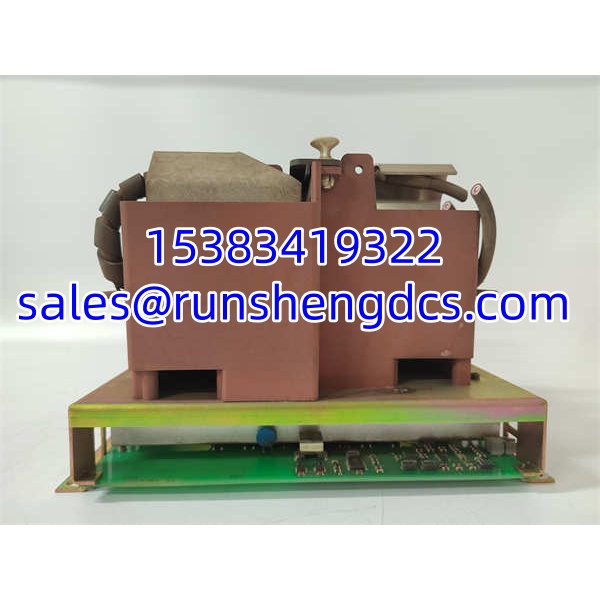
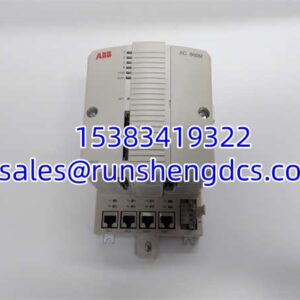
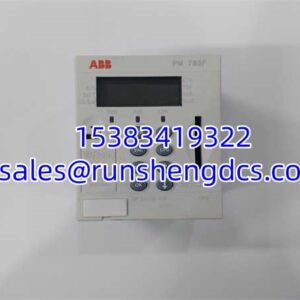
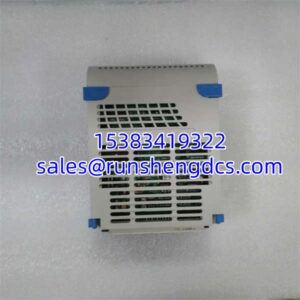
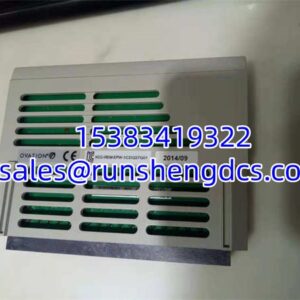
ABB KUC711AE 3BHB004661R0001
Application Scenarios
- Thermal power plant generator excitation: Maintaining terminal voltage during load changes and supporting reactive power control.
- Hydroelectric generator regulation: Managing voltage and stability under varying water flow and load conditions.
- Industrial synchronous motor/generator sets: Providing stable excitation for plants with on-site generation.
- Legacy excitation system maintenance: Replacing failed control units where OEM replacement lead times are long.
FAQ
Q: Is there an official ABB datasheet for 3BHB004661R0001?
A: No authoritative public datasheet was found. Treat distributor descriptions as indicative and verify against the physical unit and OEM documentation.
Q: Can I use KUC711AE01 instead of KUC711AE?
A: Possibly, but do not assume interchangeability. Confirm the suffix, firmware, and I/O mapping with the existing system.
Q: Is this a PLC module?
A: No. It is an excitation control unit for synchronous generators, not a general-purpose PLC CPU or I/O card.
Q: What happens if the firmware revision is wrong?
A: The unit may power up but regulate incorrectly, trip unexpectedly, or refuse to enable outputs. Excitation systems are configuration-sensitive.
Q: Can I test this on a bench supply?
A: Basic power-up and diagnostics can be checked on a compatible supply, but full functional validation requires the correct excitation cabinet and safety procedures.
Q: Is this suitable for hydro generators?
A: It is described for synchronous generator applications, including hydro. Confirm the specific configuration matches the generator type and excitation system design.
Q: What should I check before buying surplus?
A: Full model suffix, firmware revision, configuration backup availability, physical condition, and compatibility with the existing excitation power unit.