
Description
Key Technical Specifications
| Parameter | Value |
|---|---|
| Product Model | YOKOGAWA CP461-50 |
| Manufacturer | YOKOGAWA |
| Product Type | Processor Module (CPU) |
| System Series | CENTUM CS 3000 / AFV30/AFV40 |
| Power Supply | 24 VDC (Power Group) |
| Redundancy | Supports Dual Redundant Configuration |
| I/O Points | 8 (Non-standard components) |
| Successor To | CP461-10 |
| Dimensions | 15.2 cm x 5.1 cm x 20.3 cm |
| Weight | 0.7 kg |
| Mounting | Control Cabinet / FCU Rack |
| Hot-Swap Support | Yes (Redundant Configuration) |
Product Introduction
Your Field Control Unit (FCU) has lost its brain, and the entire local control loop is hanging in the balance. You need a processor that boots fast, handles redundancy seamlessly, and talks to the ESB bus without missing a beat.
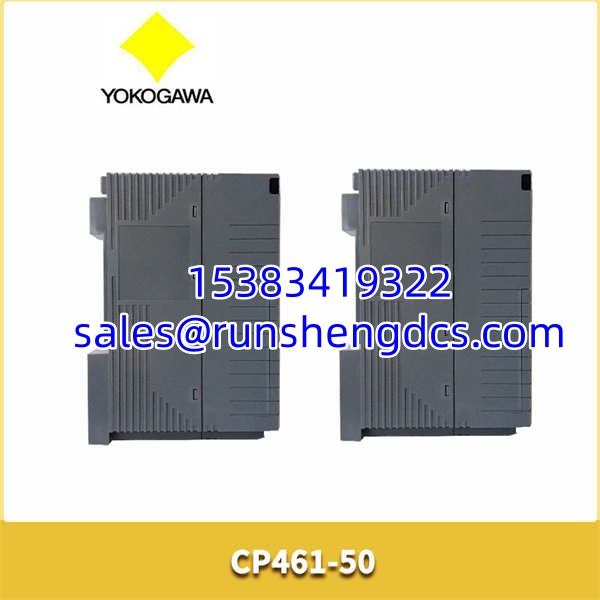
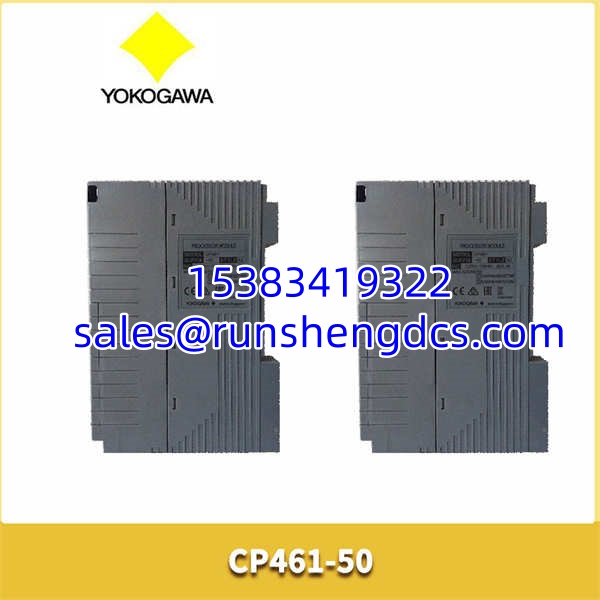
The YOKOGAWA CP461-50 is the central processor module designed for the AFV30/AFV40 series Field Control Units in the CENTUM CS 3000 DCS ecosystem. Serving as the direct replacement for the older CP461-10, this module manages the local node, processes control logic, and routes data over the ESB bus. The “-50” suffix designates the standard non-explosion-proof (basic) type. It supports dual redundant configurations, meaning if the primary CPU fails, the secondary takes over instantly to keep the process running.
Why does this module matter? Because in distributed control, the FCU is the last line of defense before the field devices. The CP461-50 handles the heavy lifting of local control while maintaining a constant heartbeat with the central Vnet/IP network. Bottom line — if you’re running an AFV40 FCU, this is the CPU that keeps the local loop alive.
QA/QC Transparency SOP
Every CP461-50 we handle goes through a rigorous inspection process before it ships. No shortcuts.
- Intake & Origin Verification: We verify the part number CP461-50, lot code, and YOKOGAWA manufacturer markings. We check the connector pins, housing label, and IP20 enclosure for signs of tampering or re-labeling.
- Live Functional Testing (Comms, Logic, Load): The CP461-50 plugs into a calibrated AFV40 test rack. We verify ESB bus communication, confirm the module boots and initializes, and test I/O point mapping.
- Electrical Parameter Tests (Megger, Continuity): Using a Fluke 87V multimeter, we verify 24VDC input stability and check for continuity on all backplane pins. We test isolation between signal and power planes to ensure no internal shorts.
- Firmware/Config Verification (Readout & Backup): We read the ‘s configuration registers through the CENTUM test system and compare against OEM defaults. Any deviation in processing parameters flags the unit for rejection.
- Final QC & Anti-Static Packaging: Visual inspection under magnification checks for solder joint quality, connector pin alignment, and PCB integrity. The then goes into an anti-static bag with desiccant, sealed and labeled with test results, date, and lot traceability.
Field Engineer Gotchas
Redundancy Pairing: The supports dual redundancy, but both CPUs in a redundant pair must be identical hardware revisions. Mixing a with a CP461-51 or an older CP461-10 will cause synchronization faults. Always match the exact part number and revision. We’ve seen plants buy three boards only to find out the revisions had to match perfectly.
24VDC Power Budget: The draws power from the 24VDC power group. If you’re stacking multiple I/O modules and communication cards in a dense FCU, check the power supply capacity. Overloading the 24VDC rail causes brownouts that manifest as intermittent CPU resets. Nasty to troubleshoot at 2am. Verify your power budget before adding modules.
ESB Bus Termination: The communicates over the ESB bus. If you’re adding this module to an existing node, verify the bus termination is correct. Missing or incorrect termination causes intermittent communication faults that look like bad CPU processing. Pro tip: check the termination resistor at the end of the ESB bus run.
ESD Damage on Hot-Swap: The CENTUM system supports hot-swap in redundant configurations. But the ’s processor and bus transceivers are sensitive to ESD. Wear an ESD strap. We’ve seen modules that passed bench test but failed in-field after an ungrounded swap. The backplane powers up the module the instant it seats. One spark and the CPU is toast. Ground yourself. Always.
CP461-10 Migration: The is the direct replacement for the CP461-10, but verify your CENTUM CS 3000 software version supports the newer CPU. Older system software may not recognize the -50 variant. Check the YOKOGAWA compatibility matrix before installing.
YOKOGAWA CP461-50
Application Scenarios
Chemical Reactor Control: Batch reactors require deterministic local control. The executes PID loops and safety interlocks locally, ensuring that even if the Vnet network hiccups, the reactor stays stable. Redundant CPUs ensure zero downtime during maintenance.
Power Plant Boiler Management: Steam drums and feedwater systems demand high-speed local control. The manages the ESB bus I/O modules that read pressure and temperature transmitters. A failed CPU means lost boiler visibility. The dual redundancy keeps the plant running.
Water Treatment SCADA Nodes: Municipal water systems use AFV40 FCUs for remote pump station control. The acts as the local brain, executing logic and buffering data until the central SCADA polls it. Reliable local control means regulatory compliance.
Case Study — Intermittent CPU Reset: A refinery reported random FCU resets on their CENTUM CS 3000 system. Maintenance replaced the twice. Both times, the reset returned after 48 hours. Root cause: the 24VDC power supply in the FCU had a failing capacitor, causing voltage droop under load. The CPU was fine; the PSU was dying. Replaced the PSU. System stable for 18 months. Lesson: always check the power supply before blaming the CPU.
FAQ
- The is the newer replacement for the CP461-10. They are functionally equivalent, but the -50 may have updated silicon and firmware. Always verify your system software supports the -50 before upgrading.
- Yes. The supports hot-swap replacement in a redundant FCU configuration. The standby CPU takes over while you replace the faulty unit. Wear an ESD strap; the processor is sensitive to static.
- Check the module label for the exact part number , lot code, and YOKOGAWA markings. Verify the connector type matches the AFV40 backplane. Genuine modules have precise 24VDC power regulation; counterfeits often use wrong-value components. If the price is suspiciously low, it’s probably fake. Buy from a trusted source.
- The typically operates from 0°C to +55°C (verify with OEM manual for exact spec). The IP20 rating means it must be installed inside a control cabinet. If your cabinet runs hotter than 55°C, add ventilation or cooling. Exceeding the temp range causes calibration drift and premature failure.
- No. The is designed specifically for the CENTUM CS 3000 AFV30/ backplane. It uses proprietary ESB bus signaling and power distribution. It will not work in other YOKOGAWA platforms like CENTUM VP or ProSafe-RS without verification. Stick to .
- The requires compatible CENTUM CS 3000 system software. Older software versions may not recognize the module. Check the YOKOGAWA compatibility matrix before installation.
- What happens if I install the wrong CPU revision?
Worst case: the FCU fails to boot or enters a fault state. Best case: the module works but lacks certain features (e.g., enhanced diagnostics). Always match the exact part number. Don’t guess.