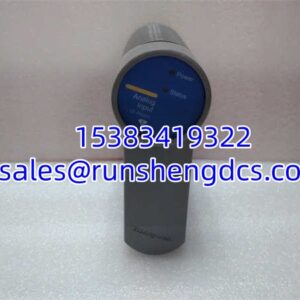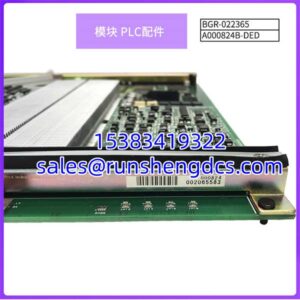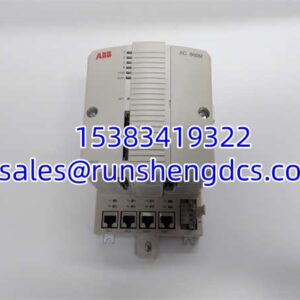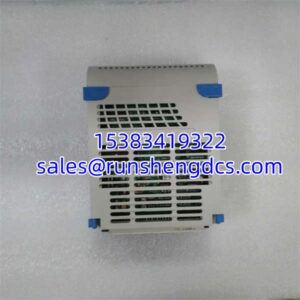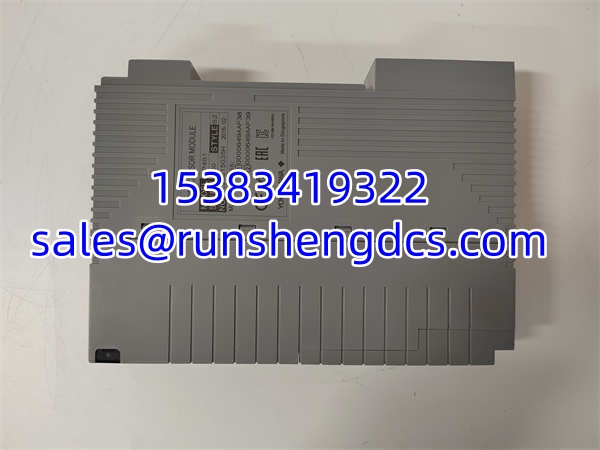

Description
Key Technical Specifications
- Product Model: CP451-50
- Brand: Yokogawa
- Product Family: CP451 series
- Product Type: Controller / processor module — exact function unconfirmed
- Likely Platform: Yokogawa DCS / SIS / ProSafe-RS family — must be confirmed
- Primary Function: Process control execution, system communication, I/O coordination, and controller logic handling
- Installation: Rack / chassis mounted controller module
- Redundancy Capability: Not confirmed for CP451-50; some CP451 variants support redundancy
- Communication: Likely system-bus / network interface — exact protocol unconfirmed
- I/O Interface: Not directly an I/O card; typically manages or coordinates I/O modules
- Operating Environment: Industrial control-room / cabinet environment
- Verification Required: Nameplate, revision, firmware, chassis type, slot position, and Yokogawa system project
Product Introduction
In a Yokogawa control cabinet, the CP451-style module is the kind of part that sits behind the scenes but carries most of the control responsibility: executing logic, managing communication, watching I/O status, and keeping the process running. The YOKOGAWA CP451-50 belongs to that family as a , not as a random field device or generic automation card.
For procurement, the critical issue is that . The suffix usually defines platform, safety certification level, firmware family, chassis compatibility, or application type. If the replacement does not match the installed system, it may seat physically but still fail to run, fail to communicate, or be rejected by the engineering software.
Troubleshooting Quick Reference
| Fault | Likely Cause | Quick Check | Fix |
|---|---|---|---|
| Module not recognized | Wrong model/suffix, firmware mismatch, wrong slot, backplane fault | Check chassis alarms and module LEDs | Confirm -50 matches system configuration |
| No power / blank LEDs | 24V DC supply missing, fuse open, backplane power fault | Measure supply at module power input | Verify 24V DC, polarity, fuses, and chassis power |
| CPU fault alarm | Firmware mismatch, memory fault, configuration error, hardware failure | Read controller diagnostics | Reload/verify project; check firmware and revision |
| Communication failure | V-Net / system bus / network mismatch, cable fault, node address error | Check bus LEDs and cable continuity | Verify network type, node address, and termination |
| Intermittent faults | Loose module seating, EMI, aging power supply, bad backplane contact | Reseat module and inspect connectors | Reseat; check grounding and cable routing |
| Redundancy failover issue | Mismatched firmware, mismatched revision, configuration difference | Compare primary and standby modules | Use matched pair; verify redundancy settings |
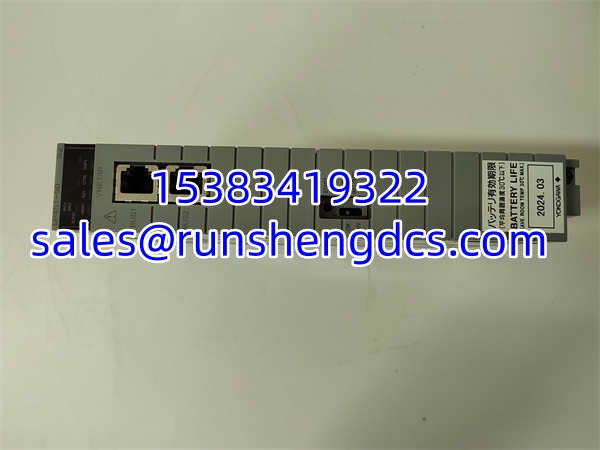
YOKOGAWA CP451-50
Application Scenarios & Pain Points
- ProSafe-RS / SIS environments: Used where safety logic, ESD, BMS, or F&G functions may depend on a Yokogawa controller module. Pain point: wrong suffix can break safety validation.
- Yokogawa DCS plants: Supports process control execution and communication with I/O and operator stations. Pain point: firmware and project compatibility are mandatory.
- Petrochemical / refining units: Handles critical control logic for valves, interlocks, and process sequences. Pain point: downtime cost is high, so exact-match spares matter.
- Power generation / utilities: Used in control cabinets for auxiliary process control or protection-related logic. Pain point: replacement modules must survive functional testing.
- Legacy Yokogawa system maintenance: Older installations may need an exact -50 match. Pain point: surplus listings often confuse -10, -50, -51, and -10 S2.