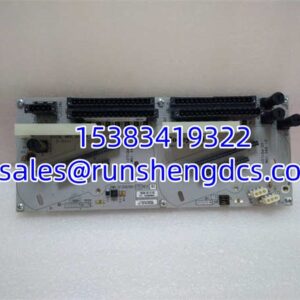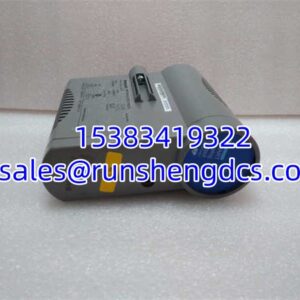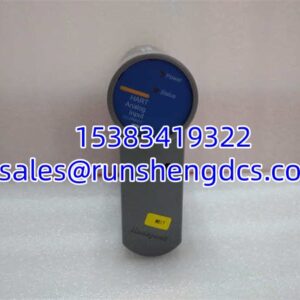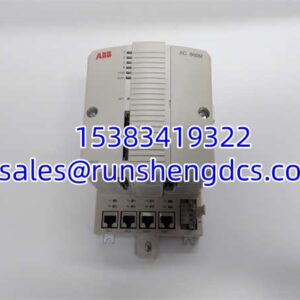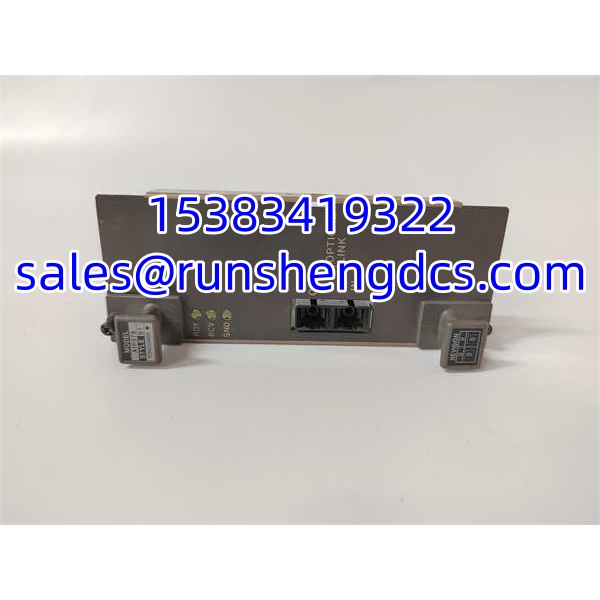
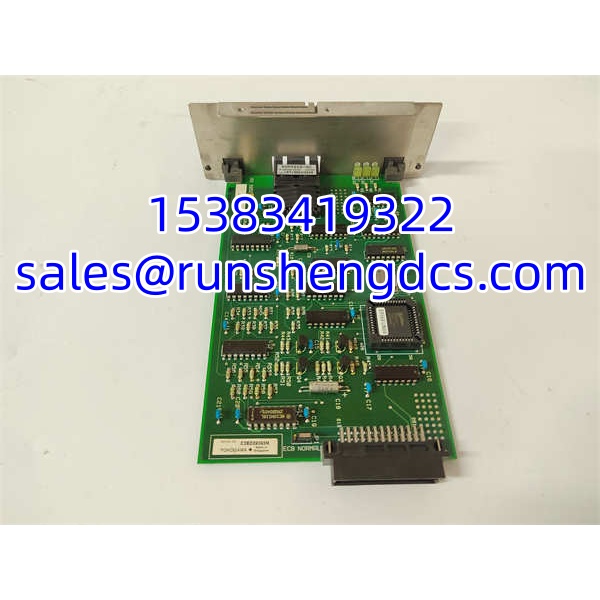

Description
Key Technical Specifications
| Parameter | Value / Note |
|---|---|
| Manufacturer | YOKOGAWA |
| Product Type | Analog Input Module (8-channel) |
| System Compatibility | CENTUM VP, CENTUM CS DCS |
| Signal Type | 4-20mA DC (isolated inputs) |
| Channel Count | 8 analog inputs |
| Communication | RIO (Remote I/O) protocol |
| Power Supply | 24 VDC ±10% (backplane-fed, ~1.2A) |
| Hot-Swap | Supported (when system is configured for it) |
| Diagnostics | Open-wire detection, sensor failure alarms |
| Operating Temp | 0°C to 50°C (per one listing; verify with OEM) |
| Approx. Dimensions | 100 × 120 × 150 mm / ~0.8 kg (one listing; confirm with OEM drawing) |
| Installation | Yokogawa FCS node slot (not generic DIN-rail — verify with OEM) |
Product Introduction
A brownfield DCS upgrade hits a wall the moment you realize pulling new analog cables from the field to the control room is not happening — not with the plant running. The AIP578 solves that exact problem. It sits in a Yokogawa RIO node, accepts up to eight 4-20mA signals from local field instruments, and ships the digitized data back to the CENTUM VP or CS controller over the RIO network. No new long-run cabling. No civil work. Just drop the module in, address it, and go.
From a procurement standpoint, the AIP578 is a high-turnover spare. Plants running CENTUM VP with RIO expansion racks keep these on the shelf because a failed AI channel can take down a critical loop — and Yokogawa lead times are not always friendly. The hot-swap capability means you can replace a faulty unit during a running shift if the system is configured for it, which matters more than any spec sheet number at 2 AM during a turbine startup. Bottom line — it is a field-proven workhorse, not a new product, and that is precisely why it holds value.
QA/QC Transparency SOP
- Intake & Origin Verification — Confirm model AIP578, check for physical damage, corrosion on connector pins, and verify the Yokogawa nameplate matches the expected revision. Cross-reference the serial number against Yokogawa’s revision history if available.
- Live Functional Testing — Install the module in a CENTUM VP FCS test rack with a known-good RIO node controller. Apply calibrated 4-20mA signals to all eight channels using a Fluke 754 process calibrator. Verify digitized values match within ±0.1% accuracy in the Control Builder configuration.
- Electrical Parameter Tests — Measure backplane current draw at 24 VDC to confirm ~1.2A consumption. Check isolation resistance between each input channel and the backplane ground (>10 MΩ typical). Verify open-wire detection triggers correctly on each channel.
- Firmware/Config Verification — Read the module’s firmware revision via the CENTUM VP engineering station. Confirm compatibility with the installed CENTUM VP release (e.g., R3, R4, R5). Back up the module’s RIO node address and slot configuration.
- Final QC & Anti-Static Packaging — Document all test readings, firmware revision, and RIO address. Package in anti-static shielding with desiccant. Include a test report and photo of the nameplate for traceability.
Field Engineer Gotchas
- RIO Node Address Conflict — The AIP578 must have a unique RIO node address within the network segment. Duplicate addresses cause communication timeouts across the entire RIO bus. Solution: verify the node address in Control Builder before inserting the module. I once watched a whole distillation column go blind for 45 minutes because a spare module had the same address as an existing node.
- Firmware Revision Mismatch — A newer AIP578 firmware may not be backward-compatible with an older CENTUM VP release. The module will appear in the rack but fail to initialize. Solution: match the firmware revision to your existing modules or upgrade the controller software first.
- Channel Scaling Errors After Swap — Replacing an does not automatically restore channel engineering units. If the new module’s default scaling differs from the original, your PID loops will see the wrong values. Solution: export the channel configuration from Control Builder before removal and re-import after installation.
- Hot-Swap Misuse — Hot-swap only works if the RIO node and controller are configured for it. Pulling a module from a non-hot-swap-configured rack will trip the node into fault. Solution: check the system configuration — do not assume. When in doubt, schedule a controlled shutdown.
- Ground Loop on 4-20mA Inputs — Although the inputs are isolated, tying the shield ground at both the field instrument and the module can create ground loops that introduce noise. Solution: ground the shield at one end only, typically at the field device.
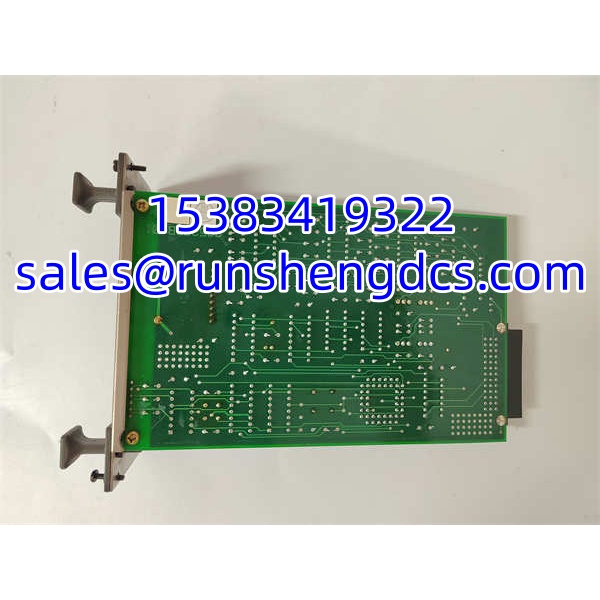
YOKOGAWA AIP578
Application Scenarios
- Remote skid package integration — A compressor skid located 300 meters from the main control room uses an RIO node with modules to send pressure and temperature signals back to the CENTUM VP controller without running individual analog cables the full distance.
- Brownfield instrumentation upgrade — An aging refinery replaces a failed analog input card in an existing RIO rack. The drops into the same slot, preserving the RIO address and field wiring, avoiding a full rack redesign.
- Redundant AI channel deployment — Critical safety loops use dual modules in separate RIO nodes. If one module fails, the controller automatically switches to the redundant channel without process disruption.
FAQ
The predominant specification identifies it as an 8-channel 4-20mA analog input module for RIO communication. Some third-party sources describe it as a fiber optic transceiver — this appears to be a listing error or confusion with a different Yokogawa module. Always verify against the Yokogawa hardware manual or the physical nameplate.
Can I hot-swap this module?
Yes, but only if your CENTUM VP system and RIO node are configured for hot-swapping. Check your Control Builder configuration before attempting a live replacement.
What DCS versions is it compatible with?
CENTUM VP and CENTUM CS systems with RIO network capability. Firmware revision must match or be compatible with your controller’s software release.
Does it support HART communication?
No. The reads 4-20mA analog signals only. It does not decode HART digital communication superimposed on the current loop.
How do I verify the module is genuine Yokogawa?
Check the nameplate for the Yokogawa logo, model number , and a valid serial number. Counterfeit modules sometimes lack proper isolation and can damage the RIO node.
What is the typical lead time for a new unit?
Yokogawa lead times vary by region and revision. Surplus and refurbished units are commonly available with shorter delivery. Verify current availability with your supplier.
Can I use this in a non-Yokogawa DCS?
No. The communicates exclusively via Yokogawa’s proprietary RIO protocol. It will not interface with Siemens, ABB, Honeywell, or other DCS platforms.