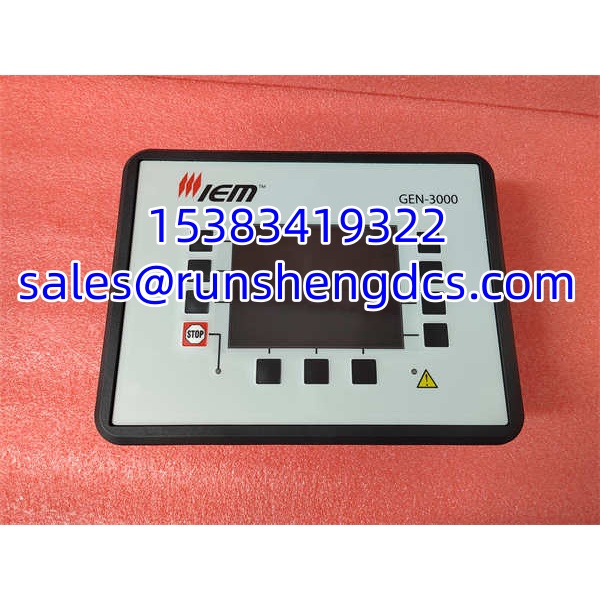
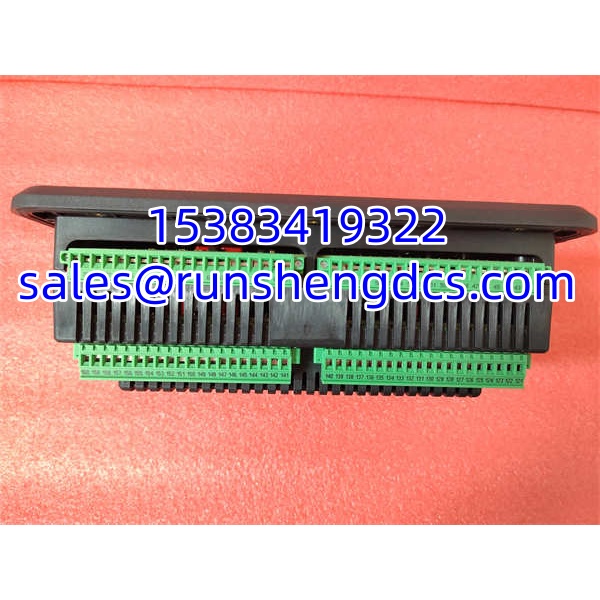

Description
Key Technical Specifications
| Parameter | Typical Value / Note |
|---|---|
| Model | easYgen-3500-5/P2 |
| Order Number | 8440-2145 |
| Brand | Woodward |
| Product Type | Parallel genset controller |
| Platform | easYgen-3000 series; used with LS-5 for multi-grid / multi-stage applications |
| Primary Role | Genset control, protection, synchronization, load sharing, and power-system management |
| Parallel Capacity | Up to 32 gensets in networked automatic sequencing |
| Engine Interface | CAN bus, SAE-J1939 and selected OEM engine protocols |
| Communications | Modbus RTU (slave); CANopen for RP-3500 remote panel up to 250 m |
| Measurement | True-RMS voltage/current for generator, bus, and mains |
| Logic Engine | LogicsManager programmable logic (Boolean + timers) |
| Configuration Tool | Woodward ToolKit via PC/laptop |
| Protection | Programmable engine/generator protection; AMF, sync, breaker control depending on configuration |
| Power Supply / I/O Count | Not confirmed for 8440-2145 specifically; verify against OEM nameplate and manual |
| Country of Origin | USA (Woodward; vendor-reported) |
Product Introduction
The Woodward easYgen-3500-5/P2 8440-2145 sits at the higher end of the easYgen-3000 family. Unlike a basic start/stop genset controller, this unit is designed for applications where generator sets must synchronize, share load, and interact with more than one grid or bus section. The “-5” designation, when paired with a Woodward LS-5 device, enables multi-grid and multi-stage power management — for example, managing a generator circuit breaker, a mains circuit breaker, and a bus-tie breaker across segmented switchgear.
For field teams, the controller’s value is that it can replace a failed or suspect easYgen-3500-5/P2 unit without redesigning the entire paralleling scheme — provided the replacement carries the same 8440-2145 configuration, firmware level, and LS-5 interaction settings. It integrates engine control over CAN/SAE-J1939, true-RMS electrical measurement, programmable protection, and LogicsManager logic, which often removes the need for an external PLC in simple to medium-complexity power systems.
QA/QC Transparency SOP
- Intake & Identity Verification
Confirm easYgen-3500-5/P2, 8440-2145, serial number, firmware revision, and hardware revision. Reject units with mismatched order numbers or evidence of non-OEPROM reflashing. - Power-Up & Display Check
Apply rated auxiliary supply per OEM manual. Verify CPU OK LED, display initialization, alarm history access, and real-time clock operation. - Communication Verification
Test CAN/SAE-J1939 engine handshake, Modbus RTU register read, and — if LS-5 is present — CAN communication between controller and LS-5. Confirm RP-3500 remote panel connectivity if applicable. - Protection & I/O Functional Test
Simulate representative alarms: overspeed, under/over voltage, under/over frequency, reverse power, and breaker feedback faults. Verify trip outputs, event logging, and fail-safe behavior. - Configuration Backup & Packaging
Download existing configuration with Woodward ToolKit before removal. After testing, package in ESD-safe materials with order number, firmware version, test date, and condition clearly labeled.
Field Engineer Gotchas
- “-5/P2” is not a generic easYgen-3500 label.
Risk: Swapping in an easYgen-3200, easYgen-3500XT, or a different 8440-xxxx variant.
Fix: Match 8440-2145 exactly and confirm the LS-5 option set. - LS-5 dependency is easy to miss.
Risk: Assuming the controller can manage multi-bus tie logic without LS-5.
Fix: Verify whether LS-5 hardware and CAN links are present in the existing switchgear. - Firmware and configuration are part of compatibility.
Risk: Installing a clean unit with default parameters into a live paralleling system.
Fix: Restore the original configuration and verify breaker mapping, droop/isochronous mode, and protection setpoints. - Modbus RTU does not mean full SCADA integration out of the box.
Risk: Expecting every register to match the plant SCADA map.
Fix: Validate register addresses, scaling, and alarm mapping before commissioning. - Surplus listings often inflate I/O counts.
Risk: Ordering based on “32 DI / 24 DO” figures pulled from other easYgen models.
Fix: Treat I/O counts as unverified for 8440-2145 unless confirmed on the nameplate or OEM manual.
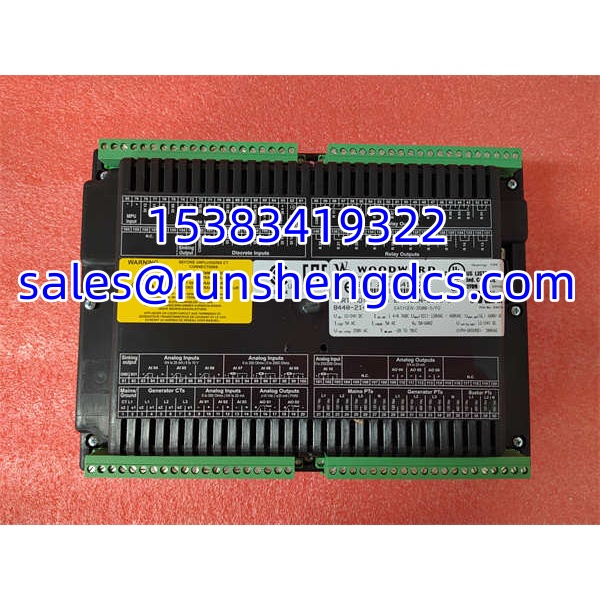
WOODWARD EASYGEN-3500-5 P2 8440-2145
Application Scenarios
- Multi-genset paralleling switchgear where an existing easYgen-3500-5/P2 has failed and the plant requires a like-for-like replacement.
- Multi-grid / multi-bus installations using LS-5 for mains, generator, and bus-tie breaker management.
- Island-mode power systems for oil and gas, marine, remote sites, or microgrids requiring up to 32-unit load sharing.
- CHP and distributed generation sites where Modbus RTU integration and programmable logic reduce external PLC dependency.
FAQ
Is 8440-2145 the same as any easYgen-3500?
No. The easYgen-3500 family includes many configurations. 8440-2145 defines a specific easYgen-3500-5/P2 variant and must be matched exactly.
What does the “-5” mean?
In Woodward documentation, the easYgen-3500-5 is associated with LS-5 interaction for multi-grid / multi-stage applications. Confirm the LS-5 option on the actual unit.
Can it run standalone without LS-5?
Possibly, but multi-grid and multi-bus tie functions may be limited. Verify the installed option set and application requirements.
Does it support Modbus TCP?
Not confirmed for this specific variant. easYgen-3500XT models reference Ethernet/Modbus TCP in some documentation, but 8440-2145 should be verified against its OEM manual.
Can I hot-swap it?
Not recommended unless the OEM manual and plant procedure explicitly allow it. Genset paralleling systems usually require controlled isolation.
Is this still produced by Woodward?
The easYgen-3000 family remains referenced in current documentation, but 8440-2145 is a specific configuration. Treat surplus stock as configuration-sensitive and verify firmware before purchase.
What warranty applies to surplus units?
Typical surplus warranty is 12 months, but confirm firmware integrity, configuration backup availability, and test records before acceptance.