
Description
Key Technical Specifications
| Parameter | Specification |
|---|---|
| Product Type | Enhanced Analog Output (AO) |
| Channel Count | 8 Independent Outputs |
| Output Signal Range | 4-20 mA (+6% Overrange) |
| Resolution | 12-bit |
| Accuracy | <0.25% of Full Scale Range (4-20 mA) |
| Output Isolation | None (Common Return, DC Coupled) |
| Operating Temp Range | 32°F to 140°F (0°C to 60°C) |
| Architecture | Triple Modular Redundancy (TMR) |
| Voting Logic | 2oo3 Data Voting per Channel |
| Calibration | Internal Self-Calibration via Reference Voltage |
Product Introduction
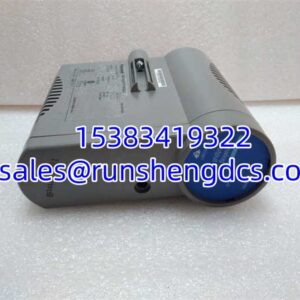
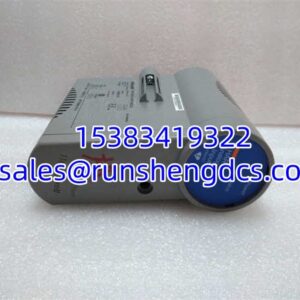
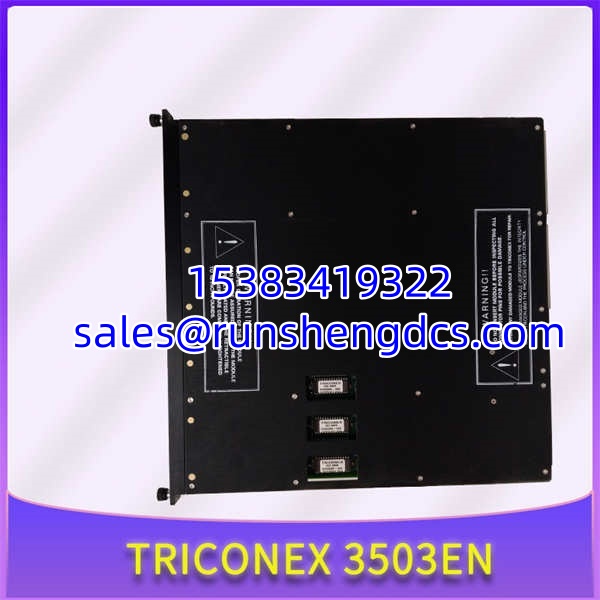
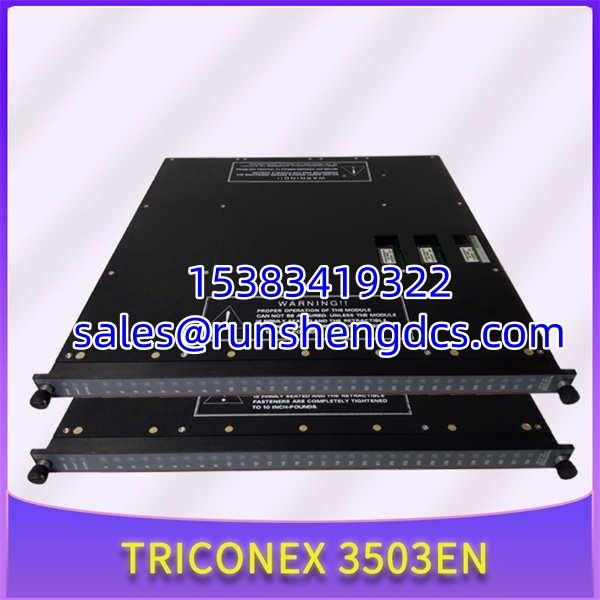
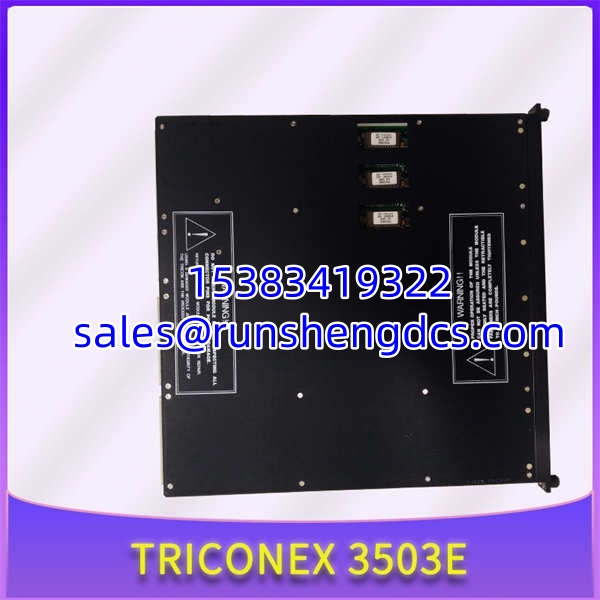
When your safety system needs to shut down a high-pressure valve, you cannot afford a noisy signal. The TRICONEX 3805E is an Enhanced Analog Output module built specifically for the Tricon TMR safety controller. It receives trip or control signals from the main processor, runs them through a 2-out-of-3 voting logic, and pushes a clean 4-20 mA signal to your field devices. I have pulled these out of refineries that have been running non-stop for two decades, and they still hold their calibration.
Engineers trust this specific board because it handles the dirty work of signal conversion without drifting. It boasts a 12-bit resolution with an accuracy of less than 0.25% FSR, meaning your valve position actually matches what the safety logic calculated. One thing to keep in mind: this board uses a common return with no channel-to-channel isolation. Ground loops will ruin your day, so make sure your shield grounding is perfect before you energize it.
Quality SOP & Tech Pitfalls (The Reality Check)
Before any TRICONEX 3805E leaves our bench, it goes through a strict protocol. We start with a visual counterfeit check, looking for reflowed solder or mismatched date codes. Next, it goes on a live Tricon test rack to verify the 4-20 mA output across the full span. We check insulation resistance with a Fluke 115 to ensure no internal shorts, log the firmware revision, and seal it in fresh anti-static packaging. I can provide the test video if you need peace of mind.
Here is the brutal reality of swapping these old boards: the 3805E has no channel isolation. I once watched a tech wire up a replacement 3805E and accidentally cross a ground wire. The resulting ground loop fried the common return path on three channels instantly. Also, never assume a “3805E” is an exact drop-in without checking the hardware revision suffix. A mismatched revision can cause the main processor to fault the entire I/O group during the initial handshake. Take a picture of the old board’s DIP switches and jumpers before you pull it.
Installation & Configuration Guide
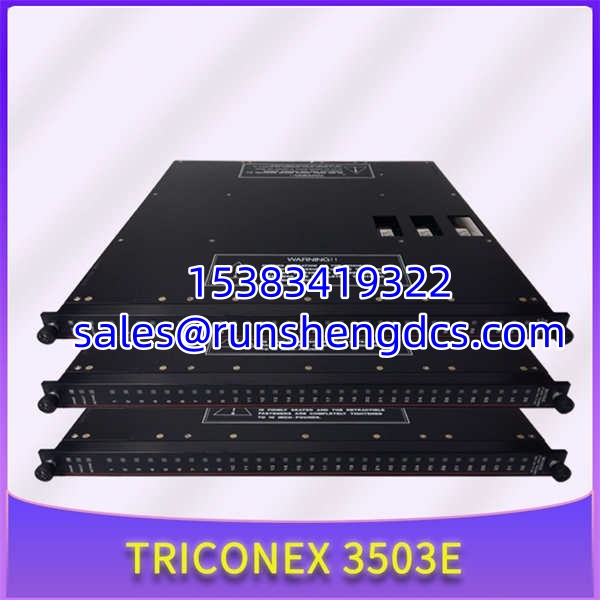
- Pre-Installation: ⚠️ SAFETY FIRST. Bypass the safety outputs in the software or put the system in a safe state. Wait at least 5 minutes for internal capacitors to discharge. Take high-resolution photos of the existing wiring and all jumper/DIP switch positions.
- Removal: Label every single wire with a sharpie. Do not rely on memory. Release the DIN rail clips carefully; old plastic gets brittle and snaps if you force it.
- Installation: Copy the DIP/Jumper settings exactly. This step prevents 90% of startup failures. Slide the new TRICONEX 3805E onto the DIN rail and press firmly until the backplane connector seats fully. Reconnect wires according to your photos.
- Power-On & Testing: Apply 24V DC power. Watch the module LEDs. The fault light should blink briefly during boot, then go out. Download the logic and force a single channel to 4 mA, then 20 mA, verifying with a multimeter at the terminal block.
Compatible Replacement Models
| Replacement Model | Compatibility Tier | Notes |
|---|---|---|
| TRICONEX 3805H | ✅ Drop-in Replacement | Hardware and software match. Often used as a direct factory substitute for the 3805E. |
| TRICONEX 3805 | ⚠️ Software Compatible | Base model. May require checking firmware compatibility or minor logic adjustments. |
| TRICONEX 3805E (Rev F) | ✅ Drop-in Replacement | Newer hardware revision. Backward compatible, but always verify with OEM docs. |
Frequently Asked Questions (FAQ)
Can I hot-swap the 3805E while the Tricon is running?
Yes, the Tricon system supports hot-swapping this module. However, I strongly advise doing it during a planned window. Old backplane connectors can be fragile, and pulling a board under load risks arcing.
Why is my 3805E showing a channel fault after installation?
Check your wiring first. Since this module has no isolation, a grounded shield or a shorted field wire will immediately trigger a fault. Also, verify the DIP switches match the old board exactly.
Is the 3805E still manufactured by Schneider?
No, it is officially obsolete. You are buying New Surplus or refurbished stock. Lead times vary wildly depending on who has it sitting on a shelf.
Can I use a standard 4-20 mA power supply to test it on the bench?
You can, but you need a proper load resistor (usually 250 ohms) across the output terminals. The module sources the current, so don’t connect it directly to a voltage source or you will damage the output stage.
Does this module have diagnostics I can read in TriStation?
Yes. TriStation will show you open wire, short circuit, and out-of-range faults per channel. It also reads the internal self-calibration status. If the calibration fails, the board is dead.
What happens if one of the three internal processors in the TMR fails?
Nothing to the field device. The 3805E uses 2oo3 voting. If one internal path dies, the other two outvote it, and the output stays exactly at the correct 4-20 mA setpoint. That is the whole point of TMR.