

Description
Key Technical Specifications
- Manufacturer: National Instruments (NI)
- Product Type: Analog Output Module for Compact FieldPoint
- Output Channels: 8 Independent Voltage Channels (0 to 10 V)
- Resolution: 12-bit DAC
- Update Rate: 200 Hz (Full-channel)
- Output Current: Up to 1 mA (internal); >10 mA (with 15-30 VDC external power)
- Overrange Capability: +0.2 V (Full scale 0-10.2 V for field calibration)
- Protection: Short-circuit protection, overcurrent detection, channel-to-backplane isolation
- Diagnostics: Red STATUS LED for overcurrent/wiring faults
- Power Supply: 24 VDC
- Operating Temperature: -40°C to +70°C
- Form Factor: Compact FieldPoint I/O Module
Product Introduction
Industrial process control relies on precise analog signals to keep valves, meters, and actuators in exact position. The NI CFP-AO-210 is an 8-channel voltage output module designed specifically for the Compact FieldPoint distributed I/O platform. It takes binary control values from your LabVIEW application and converts them into highly accurate 0-10V signals, eliminating the error-prone manual conversion steps during commissioning.
Bottom line—this module is built to survive brutal field environments while protecting your expensive downstream equipment. The CFP-AO-210 features an extended -40°C to +70°C operating range and includes built-in overcurrent detection that illuminates a red STATUS LED if a short circuit occurs. Honestly, the best feature is the HotPnP (Hot Plug and Play) capability, which allows you to swap out a failed module without powering down the entire Compact FieldPoint backplane, saving critical downtime during 3 AM troubleshooting.
Troubleshooting Quick Reference
| Fault | Probable Cause | Relevancy | Quick Check | Fix |
|---|---|---|---|---|
| Red STATUS LED Lit | Overcurrent or short circuit | High | Measure resistance at Vout/COM terminals | Disconnect field wiring; isolate shorted actuator |
| No Voltage Output | Missing backplane power | High | Verify 24 VDC at Compact FieldPoint base | Check power supply; reseat module on backplane |
| Erratic Output Signal | Ground loop or EMI | Medium | Check shield grounding at terminal base | Isolate signal cables from VFDs; verify COM wiring |
| Channel Stuck at 0V | Factory default or watchdog trip | Medium | Check LabVIEW software task state | Force output via software; verify no fault latches |
| Comm/Config Failure | Backplane recognition fault | Medium | Check NI MAX for module detection | Reseat module; verify backplane firmware |
| Low Drive Current | Missing external power | Medium | Measure voltage at Vsup terminal | Connect 15-30 VDC external supply for >10mA drive |
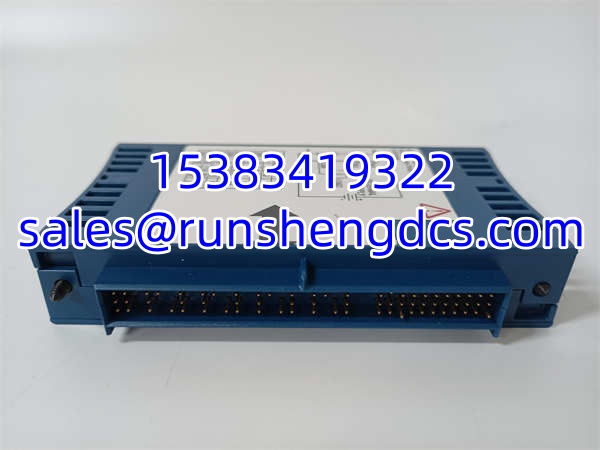
NI CFP-AO-210
Application Scenarios & Pain Points
- Subsea & Marine Robotics: Used in underwater crawler control systems where space is tight and reliability is paramount. The CFP-AO-210 provides PID output control for thrusters and hydraulic pumps, but saltwater intrusion at the terminal base can cause rapid corrosion if not properly sealed.
- Motor & Dyno Testing: Driving load signals to dynamometers to simulate torque. The 200 Hz update rate is fast enough for real-time motor characterization, but aging DAC components can introduce non-linearity at the upper voltage limits.
- Water Treatment Facilities: Controlling proportional valves for chemical dosing. The 0-10.2V overrange capability allows technicians to mechanically calibrate sticky valves, but field wiring faults frequently trigger the overcurrent protection.
- Legacy System Maintenance: Compact FieldPoint systems running 15+ years in remote pump stations. Finding verified replacements is tough because the 12-bit resolution is older tech, and mixing revisions can cause calibration scaling errors.