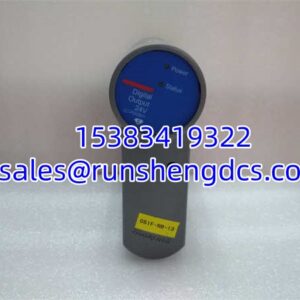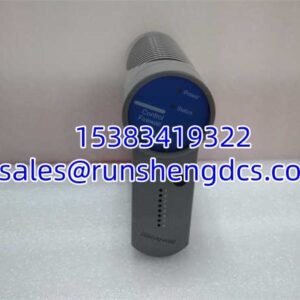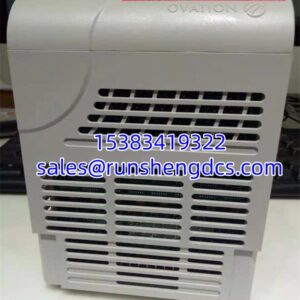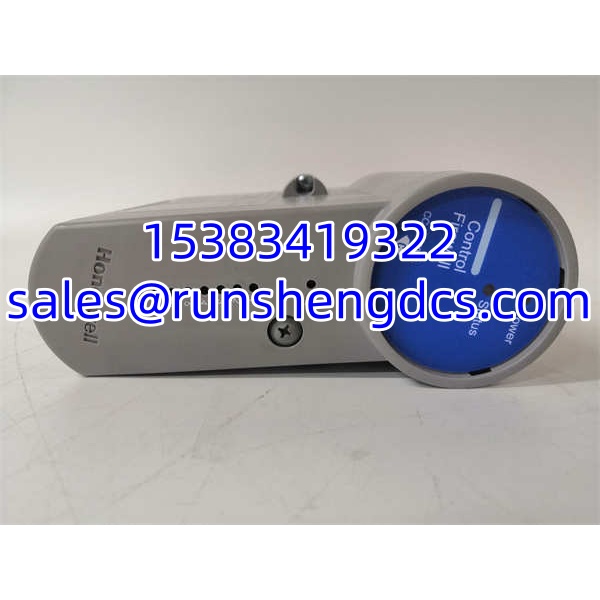

Description
Key Technical Specifications
| Parameter | Value |
|---|---|
| Product type | Control Firewall Module (FTE switch/firewall) |
| Associated IOTA | CC-TCF901 Control Firewall IOTA |
| Network role | Series C FTE communications center for a cabinet |
| Downlink ports | 8 ports for C300 controllers, Series C FIMs, FTEB modules |
| Uplink port | 1 port to supervisory FTE network / Level 2 control area |
| Power rating | 0.112 A @ 24 VDC |
| Supported controllers | C300 controllers and Series C I/O modules |
| Security behavior | Rejects non-control Ethernet messages; prioritizes downlink traffic |
| Diagnostics | Power-on and run-time self-diagnostics with fault indication |
| Typical use | Experion PKS / Experion LX Series C control networks |
Product Introduction
When an Experion cabinet starts throwing FTE link errors, the first instinct is to blame the C300 or the switch stack. More often, the problem sits at the cabinet boundary where supervisory traffic meets control traffic. The CC-PCF901 is the module that keeps that boundary clean. It sits on the CC-TCF901 IOTA and acts as the local FTE distribution point for C300 controllers, Series C FIMs, and FTE Bridge modules.
Its value is not in raw throughput specs. It is in traffic discipline. The module allows only valid C300-compliant messages into the controller domain and gives downlink control traffic priority when the fabric is saturated. That keeps broadcast storms, misrouted IP traffic, and non-control packets from dragging down the controller. Power draw is low at 0.112 A @ 24 VDC, and diagnostics are built in. Bottom line — it is a cabinet-level FTE firewall, not a general-purpose Ethernet switch.
QA/QC Transparency SOP
- Intake & Origin Verification: Verify part number CC-PCF901, associated Honeywell part reference such as 51405047-176 if present, serial number, revision, and country of origin against the nameplate. Reject units with missing labels, bent pins, or water damage.
- Live Functional Testing: Install the module on a CC-TCF901 IOTA in a test rack. Apply 24 VDC, verify power-up diagnostics, port link status, and fault indicators. Confirm downlink and uplink ports detect link partners.
- Electrical Parameter Tests: Measure 24 VDC input current and compare against the 0.112 A rating. Check connector continuity, ground paths, and insulation with a multimeter. Reject boards with shorted rails or corroded contacts.
- Firmware/Config Verification: Read module identity, revision, and diagnostic status through the test environment. No custom configuration is typically applied by the reseller; settings remain as received unless otherwise specified.
- Final QC & Anti-Static Packaging: Record test results, label the unit, and pack in ESD-safe materials. Include photos of the nameplate and connectors for traceability.
Field Engineer Gotchas
- Wrong IOTA pairing: The CC-PCF901 mounts on the CC-TCF901 IOTA. Forcing it onto a CC-TCNT01 or another IOTA will not work. Verify the base before pulling the old module.
- Uplink vs. downlink confusion: The ninth port is the uplink to the supervisory FTE network. Swapping uplink and downlink cabling can isolate the cabinet or create confusing link faults. Label ports before disconnecting anything.
- FTE redundancy errors: FTE relies on dual paths. Replacing one CC-PCF901 without verifying the redundant path can mask a second failure. Check both FTE channels after replacement.
- Power and grounding: It runs on 24 VDC at about 0.112 A. A weak or noisy 24 VDC supply can cause intermittent link drops. Confirm supply voltage under load before blaming the module.
- Revision mismatch: G3 and later revisions may differ in diagnostics or compatibility. Do not assume drop-in compatibility across revisions. Cross-check against the cabinet drawing and Experion documentation.
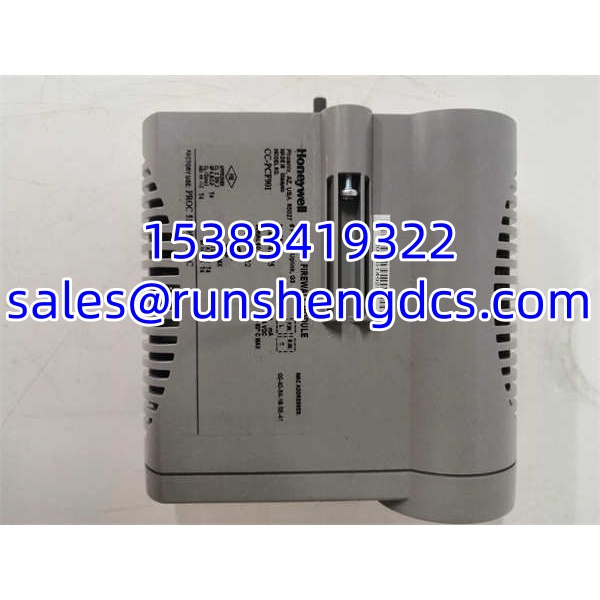
Honeywell CC-PCF901
Application Scenarios
- Refinery FCCU control cabinet: Keeps C300 controllers isolated from supervisory traffic during high-load HMI polling.
- Power plant boiler control: Maintains FTE integrity where redundant controllers and Series C I/O share a cabinet.
- Chemical batch reactor system: Prevents non-control broadcasts from affecting controller scan performance during recipe transitions.
- Pipeline compressor station: Supports Series C FIM and FTEB integration where remote cabinets connect back to an Experion supervisory network.
Case note: A mid-size chemical plant reported intermittent communication faults after a network upgrade. The uplink port on one cabinet had been re-patched into a general IT switch. Replacing the CC-PCF901 did not fix it. Restoring the correct uplink to the FTE network and verifying downlink priority cleared the fault. The module was doing its job; the cabling was not.
FAQ
Is the CC-PCF901 a regular Ethernet switch?
No. It is a control firewall and FTE distribution module for Honeywell Series C systems. It filters traffic and prioritizes control messages.
Can I use it outside an Experion PKS or LX system?
Not practically. It is designed for Series C cabinets, controllers, and FTE architecture. It is not a standalone managed switch.
What IOTA does it require?
CC-TCF901 Control Firewall IOTA. Do not substitute another IOTA without OEM confirmation.
Does it support fiber uplinks?
Fiber options are referenced for the Series C FTE firewall function, but the exact fiber capability depends on the installed configuration. Verify the cabinet BOM and module revision.
What is its power requirement?
0.112 A at 24 VDC. Confirm the cabinet 24 VDC supply can support all modules in the rack.
Is this module hot-swappable?
Treat it as a controlled replacement. FTE cabinets often have redundancy, but swapping live modules should follow site procedures and OEM guidance.
How do I confirm compatibility before buying?
Check the cabinet drawing, CC-TCF901 IOTA presence, controller model, Experion version, and the physical module nameplate revision.