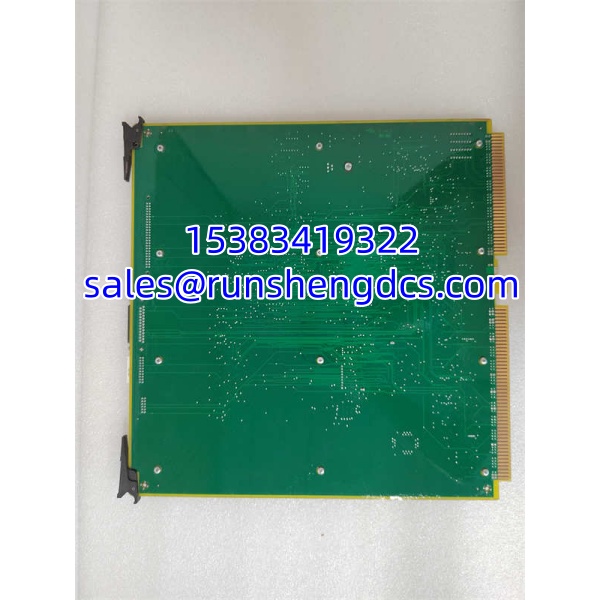

Description
Key Technical Specifications
| Parameter | Value / Note |
|---|---|
| Manufacturer | Honeywell |
| Part Number | 51403519-160 |
| Product Designation | K4LCN-16 |
| Product Family | TDC 3000 / TPS LCN node |
| Module Role | LCN processor / memory processor board |
| CPU | Motorola 68040 (K4 series) |
| Memory | 16 MW (megawords), TDC 3000 memory unit |
| Mounting | Slot 1 of TDC 3000 LCN card cage |
| Required Companions | LCN interface board, attribute board per node type |
| Typical Nodes | US, HM, NIM, AM, and other LCN nodes |
| Condition | Typically surplus, removed, or refurbished |
Product Introduction
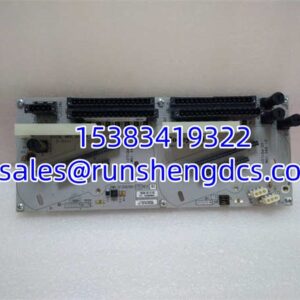
In a TDC 3000 or TPS cabinet, the K4LCN-16 is not a generic I/O card. It is the LCN processor board that gives a node its CPU and memory. The part number 51403519-160 corresponds to the K4LCN-16 assembly, which is used in LCN nodes such as Universal Stations, History Modules, Network Interface Modules, and Application Modules.
The naming is important for replacement. “K” identifies the kernel/main processor board family. “4” identifies a Motorola 68040 processor, which is a higher-performance CPU than the older K2/68020 boards. “LCN” means it carries the LCN node processor function. “-16” means 16 MW of memory, which matters because some TDC 3000 nodes require minimum memory for HM databases, US graphics, or application module loads. This board installs in slot 1 of the LCN card cage and works together with an LCN interface board and an attribute board such as EPDG, SPC, EPNI, or HM-specific boards.
QA/QC Transparency SOP
- Intake & Origin Verification — Record 51403519-160, K4LCN-16, serial number, node type, card cage tag, and slot position. Reject boards with damaged edge connectors, burnt components, or missing labels.
- Visual & Connector Inspection — Check the processor board, battery area, RAM modules, and LCN interface mating connectors. Look for corrosion, lifted traces, or previous rework.
- Live Functional Testing — Install in a verified TDC 3000/TPS LCN card cage. Confirm power-up, self-test status, LCN link behavior, and node initialization against the expected node role.
- Memory & Identity Verification — Confirm the board is recognized as a K4LCN-16 with the correct memory size. Compare it to the failed board’s label, node address, and system configuration.
- Final QC & Anti-Static Packaging — Label with full part number, node type, and test summary. Protect connectors, apply ESD packaging, and document the tested configuration for the receiving engineer.
Field Engineer Gotchas
- K2 and K4 are not interchangeable. A K2LCN board uses a 68020 CPU; a board uses a 68040 CPU. Swapping them can prevent the node from loading its configuration.
- The “-16” memory size matters. Some nodes may run with smaller memory, but HM, US, or AM nodes may require a specific memory size for databases, graphics, or application loads.
- Slot 1 is mandatory. The processor board must be installed in slot 1 of the LCN card cage. Other slots are for attribute boards, LCN interface boards, or I/O boards.
- It is not a standalone replacement.he works with an LCN interface board and an attribute board. A failed node may involve any of those boards, not only the processor.
- Node address and load must match. Even if the board powers up, the LCN node address, redundancy pairing, and software load must match the original configuration.
- Do not hot-swap without procedure. LCN node work can affect HMI, historian, and NIM communication. Follow site change control and redundancy procedures.
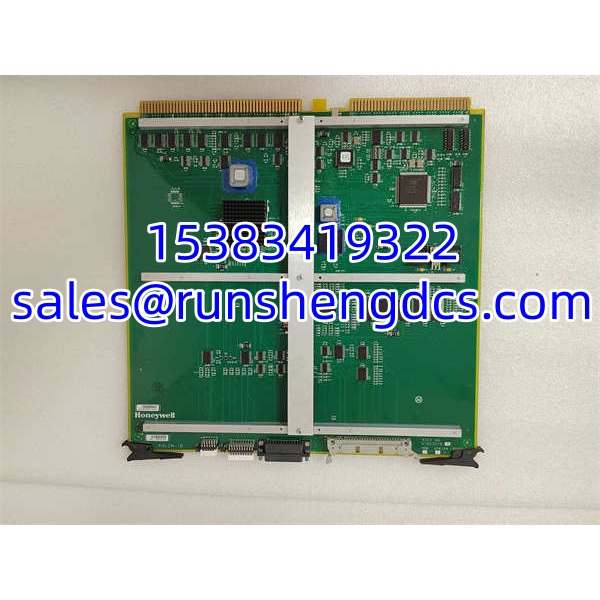
HONEYWELL 51403519-160 K4LCN-16
Application Scenarios
- Replacing a failed LCN processor board in a TDC 3000 Universal Station where the node no longer initializes.
- Supporting a legacy History Module that req a for sufficient memory and processor performance.
- Maintaining an aging NIM or AM node in a refinery or chemical plant where OEM spares are limited.
- Keeping a TDC 3000/TPS system stable during a phased migration to Experion or another modern DCS platform.
FAQ
Yes. 51403519-160 is commonly listedhe LCN processor board for TDC 3000/TPS systems.
K = kernel/main processor board; 4 = Motorola 68040 CPU; LCN = Local Control Network node processor; 16 = 16 MW memory.
Can I replace it with a K2LCN board?
No. K2LCN boards use a 68020 CPU and different performance/memory characteristics. They are not direct substitutes.
Does it work in any TDC 3000 slot?
No. The processor board belongs in slot 1 of the LCN card cage. Other slots hold attribute or interface boards.
Is it still sold new by Honeywell?
Treat it as a discontinued/legacy spare. Most available stock is surplus, removed, or refurbished.
What information should I provide before ordering?
Full label photo, node type, card cage tag, slot position, failed board part number, and the existing LCN node configuration.