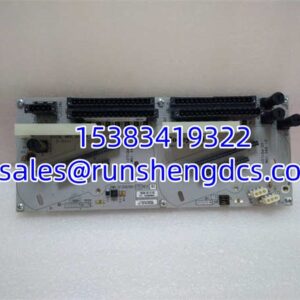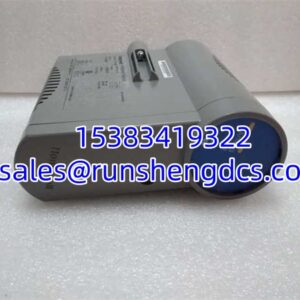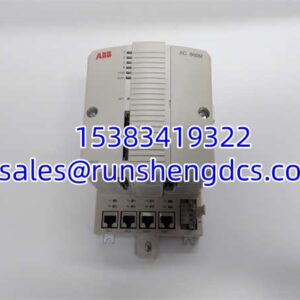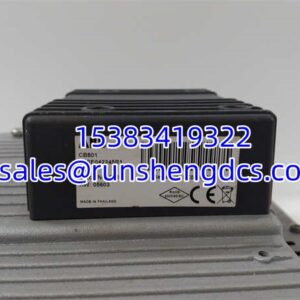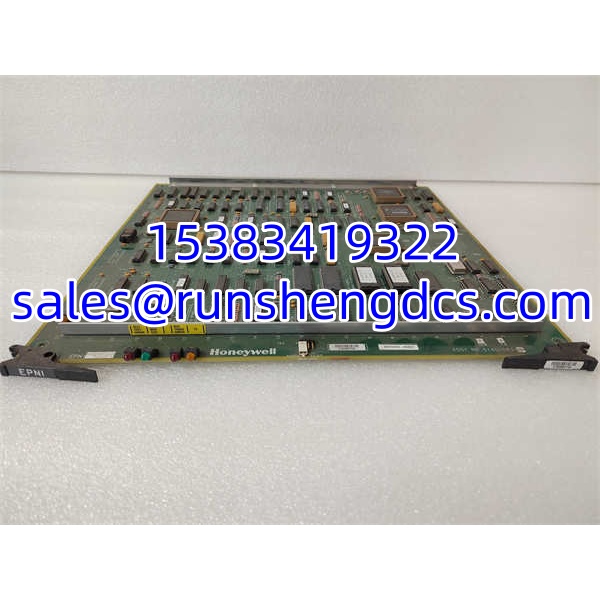
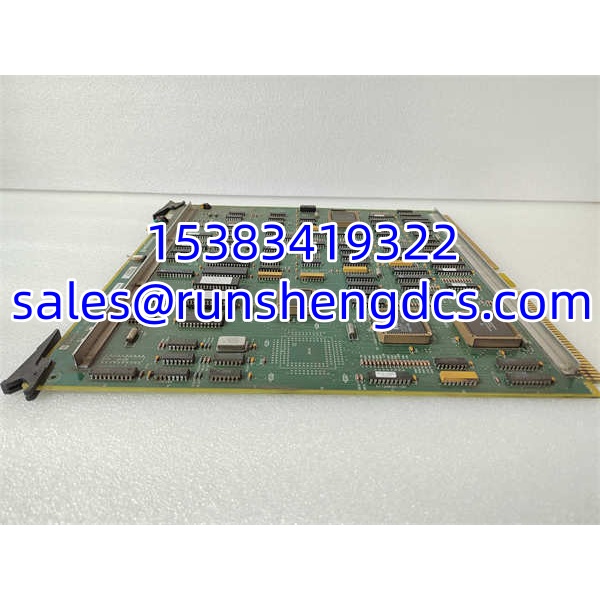

Description
Key Technical Specifications
| Parameter | Typical Value |
|---|---|
| Product Type | EPNI card — Enhanced Process Network Interface |
| System Platform | Honeywell TDC 3000 / TPS DCS |
| Part Number | 51401583-100 |
| Functional Role | NIM main logic board; LCN-to-UCN bridge |
| Associated Assembly | Used with NIM modem I/O card to configure a complete NIM |
| Power Dissipation | Approximately 6.0 W |
| Dimensions | 12.7 × 7.6 × 3.8 cm (5.0 × 3.0 × 1.5 in) |
| Weight | Approximately 0.2 kg (0.5 lb) |
| Certifications | CE, FM, CSA |
| Mounting | NIM assembly / DCS rack-mounted |
| Availability | Legacy; surplus/refurbished; verify revision |
Product Introduction
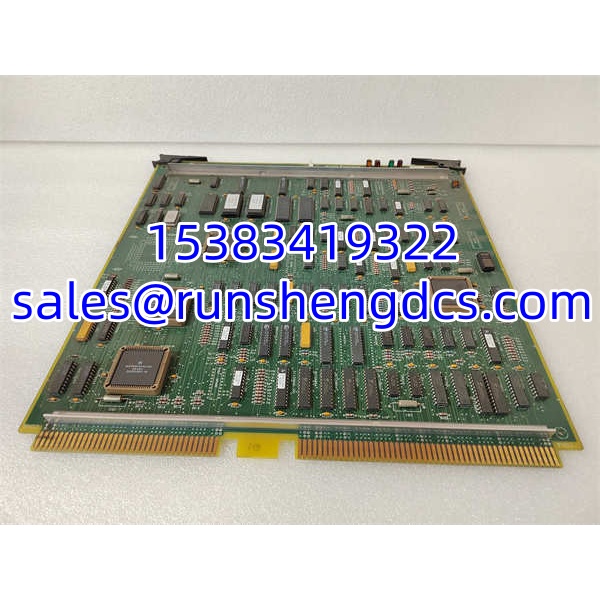
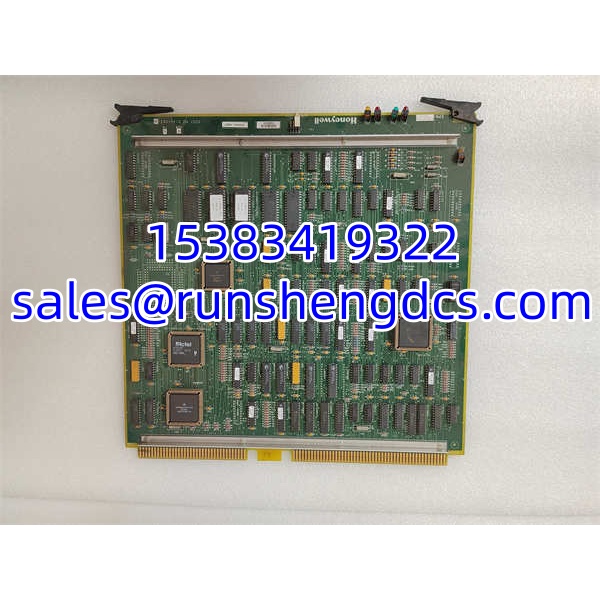
The Honeywell 51401583-100 EPNI is not a standalone controller or generic Ethernet card. It is the Enhanced Process Network Interface board that functions as the main logic board within a Honeywell Network Interface Module. In TDC 3000 and TPS architectures, the NIM provides the critical bridge between the Local Control Network and the Universal Control Network, and the EPNI card is the logic element that enables that translation.
This module is typically installed as part of a complete NIM assembly together with the associated NIM modem I/O card. Because the EPNI operates at the network-bridge layer of the DCS, a failed or mismatched unit can affect LCN-to-UCN communications rather than a single I/O point. Treat it as a revision-controlled spare and verify compatibility with the existing NIM hardware, rack configuration, and system software level before installation.
QA/QC Transparency SOP
- Intake & Origin Verification: Record the full part number 51401583-100, any revision suffix, serial number, and physical condition. Confirm it is an EPNI/NIM logic board and not a C300 controller, FTE interface, or unrelated Honeywell card.
- Live Functional Testing: Install the card in a compatible NIM assembly and verify that the NIM powers up, initializes, and is recognized by the TDC 3000/TPS system. Check LCN and UCN communication status.
- Electrical Parameter Tests: Inspect connectors, backplane contacts, edge fingers, and insulation condition. Measure power consumption where possible and check for signs of overheating, corrosion, or damaged components.
- Configuration Verification: Confirm the NIM node address, firmware level, and system recognition. Back up the existing DCS configuration before removing the original EPNI card.
- Final QC & Anti-Static Packaging: Protect connectors, apply anti-static packaging, and include part number, revision, serial number, and test notes. Do not ship without label confirmation.
Field Engineer Gotchas
- It is a NIM logic board, not a general-purpose Ethernet module: The EPNI bridges LCN and UCN in TDC 3000/TPS systems. It is not the same as an Experion PKS FTE network interface.
- Do not replace the EPNI alone without verifying the NIM assembly: The EPNI works with the NIM modem I/O card. A mismatch between the two can prevent the NIM from initializing correctly.
- Revision sensitivity is real: Hardware revisions may differ in firmware, connector layout, or compatibility. Always match the full part number and confirm against the OEM manual.
- LCN impact is systemic: A faulty EPNI can affect multiple nodes on the LCN-to-UCN path. Plan replacements during a controlled maintenance window and verify system backups first.
- Surplus listings can be ambiguous: Some sources describe the 51401583-100 broadly as a DCS interface card. For field use, treat it specifically as an EPNI/NIM component for TDC 3000/TPS unless OEM documentation confirms otherwise.
HONEYWELL 51401583-100 EPNI
Application Scenarios
- TDC 3000/TPS NIM restoration: Used when replacing a failed EPNI board inside an existing NIM assembly during a planned outage.
- Legacy DCS bridge maintenance: Supports continued LCN-to-UCN communication where migration to Experion PKS is not yet feasible.
- Brownfield spare-parts support: Serves as a controlled replacement for plants maintaining older Honeywell DCS infrastructure.
- NIM fault isolation: Helps determine whether a communication fault resides in the EPNI logic board, modem I/O card, backplane, or network cabling.
Anonymized case note: A plant reported intermittent LCN communication alarms after a previous NIM maintenance activity. The replacement EPNI card seated correctly, but the NIM failed to establish stable UCN communication. The issue was traced to a revision mismatch between the EPNI board and the associated NIM modem I/O card. After installing a matched 51401583-100 revision and verifying NIM configuration, communication stabilized.
FAQ
Is the 51401583-100 EPNI a controller?
No. It is the main logic board for a Honeywell NIM, providing the LCN-to-UCN bridge function in TDC 3000/TPS systems.
What system does it belong to?
It belongs to the Honeywell TDC 3000 / TPS DCS family as part of the Network Interface Module.
Can it be used in Experion PKS racks?
Not as a direct substitute. Experion PKS uses different network interfaces such as FTE modules and C300 controllers. The 51401583-100 EPNI is specific to the TDC 3000/TPS NIM architecture.
Does it work alone?
No. It is used with the NIM modem I/O card to form a complete NIM assembly.
What should I check before buying surplus stock?
Confirm the full part number, revision, serial number, physical condition, NIM compatibility, and test evidence. Verify that it matches the existing NIM hardware and system configuration.
Is this module still in production?
Availability varies. Most units are sold as surplus or refurbished stock. Confirm current status and revision with the supplier.