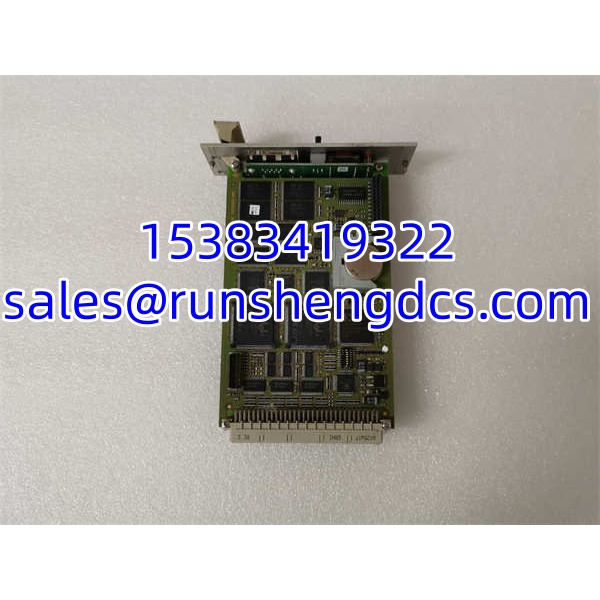

Description
Key Technical Specifications
| Parameter | Detail |
|---|---|
| Manufacturer | HIMA (HIMA Paul Hildebrandt GmbH) |
| Model | F8650X |
| Product Type | Central module / safety CPU module |
| Target Platform | PES H51q-MS, H51q-HS, H51q-HRS |
| Processor | 2× Intel 386EX, 32-bit, 25 MHz, clock-synchronized |
| Memory | 1 MB OS Flash-EPROM; 1 MB user Flash-EPROM; 1 MB SRAM |
| Interfaces | 2× electrically isolated RS-485 serial ports |
| Safety Watchdog | 24 V output, short-circuit protected, up to 500 mA |
| Diagnostics | 4-digit matrix display, error LEDs, toggle switches, ACK button |
| Slot Requirement | 8 SU |
| Power | 5 V DC, 2 A |
| Operating System | BS41q/51q V7.0-8 (05.31) or later for extended features |
| Ethernet Support | Via F8627X communication module, not native on F8650X |
| Safety Rating | IEC 61508 SIL 3 |
| Platform Status | Legacy; verify OEM support and migration path |
Product Introduction
The HIMA F8650X is a central processor module for legacy HIMA PES H51q safety instrumented systems. It is not a general-purpose PLC CPU, Ethernet gateway, or modern safety controller. Its primary role is to execute safety-related application logic, manage diagnostics, and coordinate with I/O and communication modules inside the H51q architecture.
The module uses two clock-synchronized Intel 386EX processors. This dual-processor design supports deterministic safety execution and internal monitoring rather than high-throughput data processing. Ethernet connectivity is not built into the F8650X itself; it is provided through the F8627X communication module via the backplane bus.
Because this module carries application logic, OS configuration, and safety watchdog behavior, replacement is not a simple hardware swap. The site must verify revision compatibility, OS version, station address, RS-485 settings, and whether the module is part of a redundant configuration.
QA/QC Transparency SOP
- Intake & Origin Verification — Confirm model , HIMA branding, serial number, hardware revision, and system origin. Reject units with damaged backplane connectors, burnt components, missing display panels, or unclear labeling.
- Visual & Mechanical Inspection — Check 8 SU housing, ejector mechanisms, front-panel display, LEDs, RS-485 connectors, and PCB condition. Verify no corrosion, cracked connectors, or prior unauthorized modification.
- Power & Diagnostic Test — Apply 5 V DC and verify module startup, display activity, LED status, and absence of immediate fault indications.
- RS-485 & Watchdog Verification — Confirm both isolated RS-485 ports are present and responsive. Verify watchdog 24 V output behavior and short-circuit protection where testable without affecting live safety systems.
- Configuration Preservation — Record hardware revision, display codes, switch settings, and any readable OS or application identifiers. Do not erase Flash-EPROM or SRAM content unless explicitly authorized by the site engineering team.
- Final QC & Packaging — Document test results, cosmetic condition, and configuration notes. Pack in anti-static materials with nameplate photos, revision data, and handling instructions.
Field Engineer Gotchas
- It is a central module, not an Ethernet communication card. The provides RS-485 interfaces; Ethernet requires the F8627X module.
- Not TMR or ARM-based. Claims of triple redundancy, ARM Cortex-A9, or 1.2 GHz processors do not apply to the .
- OS version matters. Features such as ELOP II TCP and extended station addressing require BS41q/51q V7.0-8 (05.31) or later.
- Station address switches are critical. RS-485 station numbers are set via hardware switches. Incorrect settings can prevent communication with PADT or other nodes.
- Application logic may reside in Flash/SRAM. Replacing the module without preserving or restoring the site application can result in loss of safety logic.
- Legacy platform risk. H51q systems are mature/legacy. Confirm spare availability, OS support, and migration strategy with HIMA before long-term deployment.
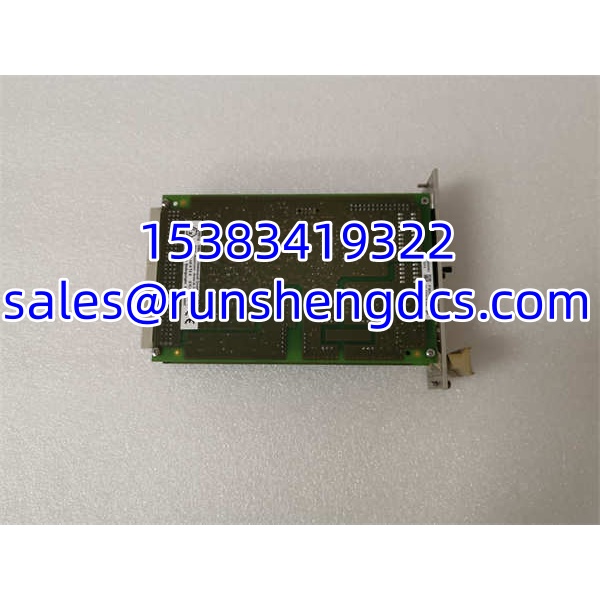
HIMA F8650X
Application Scenarios
- H51q SIS CPU replacement. A legacy HIMA safety rack reports a central module fault. A verified with matching revision and OS version restores controller operation after station address and watchdog settings are confirmed.
- Brownfield spare provisioning. A refinery keeps one tested as a spare because the H51q system is no longer easy to source. The spare is stored with revision records and configuration notes.
- Diagnostic troubleshooting. A maintenance team uses the 4-digit display and error LEDs to isolate whether a fault originates in the central module, communication path, or I/O subsystem before committing to replacement.
FAQ
Yes. It is a central processor module for HIMA PES H51q safety systems.
Does it have built-in Ethernet?
No. Ethernet connectivity is provided through the F8627X communication module.
What processors does it use?
Two Intel 386EX, 32-bit, 25 MHz, clock-synchronized.
Is it SIL 3 certified?
The is documented for use in IEC 61508 SIL 3 applications within H51q systems.
Not automatically. Compatibility depends on the specific H51q variant, OS version, hardware revision, and site configuration.
Do you provide application download or SIL commissioning?
No. Application restoration, OS loading, safety validation, and commissioning must be performed by the site engineering team or a qualified HIMA service provider. We provide hardware identification, inspection, and functional testing support only.