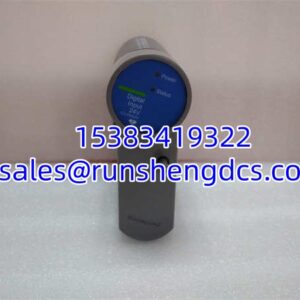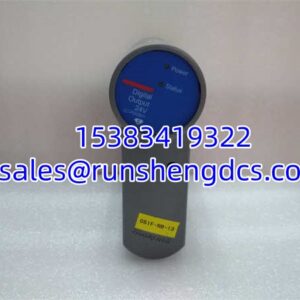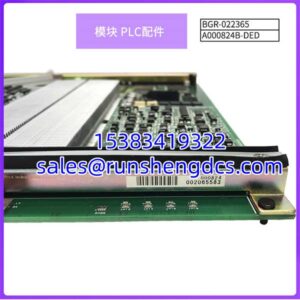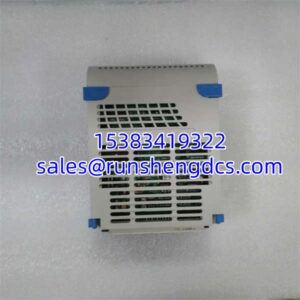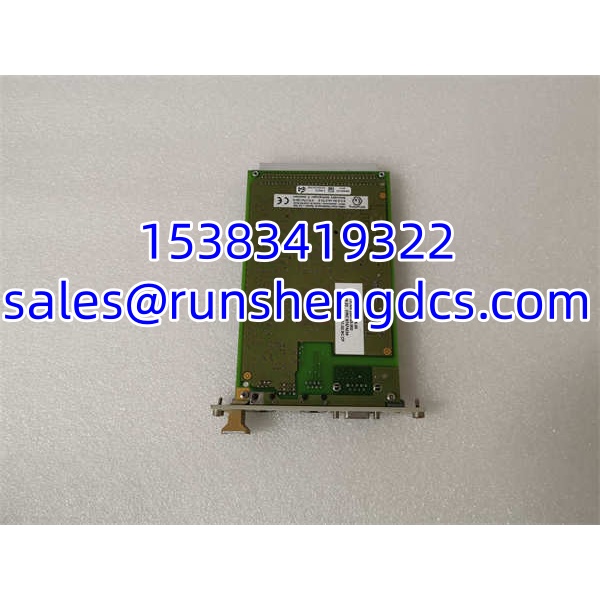

Description
Key Technical Specifications
| Parameter | Typical / Verified Detail |
|---|---|
| Part Number | F8627 / F8627X (F8627X also referenced as 984862765) |
| Manufacturer | HIMA |
| Product Family | HIMax safety controller / communication module |
| Primary Function | Safety control logic execution and/or system communication |
| Redundancy | TMR or redundant CPU architecture reported for F8627/F8627X |
| Safety Rating | IEC 61508 SIL 3; some references cite SIL 4 capability |
| Communication | Ethernet, RS-232/RS-485, Profibus, Modbus, Profinet reported |
| Processor | Intel 386EX or ARM Cortex-A9 variants reported |
| Memory | 1 MB Flash-EPROM + 1 MB SRAM reported; higher-memory variants also cited |
| Typical Applications | ESD, BMS, F&G, turbine protection, high-integrity process shutdown |
| Mounting | HIMA HIMax rack/chassis module |
| Operating Temperature | Approx. -20 °C to +55 °C reported for some variants |
Product Introduction
Safety controllers are the last line of defense between a process upset and a plant incident. The HIMA F8627/F8627X sits in that critical path, executing safety logic and managing communication within a HIMax-based SIS. Unlike a standard PLC, this module is designed for fault-tolerant operation — typically using redundant or TMR architectures — so that a single internal failure does not cause either a dangerous failure or an unnecessary trip.
The F8627 is generally referenced as a HIMax safety controller, while the is more commonly described as a communication-capable safety controller or communication processor. It supports integration with DCS, SCADA and third-party systems through Ethernet and serial/fieldbus interfaces, with Modbus and Profibus frequently cited. In practice, this module is found in ESD systems, burner management, fire and gas detection, turbine protection and other high-integrity applications.
Bottom line: this is not a generic communication card. It is a safety-certified module whose replacement requires correct model identification, firmware matching and configuration download. Treat any listing that does not distinguish F8627 from as incomplete.
QA/QC Transparency SOP
- Intake & Origin Verification — Confirm exact model ( vs. ), part number, revision, serial number and firmware version. Reject units with damaged connectors, burnt components, missing labels or signs of moisture ingress.
- Visual & Mechanical Inspection — Inspect backplane connectors, front-panel indicators, mounting hardware and PCB condition. Check for rework, corrosion or physical stress on communication ports.
- Power-Up & Self-Test — Install in a compatible HIMA rack and apply rated power. Verify boot sequence, LED status and built-in self-test results. Confirm no persistent ERROR or FAULT indications.
- Communication Verification — Test Ethernet and/or serial interfaces per configuration. Validate Modbus/Profibus connectivity where applicable. Confirm that the module can be addressed and that diagnostic registers are readable.
- Safety Function Validation — Where a test rack is available, verify redundant/TMR behavior, watchdog operation and fail-safe response. Download and archive existing configuration and event logs.
- Final QC & Packaging — Seal in ESD-safe packaging with photos, firmware version, test results and a packing list noting which tests were performed and which require on-site validation.
Field Engineer Gotchas
- The “X” variant is frequently described as a communication-capable module, while may refer to a base safety controller. Swapping without verifying system configuration can break communication or safety logic.
- Firmware and configuration are critical. A replacement module with mismatched firmware may boot but fail to synchronize with redundant partners or reject the existing application load.
- Do not treat it as a standalone gateway. Even when it supports Modbus or Profibus, the module operates within a HIMA safety architecture. Removing it from context can create dangerous misconfigurations.
- Redundancy matching matters. In TMR or redundant systems, all partners must be compatible in hardware revision, firmware and configuration.
- Surplus units may carry hidden faults. A module that powers up and communicates may still have degraded self-diagnostics or memory errors. Always review diagnostic logs before commissioning.
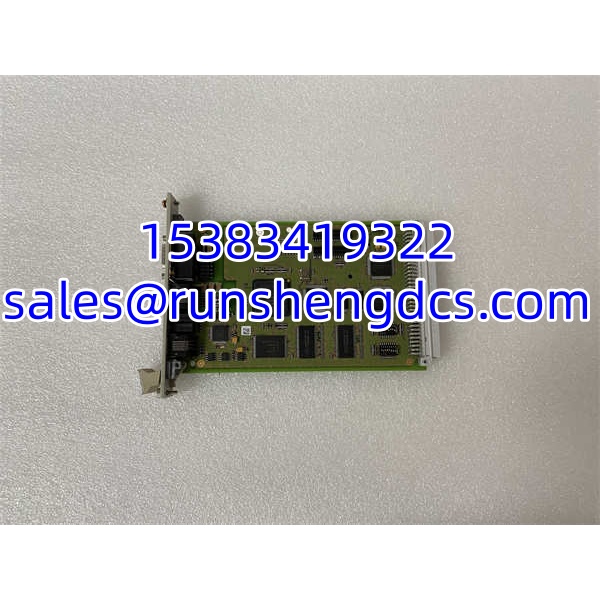
HIMA-F8627
Application Scenarios
- Refinery ESD system. The / executes emergency shutdown logic and communicates trip status to the DCS via Modbus or Profibus.
- Power plant turbine protection. Used within a HIMax rack to monitor critical trips and maintain safe turbine shutdown under fault conditions.
- Chemical plant fire and gas system. Provides SIL-rated logic execution and communicates alarm/trip states to operator stations and third-party safety networks.
- Brownfield SIS maintenance. Replaces an aging or failed HIMax module during a planned outage, restoring redundancy and communication to the safety network.
FAQ
Not necessarily. Public listings often distinguish as a safety controller and as a communication-capable safety controller or communication module. Confirm the exact designation before procurement.
Does it support Modbus and Profibus?
Yes, Modbus and Profibus are commonly cited for . Profinet and serial interfaces are also reported, but supported protocols depend on firmware and system configuration.
Can I use it outside a HIMA rack?
No. The / is a HIMA HIMax system module and requires a compatible HIMA backplane, power supply and system configuration.
Is it SIL 3 or SIL 4?
SIL 3 per IEC 61508 is widely cited; some references mention SIL 4 capability for certain applications. The certified level depends on the specific module, firmware and application design.
Should I download the configuration before removal?
Yes. Always archive the application load, configuration, firmware version and diagnostic logs before removing the module from service.
Is this module still supported by HIMA?
Availability and support status should be confirmed directly with HIMA or an authorized distributor, as HIMax product generations and support policies evolve over time.