
Description
Key Technical Specifications
| Parameter Name | Parameter Value |
|---|---|
| Product Model | MVME5100 |
| Manufacturer | GE Fanuc / Motorola |
| Processor | MPC755 (PowerPC) @ 400MHz |
| Memory | 512MB ECC SDRAM (Expandable to 1GB) |
| Front-Side Bus | 100MHz |
| Cache | 32KB L1 + 2MB Backside L2 |
| Storage | 17MB Onboard Flash |
| I/O Expansion | Dual PMC Slots (64-bit PCI) |
| Network | Dual 10/100BaseTX Ethernet |
| Serial | Dual 16550 Compatible UARTs |
| Form Factor | Single Slot VME64 |
| Operating Temp | 0°C to 55°C (Commercial) / -20°C to 71°C (Extended) |
Product Introduction
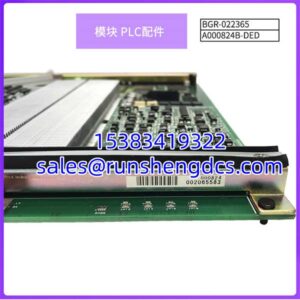
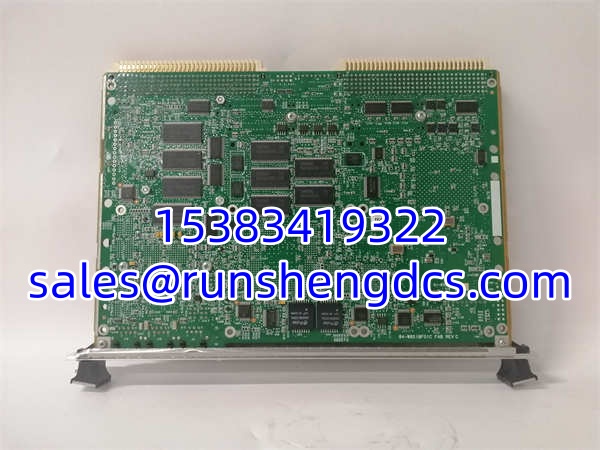
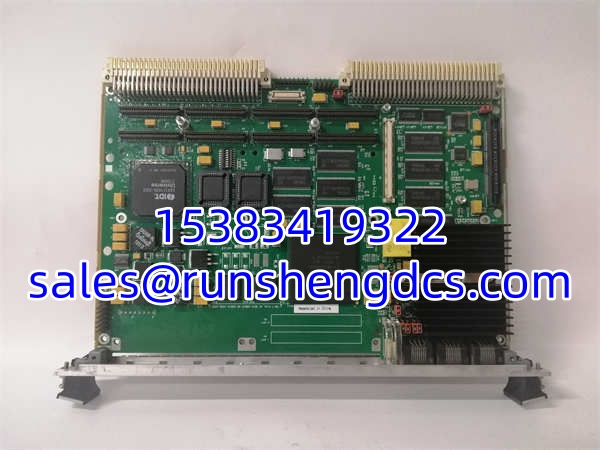
VMEbus backplanes don’t care about your upgrade schedule, but the MVME5100 keeps aging control systems alive when OEM support has long since evaporated. This single-board computer slots into a standard VME64 connector and delivers 400MHz PowerPC performance with 512MB of ECC-protected RAM. It’s not a modern embedded PC; it’s a purpose-built industrial controller designed to run deterministic code for decades without crashing.
Field engineers trust the MVME5100 because it bridges the gap between legacy VME infrastructure and modern I/O requirements. The dual PMC slots let you add custom I/O or communication cards without redesigning the entire backplane. With 17MB of onboard flash for boot code and a 100MHz front-side bus, the MVME5100 handles real-time control loops that would choke on generic industrial PCs. Bottom line — if your system still runs VME, this board is likely your best path forward.
QA/QC Transparency SOP
- Intake & Origin Verification: We inspect the MVME5100 under magnification to verify the GE/Motorola silkscreen, check for re-tinned VME pins, and confirm the MPC755 processor revision matches the labeled speed grade.
- Live Functional Testing: The board is installed in a VME test chassis. We verify POST completes, the 400MHz clock is stable, and both Ethernet ports negotiate 10/100Mbps without CRC errors.
- Electrical Parameter Tests: Using a Fluke 115, we measure VME bus power draw and verify the 5V/3.3V rails stay within ±5% tolerance under full memory load.
- Firmware/Config Verification: We connect via the serial console to read the boot monitor version and confirm the 17MB flash is writable and the 512MB SDRAM passes memory test patterns.
- Final QC & Anti-Static Packaging: After passing all tests, the MVME5100 is sealed in an anti-static bag with a printed QC sign-off sheet detailing the exact processor speed, memory size, and firmware version.
Field Engineer Gotchas
- VME Pin Inspection: The 160-pin VME connector is fragile. I’ve seen techs bend pins during installation because they didn’t align the guide rails first. Always use a VME extraction tool, never pry with a screwdriver.
- PMC Card Compatibility: Not all PMC cards work in the . The second PMC slot shares PCI bus resources. Verify your PMC card’s bus requirements in the manual before assuming it’ll work.
- Thermal Management: The MPC755 runs hot. If your VME chassis lacks forced air, add a heatsink to the CPU. I’ve seen throttling issues at 50°C ambient without adequate cooling.
- Flash Write Cycles: The 17MB flash has limited write endurance. Don’t use it as a scratchpad for logging. Store runtime data on external storage; keep flash for boot code and config only.
GE MVME-5100
Application Scenarios
- Power Plant Turbine Control: Running real-time governor algorithms in VME-based Mark VIe precursor systems where latency must stay under 1ms.
- Rail Signaling Interlock: Executing safety-critical logic in wayside cabinets with extended temperature ranges (-20°C to 71°C).
- Semiconductor Fab Equipment: Controlling wafer handling robots in legacy VME chassis where retrofitting to PXI would cost $200k+.
FAQ
Can I replace an MVME2400 with this board?
Yes, the is backward compatible with MVME2400 software in most cases. However, verify your PMC card I/O mapping, as the rear I/O pinout differs. Check the migration guide in the OEM manual.
Does this support VME64x?
No. The is a VME64 (32/64-bit) board, not VME64x. It will work in VME64x backplanes but won’t use the extended 64-bit data path. Performance is still adequate for most control tasks.
What OS does it run?
Typically VxWorks, LynxOS, or RTEMS. The doesn’t run Windows or Linux natively. Verify your BSP (Board Support Package) matches the MPC755-400 before upgrading.
Is the 512MB SDRAM soldered or socketed?
Soldered. You cannot upgrade the onboard 512MB. If you need 1GB, you must use the optional RAM500 memory expansion module on the PMC夹层 connector.
Can I hot-swap this in a live VME chassis?
Absolutely not. VME is not hot-swappable. Pulling the while powered will damage the backplane and potentially other boards. Always power down the entire chassis.
What’s the difference between commercial and extended temp versions?
The extended temp version (-20°C to 71°C) uses screened components and different thermal paste. The commercial version (0°C to 55°C) is cheaper but will fail in unheated outdoor cabinets. Verify your environment before ordering.