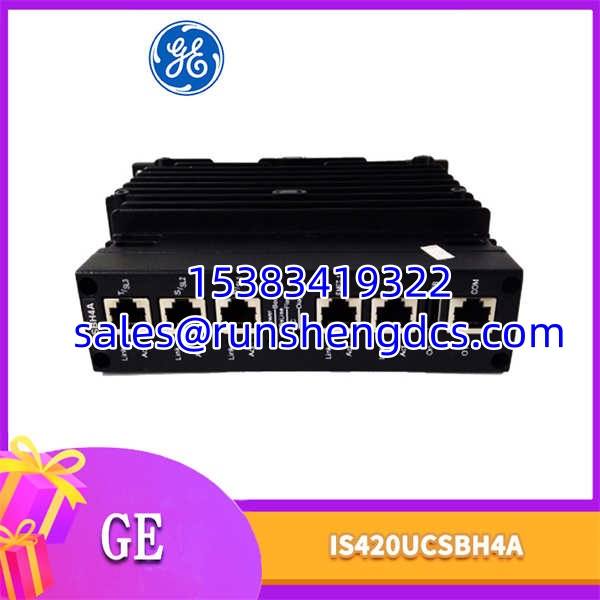

Description
Key Technical Specifications
| Parameter | Specification |
|---|---|
| Product Type | UCSB (Universal Control System Board) Controller Module |
| Manufacturer | GE (General Electric) |
| Model Number | IS420UCSBH4A |
| System Platform | Mark VIe / Mark VIeS Speedtronic Control System |
| Application Scope | Gas turbine, steam turbine, hydro turbine, EX2100e exciter, LS2100e load share |
| Processor | Intel EP80579 @ 1066 MHz |
| Memory | 256 MB DDR2 SDRAM (ECC) + 512 MB Flash |
| Operating System | QNX Neutrino (real-time, multitasking RTOS) |
| Control Language | Control Block Language (analog and digital blocks); ladder logic |
| I/O Architecture | No local/backplane I/O — communicates exclusively via IONet to distributed IS220 I/O packs |
| I/O Capacity | Up to 768 points (via distributed I/O packs) |
| Communication Interfaces | IONet (private 10/100Base-TX Ethernet, RJ-45); additional Ethernet ports for HMI, historian, peer-to-peer; USB port for service access |
| Time Synchronization | IEEE 1588 Precision Time Protocol (PTP), synchronized to within 100 µs across R/S/T IONets |
| Redundancy Architecture | Simplex, dual-redundant, or TMR (Triple Modular Redundant) |
| Redundancy Switchover | < 50 ms (hardware-level via VME bus) |
| Supply Voltage | 28 VDC (nominal); 18–36 VDC operating range |
| Cooling Method | Fanless conduction cooling (heat-sink fins on enclosure); vertical airflow required |
| Operating Temperature | -30°C to +65°C (-22°F to +149°F) |
| Storage Temperature | -40°C to +85°C (-40°F to +185°F) |
| Humidity | 5% to 95% RH, non-condensing |
| Enclosure Rating | IP20 |
| Dimensions | ~6.4″ × 8.1″ × 1.4″ (~163 mm × 206 mm × 36 mm) |
| Weight | ~2.4 lbs (~1.1 kg), excluding packaging |
| Mounting | Direct panel mount (sheet metal); captive fasteners; keyed connectors |
| Certifications | UL E207685, Class I Div 2 Groups A/B/C/D, Class I Zone 2, ATEX (DEMKO12ATEX1114875X), CE |
| Software Tools | ToolboxST (within ControlST suite) for configuration, download, and diagnostics |
| Hardware Revision | H4A (later-build revision with improved component longevity) |
| Battery | None required (Flash-based non-volatile storage) |
| Fan | None (fanless design — UCSBH4A, UCSBSIA, UCSBHIA are all fanless) |
Product Introduction
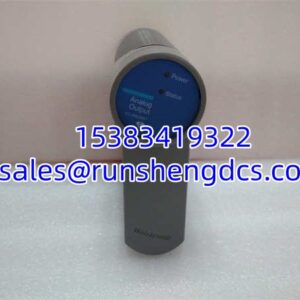
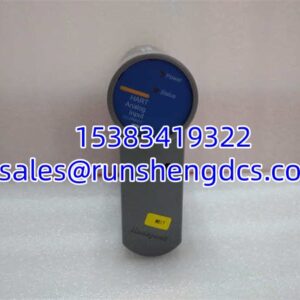
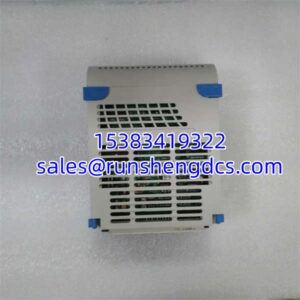
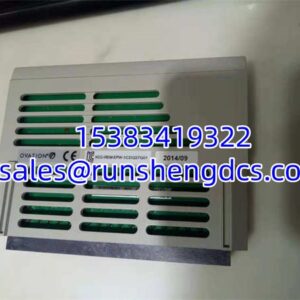
The IS420UCSBH4A is the H4A hardware revision of GE’s UCSB controller family within the Mark VIe Speedtronic platform. Unlike legacy Speedtronic controllers that hosted I/O on a backplane, the UCSB is a standalone computer — it contains no local I/O slots and instead communicates with distributed IS220 I/O packs over GE’s private IONet Ethernet network. Powered by a 1066 MHz Intel EP80579 processor running QNX Neutrino RTOS, it executes application logic (control block language and ladder) with deterministic scan times, while IEEE 1588 PTP keeps all controllers and I/O packs time-synchronized to within 100 microseconds across the R, S, and T redundant IONets. The H4A revision is a fanless, conduction-cooled design with no battery, meaning there are no moving parts or consumables to fail — a critical reliability advantage in turbine control applications where mean time between failures directly translates to avoided forced outages.
Bottom line — the IS420UCSBH4A is a field-proven controller that remains in active service across thousands of GE turbine installations worldwide, but GE has been transitioning customers to newer platforms. Every IS420UCSBH4A on the secondary market today is surplus or pulled-from-service stock. Before deploying a replacement, verify the hardware revision (H4A) matches your existing controllers — mixing revisions in a redundant or TMR configuration can cause compatibility issues. Confirm the QNX OS image and application code version are compatible with your current ToolboxST/ControlST software release. And because the UCSB has no local I/O, a controller swap does not disturb field wiring — the I/O packs continue sampling and buffering data on IONet even while the controller is offline, which means you can hot-swap a failed UCSB in a redundant configuration without tripping the turbine. Always back up the application code and configuration from the surviving controller before attempting any replacement.
Troubleshooting Quick Reference
| Fault | Probable Cause | Relevancy | Quick Check | Fix |
|---|---|---|---|---|
| Controller not communicating on IONet | IONet cable fault, IP conflict, or IONet switch failure | High | Check front-panel Ethernet LEDs; ping controller IP from engineering workstation | Verify IONet cable and switch port; check IP configuration in ToolboxST; replace controller if port is dead |
| Controller fails to boot / no OS load | Corrupted Flash memory or OS image | High | Observe front-panel status LEDs during power-up; connect via USB to check boot messages | Re-flash QNX OS image via ToolboxST; replace controller if Flash is unrecoverable |
| Redundancy switchover failure | Mismatched hardware revision or application code version between controllers | High | Compare hardware revision (H4A label) and OS/application version on both controllers | Ensure both controllers match in revision and software; re-download application to standby controller |
| I/O data stale or missing on controller | IONet communication loss to specific IS220 I/O packs | Medium | Check I/O pack status in ToolboxST; verify IONet topology (R/S/T ring integrity) | Reseat IONet cables at I/O pack; check for broken ring segment; replace faulty I/O pack or cable |
| Controller overheating | Blocked airflow around heat-sink fins or high ambient temperature | Medium | Visually inspect controller enclosure for dust/debris blocking fins; check cabinet ambient temperature | Clean fins; verify cabinet cooling fans and airflow; relocate controller if ambient exceeds +65°C |
| IEEE 1588 time sync loss | Grandmaster clock failure or IONet switch PTP configuration error | Low | Check time sync status in ToolboxST diagnostics; compare timestamps across controllers | Verify grandmaster clock operation; check switch PTP settings; re-sync controllers |
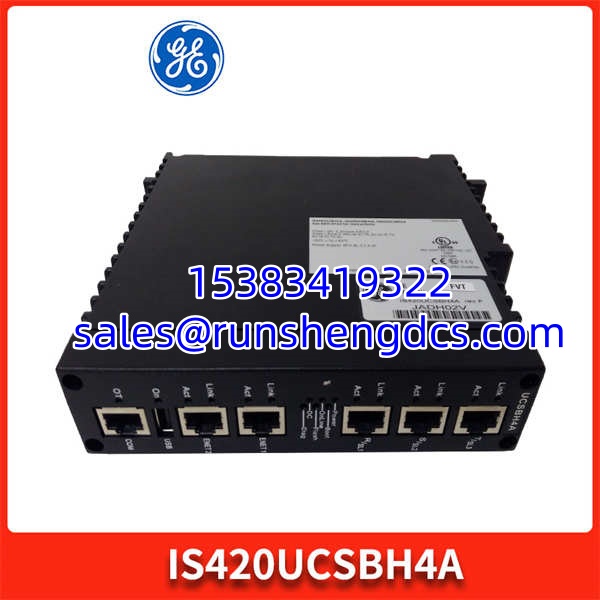
GE IS420UCSBH4A
Application Scenarios & Pain Points
Gas turbine speed and temperature control in combined-cycle power plants: In a 7FA combined-cycle unit, the IS420UCSBH4A executes the core turbine control algorithm — fuel stroke positioning, exhaust temperature control (CTTEMP), acceleration rate limiting, and flame detection logic. The controller reads combustion dynamics from IS220 I/O packs via IONet, computes the fuel demand in real time, and outputs position commands to the electrohydraulic servo valves. A failed UCSB in a simplex configuration means an immediate turbine trip; in a redundant configuration, the standby controller takes over in under 50 ms, but the root cause must be diagnosed before the standby also fails. The fanless design is critical here — a failed fan in a turbine enclosure at 50°C ambient would cause rapid thermal shutdown of the controller itself.
TMR (Triple Modular Redundant) protection in critical steam turbines: In a nuclear or fossil steam turbine application, three IS420UCSBH4A controllers operate in TMR configuration, each independently reading the same speed and vibration inputs from separate IONets (R, S, T). The TMR voter compares the three controller outputs and selects the majority result, masking a single controller failure without any bump or trip. If one UCSB fails, the system degrades to dual-redundant operation — still protected, but no longer fault-tolerant to a second failure. The IEEE 1588 time synchronization ensures all three controllers sample inputs at exactly the same instant, which is essential for the TMR voter to make valid comparisons. A drifted clock on one controller can cause false voter mismatches and nuisance trips.
EX2100e exciter control for generator voltage regulation: In a generator excitation system, the runs the EX2100e application, regulating generator terminal voltage by controlling the thyristor firing angle in the power bridge. The controller reads generator voltage and current from IS220 analog input packs, computes the required field current, and outputs firing commands via IS220 discrete output packs. A failed UCSB means loss of automatic voltage regulation — the exciter may fall back to manual mode or trip the generator breaker. The 28 VDC supply is typically derived from the station battery, so loss of station DC power is a common root cause of simultaneous multi-controller failures in a redundant configuration.