
Description
Key Technical Specifications
| Parameter | Value |
|---|---|
| Product Type | UCSB Controller |
| Series | Mark VIe / Mark VIeS |
| Part Number | IS420UCSBH4A |
| Processor | Intel EP80579 @ 1066 MHz |
| Memory | 256 MB DDR2 SDRAM |
| Storage | 512 MB Flash |
| Operating System | QNX Neutrino RTOS |
| I/O Interface | IONet (dedicated Ethernet for Mark VIe I/O packs) |
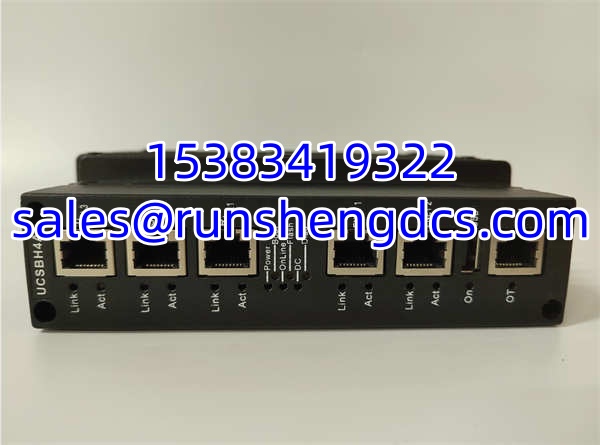
| Ethernet Ports | ENET1, ENET2, plus IONet ports (verify per front panel) |
| USB Port | Yes (service/config use) |
| Power Input | 28 VDC, micro-mini Mate-N-Lok connector |
| Cooling | Fanless (UCSBH4A) |
| Operating Temp | −30 °C to +65 °C (verify with OEM datasheet) |
| Certifications | UL E207685; ATEX UL 12 ATEX 1114875X |
| Configuration Tool | ToolboxST |
Product Introduction
A Mark VIe controller swap is not the time to discover a firmware mismatch, a bad Flash image, or a missing backup. The IS420UCSBH4A is GE’s fanless UCSB controller for Mark VIe and Mark VIeS systems, running application code on a 1066 MHz Intel EP80579 processor with QNX Neutrino RTOS. It does not host I/O on a backplane. Instead, it talks to distributed I/O packs through IONet, a dedicated Ethernet network built for Mark VIe field I/O traffic.
This variant is used where panel space, heat, and maintenance access matter. No fans and no battery reduce two common aging failure points. The H4A carries 256 MB DDR2 SDRAM and 512 MB Flash, which is sufficient for typical Mark VIe application loads while keeping the controller compact. It is rated for −30 °C to +65 °C operation and carries UL and ATEX hazardous-location approvals, so it fits turbine panels, compressor shelters, and balance-of-plant enclosures. Treat it as a Mark VIe/VIeS controller, not a generic PLC.
QA/QC Transparency SOP
- Intake & Origin Verification — Confirm IS420UCSBH4A label, serial number, board revision, and power connector type. Photograph all labels. Reject units with cracked housings, damaged Mate-N-Lok pins, or missing revision data.
- Live Functional Testing – Power at 28 VDC on a test bench. Verify Power, Boot, COM, and ONL LEDs. Confirm QNX Neutrino boot, ToolboxST communication, and IONet link status. Run a short application load or diagnostics if a licensed test environment is available.
- Electrical Parameter Tests — Measure 28 VDC input current at idle and under load. Check USB port continuity, Ethernet port link negotiation, and insulation on the power connector. Flag any over-current draw or intermittent Ethernet links.
- Firmware/Config Verification — Read processor ID, firmware revision, Flash health, and application image status. Archive the readout. Do not reflash surplus controllers unless the end user authorizes it.
- Final QC & Anti-Static Packaging — Seal in ESD bags with desiccant. Include test summary, LED status photos, firmware revision, and power-draw readings. No “tested OK” label without logged data.
Field Engineer Gotchas
- Firmware/Application Revision Mismatch — A UCSBH4A with older Flash content may boot but fail to join IONet or load the application. Fix: Compare firmware and application revision with the existing controller before swapping. Warning: Do not flash a live turbine controller during an outage unless you have a verified backup and rollback plan.
- H4A vs H1A/H3A Confusion – The H4A is fanless; the H3A uses dual redundant fans. They are not always drop-in identical for thermal or mechanical fit. Fix: Check panel airflow, mounting clearances, and the approved BOM. War story: A site swapped an H3A location with an H4A without checking ambient temperature — the controller ran, but the panel exceeded its thermal margin during summer load.
- IONet vs ENET Port Mix-Up — IONet ports carry Mark VIe I/O traffic; ENET ports are for HMI, peer links, historians, or engineering access. Fix: Trace cables before unplugging anything. Warning: Plugging an IONet cable into an ENET port will not bring the I/O network up.
- 28 VDC Power Connector Risk — The micro-mini Mate-N-Lok connector is small and easy to force. Fix: Verify pinout, polarity, and crimp quality. Warning: A loose 28 VDC connection can cause intermittent controller resets that look like network faults.
- USB and Backup Discipline — The USB port is useful, but it is not a backup strategy. Fix: Export application, configuration, and controller identity through ToolboxST before removal. Blunt advice: If you pull a controller without a backup, you are gambling.
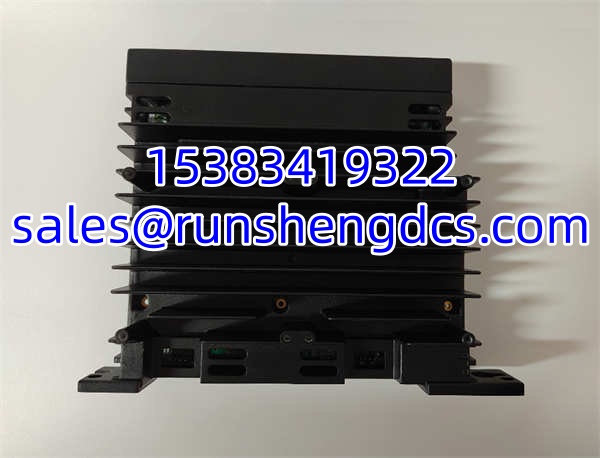
GE IS420UCSBH4A
Application Scenarios
- Gas turbine Mark VIe replacement — A failed UCSB controller must be replaced during a short outage while keeping IONet communication to analog, discrete, and turbine I/O packs intact.
- EX2100e excitation control panel — The IS420UCSBH4A runs application code for excitation systems where fanless hardware reduces dust ingestion and maintenance intervals.
- LS2100e drive or auxiliary control — Used where a compact, fanless Mark VIe controller interfaces with field I/O through IONet rather than a traditional backplane.
- Hazardous-location panel upgrade — The UL and ATEX approvals support deployment in classified areas, provided the enclosure and wiring meet site certification requirements.
FAQ
Q: Is the IS420UCSBH4A a PLC?
A: No. It is a Mark VIe/Mark VIeS UCSB controller running QNX Neutrino RTOS and communicating with I/O packs over IONet.
Q: Does it have a fan?
A: No. The UCSBH4A is fanless. The IS420UCSBH3A is the variant with dual redundant fans.
Q: What processor does it use?
A: Intel EP80579 at 1066 MHz.
Q: How much memory does it have?
A: 256 MB DDR2 SDRAM and 512 MB Flash.
Q: Can I use it in EX2100e or LS2100e systems?
A: Yes. It is listed for EX2100e, LS2100e, and Mark VIe applications. Confirm the approved application load with site documentation.
Q: Does it support Mark VIeS safety applications?
A: Mark VIeS safety functions require the correct safety-rated controller, I/O, and certified configuration. The is a UCSB controller, but SIL suitability depends on the full system build. Verify with the current GE safety manual.
Q: What software configures it?
A: ToolboxST is used for configuration, diagnostics, and application management.