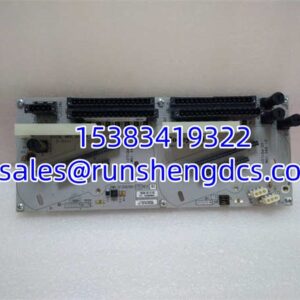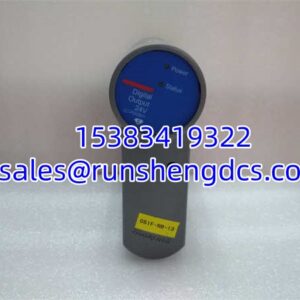

Description
Key Technical Specifications
| Parameter | Typical Value / Note |
|---|---|
| Manufacturer | GE Energy / GE Boards & Turbine Control |
| Model | IS220PDIAH1A |
| Alternate Number | 336A4940CSP1 |
| Product Type | Discrete Input I/O Pack (PDIA) |
| Control System | GE Mark VIe / IS200 |
| Communication | Dual Ethernet IONet ports (ENet1 / ENet2) |
| Input Function | Discrete / contact status acquisition via terminal board |
| Input Channels | Typically 16–24 discrete inputs depending on terminal board; verify with GEH manual |
| Nominal Voltage | 28.0VDC |
| Minimum Operating Voltage | 27.4VDC |
| Contact Wetting / Input Voltage | Up to 32VDC |
| Operating Temperature | -30 to 65°C |
| Mounting | Plugs into Mark VIe terminal board; DIN-rail style terminal assemblies are used in the system |
| Certifications | UL E207685; UL DEMKO 12 ATEX 1114875X (Class I Div 2 / ATEX Zone 2 when paired with approved terminal boards) |
| Compatible Terminal Boards | IS200TBCIH4C, IS200STCIH1A, IS200STCIH8A, IS200TBCIH2C, IS200TCIH2A |
| Status Indicators | Power, ENet1, ENet2, ASTN, and channel/relay-related LEDs |
Product Introduction
Turbine panels do not forgive vague I/O. A missed limit switch, a floating contact, or a noisy discrete channel can trip a permissive, block a start sequence, or force an unnecessary outage. The IS220PDIAH1A sits exactly where those signals enter the Mark VIe architecture: it is a PDIA discrete input I/O pack that interfaces field contacts through an approved terminal board and reports status to the controller over redundant IONet Ethernet.
This pack is not a generic PLC card. It is built for GE Mark VIe turbine and critical-process I/O, where channel isolation, hazardous-area approvals, and deterministic communication matter more than raw channel count. It runs from a 28VDC supply with a 27.4VDC minimum, supports dual Ethernet links, and operates from -30 to 65°C. Bottom line — if your cabinet already runs Mark VIe PDIA I/O, this is the correct replacement family, not a candidate for “close enough” substitutions.
QA/QC Transparency SOP
- Intake & Origin Verification: Record model, alternate number 336A4940CSP1, and serial/lot data. Inspect for corrosion, burnt connectors, missing screws, and non-OEM repairs.
- Live Functional Testing: Power the pack on a verified 28VDC supply. Confirm ENet1/ENet2 link LEDs, ASTN behavior, and IONet communication with a test controller or simulated IONet node.
- Electrical Parameter Tests: Measure supply input, continuity across power pins, and insulation where applicable. Verify no shorted channels or abnormal current draw before connecting to a live terminal board.
- Firmware/Config Verification: Read application/firmware identity from the pack. Confirm it matches the installed Mark VIe project requirements. Back up readouts for traceability.
- Final QC & Anti-Static Packaging: Seal in ESD bags with desiccant. Label model, test date, supply voltage, and any firmware revision observed. Do not ship loose.
Field Engineer Gotchas
- Firmware/Application Mismatch: A PDIA pack with the wrong application code may power up but fail to join IONet cleanly. Check the firmware/application readout before installing it in a running turbine panel.
- Terminal Board Compatibility: The PDIA pack does not work alone. It must mate with the correct IS200 terminal board. Using the wrong board can break channel mapping, feedback signals, and hazardous-area approval.
- DIP/Jumper/ID Errors: Some Mark VIe I/O assemblies rely on board ID or terminal-board identification chips. If the pack cannot confirm the terminal-board type, it may refuse to enable I/O. Verify the terminal board part number before swapping.
- Wiring and Torque Discipline: Field wiring must follow the GEH manual for wire size, termination, and screw torque. Loose terminals create intermittent faults that look like module failures.
- Power Quality and ESD: Supply must be clean 28VDC nominal. Undervoltage below 27.4VDC can cause unstable behavior. Always use ESD protection when handling the pack outside the cabinet.
GE IS220PDIAH1A 336A4940CSP1
Application Scenarios
- Gas turbine auxiliary permissives: Lube oil pressure switches, vent valve position contacts, and cooling fan run proofs feed into Mark VIe through the PDIA pack.
- Steam turbine protection annunciation: Overspeed relay contacts, trip solenoid feedback, and emergency-stop circuits require clean discrete acquisition.
- Hazardous-area process skids: When paired with approved terminal boards, the assembly supports Class I Div 2 / ATEX Zone 2 installations where field contacts enter the control system.
- Balance-of-plant interlocks: Pump run feedback, breaker auxiliary contacts, and damper limit switches can be consolidated into Mark VIe discrete inputs.
FAQ
1. Is the IS220PDIAH1A a discrete input or output module?
It is a discrete input I/O pack (PDIA) for Mark VIe. It acquires field contact/switch status through a terminal board.
2. Does it plug directly into a DIN rail by itself?
No. The PDIA pack mates with a Mark VIe terminal board. The terminal board may be panel-mounted or part of a DIN-rail assembly, but the pack itself connects to the terminal board.
3. What voltage does it need?
Nominal 28.0VDC with a minimum of 27.4VDC. Contact wetting/input voltage can be up to 32VDC.
4. How many input channels does it have?
Sources vary between 16 and 24 discrete inputs depending on the terminal board and configuration. Confirm the exact count from the GEH manual and the installed terminal board.
5. Can it be used in hazardous areas?
Yes, when paired with approved terminal boards. It carries UL E207685 and UL DEMKO 12 ATEX 1114875X for Class I Div 2 / ATEX Zone 2 applications.
6. Will any Mark VIe PDIA pack replace this one?
Not automatically. The application code, terminal-board compatibility, and firmware must match the existing system. A PDIB or other revision may require validation before drop-in use.
7. Is surplus stock safe to buy?
It can be, if tested properly. Demand power-up verification, IONet communication check, firmware readout, and traceable origin. Do not install untested packs in turbine protection circuits.