
Description
Key Technical Specifications
| Parameter | Value |
|---|---|
| Product Model | IC660BBD110 (Input) / IC660EBD110 (Output) |
| Manufacturer | GE Fanuc / GE Industrial Systems |
| Product Type | 16-Point Discrete I/O Block |
| Nominal Voltage | 115 VAC |
| Operating Range | 93-132 VAC, 47-63 Hz |
| Isolation | 1500V (Field to Bus) |
| Thresholds | Programmable 25% – 85% |
| Input Filter | 10-100 ms (Software Configurable) |
| Bus Protocol | Genius Bus (Daisy Chain) |
| Diagnostics | Open/Short Circuit Detection |
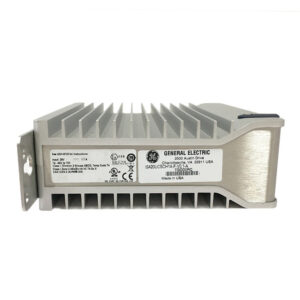
| Dimensions | 8.83″ x 3.34″ x 3.91″ |
| Weight | 1.8 kg (4 lbs) |
Product Introduction
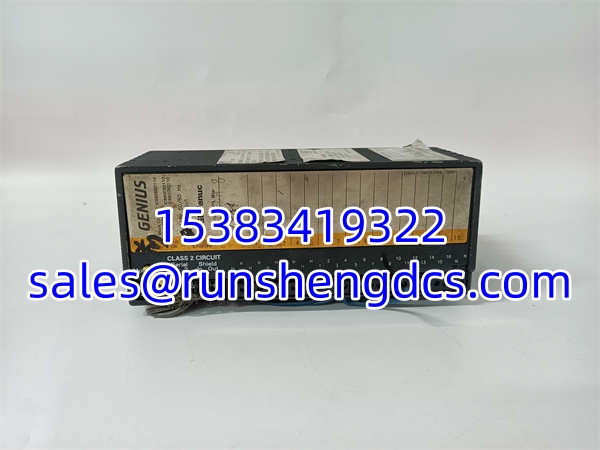
Old Genius Bus racks are tough to keep alive, and the GE IC660BBD110 is often the first card to show its age when field wiring gets wet or noisy. This isn’t just a dumb terminal block; it’s a smart 16-point input module that handles its own signal conditioning and diagnostics right at the machine. Engineers specifically target the GE IC660BBD110 when they need to retrofit legacy 115VAC control panels without ripping out the entire Genius Bus backbone.
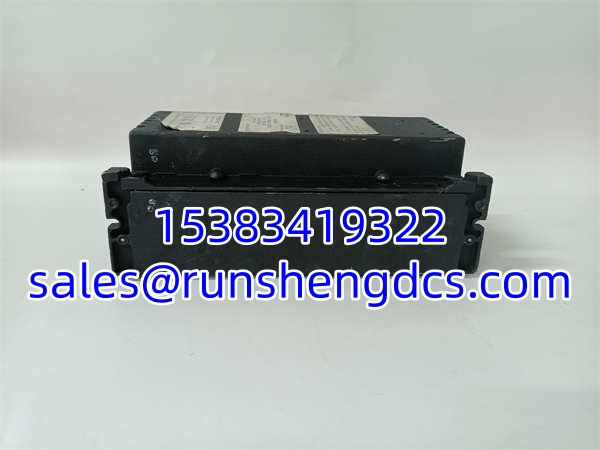
The GE IC660EBD110 is the output counterpart, designed to drive solenoids and contactors with the same level of intelligence. Both modules feature 1500V isolation and programmable thresholds (25%-85%), letting you tune out noise without adding external filters. Bottom line — these blocks are workhorses, but they demand clean power and proper grounding. If you’re sourcing a GE IC660BBD110, verify the revision; older Rev C cards can be finicky with newer CPU firmware compared to Rev D or E.
QA/QC Transparency SOP
- Intake & Origin Verification: We inspect the GE IC660BBD110 for physical damage, check the revision letter (Rev C/D/E), and verify the Genius Bus connector pins aren’t bent or corroded.
- Live Functional Testing: The GE IC660EBD110 is mounted on a Genius Bus test rack. We run a 4-hour burn-in, forcing all 16 outputs ON/OFF while monitoring bus current draw to ensure no internal shorts.
- Electrical Parameter Tests: Using a Variac and Fluke 115, we sweep the input voltage from 93VAC to 132VAC to verify the GE IC660BBD110 triggers correctly at the programmed thresholds.
- Firmware/Config Verification: We connect via a Genius Handheld Monitor or PCIM card to read the module’s configuration. The GE IC660EBD110 settings are logged to ensure it matches your existing bus layout.
- Final QC & Anti-Static Packaging: After passing, the is cleaned, sealed in an anti-static bag with desiccant, and packed with a test report showing the threshold test results and bus communication status.
Field Engineer Gotchas
- Threshold Mismatch: The defaults to 25% ON / 85% OFF thresholds. If your field device has a weak signal or long cable run, it might chatter. Don’t just swap the card; check the threshold settings in the configuration software first.
- Bus Termination: The Genius Bus must be terminated at both ends. I’ve seen techs replace a perfectly good GE IC660EBD110 three times because they forgot to check the termination resistor on the last block in the daisy chain.
- Power Supply Sag: These blocks draw power directly from the 115VAC field supply. If your transformer is undersized or the wiring is long, voltage drop can cause the to reset during high-load switching. Measure voltage at the block during operation.
- Revision Compatibility: Mixing Rev C and Rev E GE IC660EBD110 cards on the same bus segment can cause timing issues with older CPUs. Always try to match revisions within a single daisy chain.
GE IC660BBD110 IC660EBD110
Application Scenarios
- Press Control Retrofits: Stamping presses generate massive EMI. The ’s 1500V isolation and programmable filters make it ideal for reading limit switches near 480V motor drives without false trips.
- Conveyor Safety Circuits: Legacy packaging lines use the to drive safety relay coils. The open-circuit diagnostic feature lets maintenance spot broken wires before they cause an unexpected E-stop.
- Water Treatment Plants: Outdoor panels get hot and humid. The is rated for 0-60°C operation and conforms to IEC 61131-2, making it more resilient than standard PLC I/O in unconditioned pump stations.
Real-World Case: A paper mill kept getting “Bus Fault” alarms on a driving a large solenoid valve. Maintenance swapped the output block twice. Finally, we scoped the 115VAC supply and found a 40V dip every time the solenoid energized. The internal power supply in the was hitting its undervoltage lockout. Adding a dedicated 115VAC transformer for the output block solved it. The card wasn’t bad; the field load was too heavy.
FAQ
Can I mix BBD110 and EBD110 on the same bus?
Yes. The (Input) and (Output) are designed to coexist on the same Genius Bus segment. Just ensure the total bus current doesn’t exceed the power supply rating.
No. Pulling a will break the Genius Bus daisy chain and fault the entire segment. You must power down the bus or use a redundant bus topology if hot-swap is required.
What does the “Unit OK” LED mean?
Solid green means the is powered and communicating. Blinking usually means it’s in configuration mode or has a minor fault. Off means no power or a dead block. Check the 115VAC field supply first.
Can I use 24VDC sensors with the BBD110?
No. The is strictly 93-132VAC. For 24VDC, you need the IC660BBD101 or IC660BBD024. Applying DC to an AC block will destroy the input optocouplers.
Why is my output flickering?
Check for ground loops. The has 1500V isolation, but if your field device is grounded at both the panel and the machine, circulating current can cause flicker. Lift the shield at the field device end.
Is this module SIL rated?
The itself is not SIL-rated for safety applications. It’s a standard control I/O block. For SIL 3, you need Triconex or HIMA. Don’t use Genius I/O for emergency shutdown unless explicitly validated by a safety engineer.