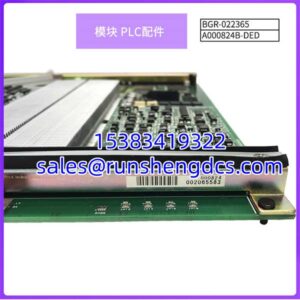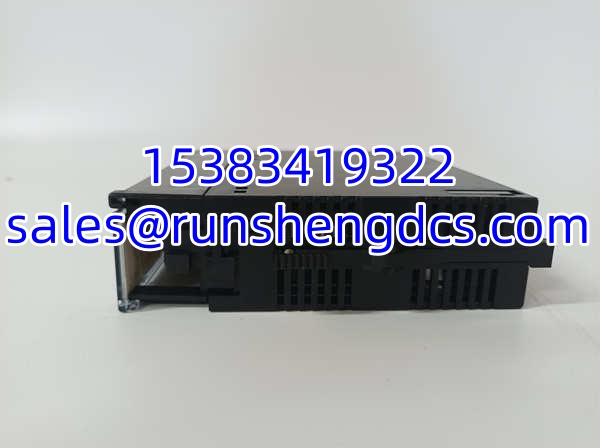

Description
Key Technical Specifications
| Specification | Detail |
|---|---|
| Part Number | HE693ADC409A-22 |
| Product Type | 16-Channel Isolated Analog Input Module |
| System Platform | GE 90-30 Series PLC |
| Number of Input Channels | 16 (channel-to-channel isolated) |
| Input Signal Types | 0-10V DC, ±10V DC, 4-20mA (configurable per channel) |
| Resolution | 16-bit |
| Accuracy | ±0.1% of full scale (typical at 25°C) |
| Sampling Rate | Up to 200k samples/second (aggregate across all channels) |
| Isolation | Channel-to-channel optoelectronic isolation — prevents ground loop interference |
| Power Requirements | 5V DC @ 300mA max (drawn from 90-30 rack backplane) |
| Operating Temperature | -25°C to +70°C |
| Storage Temperature | -40°C to +85°C (typical for GE 90-30 modules) |
| Installation | 30-pin rack mount — direct fit in GE 90-30 series chassis, no adapter required |
| Dimensions (H × W × D) | 260 × 340 × 62 mm (module with terminal block) |
| Weight | ~3.4 kg (with terminal block) |
| LED Indicators | Channel status LEDs (front panel) — indicate active input and fault conditions |
| Communication Interface | Backplane communication to 90-30 CPU (no external communication port on module) |
| Configuration Software | GE Proficy Machine Edition / Cimplicity — configure input ranges and scaling per channel |
| HS Code | 8537.10 (Programmable controllers) |
| Status | Discontinued — legacy spare part only |
Product Introduction
You’re standing in front of a GE 90-30 PLC rack in a municipal water treatment plant’s control room. The CPU is a GE 90-30 series processor, and you’ve got 10 slots filled with discrete I/O modules controlling pumps, valves, and alarms. But the analog sensors — turbidity meters on the clarifier effluent, pH probes in the chemical feed lines, pressure transmitters on the discharge headers, flow meters on the raw water intake — all output 4-20mA or 0-10V signals. You need to bring all those analog readings into the PLC for monitoring, alarming, and PID control. That’s where the HE693ADC409A-22 comes in. It slides directly into a slot in your 90-30 rack, and each of its 16 channels accepts an analog signal from a field instrument, converts it to a 16-bit digital value, and makes it available to the PLC program. One module handles 16 analog instruments — no external signal conditioners, no remote I/O drops, no additional wiring complexity.
Let’s clarify what this module does and what it doesn’t. The HE693ADC409A-22 is an analog INPUT module only — it reads analog signals from field devices and converts them to digital values for the PLC. It does NOT output analog signals (that would be an analog OUTPUT module, a different part number). Some online listings incorrectly describe it as having both analog input and output capability — that’s wrong. The “ADC” in the part number stands for Analog-to-Digital Converter, confirming it’s an input-only module. It also does NOT have any external communication ports (no Modbus, no Ethernet, no Profibus on the module itself) — it communicates with the 90-30 CPU exclusively over the rack backplane.
The 16-channel channel-to-channel isolation is this module’s most important feature. In industrial environments — especially pump stations, wastewater treatment plants, and chemical processing facilities — ground loops are a constant threat. Different field instruments are powered from different sources, at different physical locations, and their signal grounds can be at different potentials. Without isolation, stray currents flow through the analog signal wiring, corrupting the readings with noise, offset errors, or even damaging the module. The HE693ADC409A-22’s optoelectronic isolation between each channel means each input is electrically independent — a ground loop on channel 3 doesn’t affect channels 1, 2, 4-16. This is critical for measurement integrity in noisy industrial environments.
The 16-bit resolution is another key specification. A 12-bit module divides the input range into 4,096 steps; a 16-bit module divides it into 65,536 steps. For a 4-20mA signal representing 0-100 psi pressure, a 12-bit module gives you ~0.024 psi resolution per step; a 16-bit module gives you ~0.0015 psi resolution per step. In applications like chemical dosing control, where precise flow measurement matters, that extra resolution is the difference between stable control and oscillating loops. The ±0.1% full-scale accuracy means on a 10V range, the maximum error is ±10mV — well within the tolerance of most industrial instruments.
Configuration is done through GE Proficy Machine Edition (or the older Cimplicity software). You assign each channel an input type (0-10V, ±10V, or 4-20mA), set engineering unit scaling (e.g., 4mA = 0 psi, 20mA = 100 psi), and configure alarm thresholds. The module appears in the PLC’s I/O image table as a block of registers — each channel’s digital value is read by the PLC program just like any other input. No special function block or complex programming is required.
The module draws its 5V DC power (300mA max) directly from the 90-30 rack backplane — no external power supply is needed for the module itself. However, the field instruments connected to the analog inputs need their own power (typically 24V DC loop-powered for 4-20mA transmitters, or line-powered for voltage-output instruments). The module does NOT provide loop power — if you’re connecting 4-20mA loop-powered transmitters, you need external 24V loop power supplies or intrinsically safe barriers depending on the hazardous area classification.
The operating temperature range of -25°C to +70°C means this module can handle unheated outdoor substations in winter and steamy food processing areas in summer — environments where commercial-grade electronics would fail prematurely. The direct 90-30 rack mount means no adapter plates or custom wiring — just slide it into an available slot, configure it in software, wire the field signals to the terminal block, and you’re done.
Here’s the practical reality: the GE 90-30 platform is a legacy system. GE’s industrial automation business was acquired by Emerson, and the 90-30 series has been superseded by newer platforms. But thousands of 90-30 systems are still running worldwide — water treatment plants, power generation facilities, automotive assembly lines, food & beverage processing, and chemical plants. For maintenance teams managing these brownfield installations, the HE693ADC409A-22 is a critical spare. If the module fails, all 16 analog inputs on that module go offline simultaneously — potentially losing visibility into critical process variables. Third-party distributors in Xiamen and Shanghai stock new surplus and refurbished units, typically with 12-month warranties.
One thing to watch: the HE693ADC409A-22 is often confused with other GE analog modules because of the similar “HE693” naming convention. The HE693ADC405 is an 8-channel analog input module with different specifications. The HE693DAC series modules are analog OUTPUT modules. Always verify the full part number on the module label before installation. Also, the “-22” suffix may indicate a specific hardware revision or configuration variant — verify compatibility with your existing 90-30 rack and CPU firmware before ordering a replacement.
Troubleshooting Quick Reference
| Fault | Likely Cause | Probability | Quick Check | Fix |
|---|---|---|---|---|
| All 16 channels reading zero or erratic | Module not properly seated in rack or backplane connection fault | ~25% | Verify module is fully inserted and locked in rack slot; check rack power supply status | Reseat module firmly; verify rack backplane connectors are clean; ensure rack power supply is providing stable 5V DC |
| One or more channels reading incorrectly | Wiring fault, loose terminal connection, or field instrument failure | ~20% | Measure signal at module terminal block with multimeter; compare to field instrument display | Check wiring connections at terminal block; verify field instrument is powered and outputting correct signal; check for broken or shorted signal cable |
| Channel reading noisy/unstable | Ground loop, EMI interference, or unshielded cable | ~15% | Check if signal cable is shielded twisted-pair; verify shield is grounded at one end only | Use shielded twisted-pair cable for all analog signals; ground shield at field instrument end only (not at module end); route analog cables away from VFD output cables and high-voltage power lines |
| Module not recognized by PLC CPU | Wrong slot assignment or CPU compatibility issue | ~10% | Verify module is installed in a valid I/O slot; check PLC hardware configuration in Proficy Machine Edition | Ensure module is in a valid I/O slot per 90-30 hardware manual; verify PLC hardware configuration matches physical rack layout; re-download hardware configuration to CPU |
| Channel reading offset (consistent error) | Scaling configuration error or calibration drift | ~10% | Check engineering unit scaling in Proficy Machine Edition; compare raw digital value to expected value | Verify scaling parameters (4mA = X, 20mA = Y) are correct; if scaling is correct but reading is still offset: module may need recalibration or replacement |
| Module overheating | Excessive ambient temperature or poor rack ventilation | ~5% | Check ambient temperature at rack location; verify rack cooling fans are operating | Ensure ambient temperature is within -25°C to +70°C spec; improve rack ventilation; relocate rack if in direct sunlight or near heat sources |
| Intermittent channel dropouts | Loose terminal block connection or corroded terminals | ~5% | Check terminal block screws are tight; inspect terminals for corrosion | Tighten all terminal connections; clean corroded terminals with contact cleaner; replace terminal block if damaged |
| Module LED indicators abnormal | Module hardware fault | ~5% | Check front panel LED status against module manual | If RUN/OK LED is off or fault LED is on: module hardware fault — replace module |
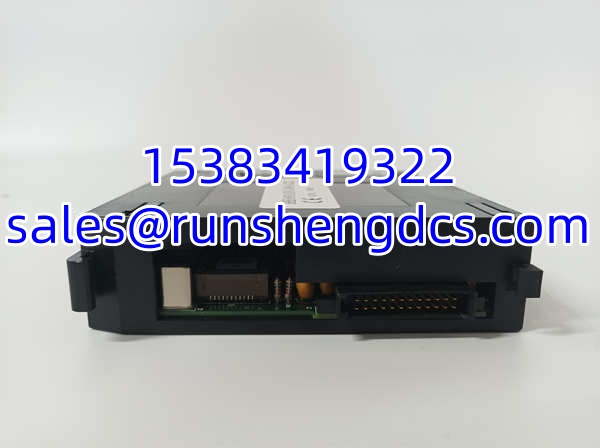
GE HE693ADC409A-22
Application Scenarios & Pain Points
Municipal Water Treatment — Turbidity & pH Monitoring. A municipal water treatment plant uses a GE 90-30 PLC with an module to monitor 12 analog instruments across the treatment process — turbidity sensors on clarifier effluent, pH probes in chemical feed basins, pressure transmitters on filter backwash lines, and flow meters on the finished water discharge. The plant’s location near high-voltage transmission lines created significant EMI interference, causing noisy readings on the analog inputs. After switching to shielded twisted-pair cable with single-point grounding at the field instrument end, the noise disappeared and the readings stabilized. The 16-bit resolution allowed the plant to detect subtle changes in turbidity (down to 0.01 NTU) that triggered early warnings of filter breakthrough, preventing off-spec water from reaching the distribution system.
Automotive Stamping Press — Hydraulic Pressure Monitoring. An automotive stamping plant uses a GE 90-30 PLC with an to monitor hydraulic pressure on 8 stamping presses. Each press has two pressure transmitters (4-20mA) — one on the main hydraulic cylinder and one on the cushion cylinder. The 16-bit resolution allowed the plant to detect pressure droop of less than 1 psi, which was an early indicator of hydraulic pump wear. When the module failed after 15 years of service (suspected internal ADC chip degradation), all 16 pressure readings went to zero simultaneously, triggering press shutdowns. The maintenance team had a refurbished replacement module on hand from a Xiamen distributor and restored operation within 30 minutes. The lesson: keep a spare analog input module on the shelf — when it fails, you lose visibility into all connected process variables at once.
Chemical Dosing — Precision Flow Control. A chemical processing facility uses a GE 90-30 PLC with an to monitor flow rates on 6 chemical dosing lines. Each line has a magnetic flow meter outputting 4-20mA representing 0-100 GPM. The 16-bit resolution (0.0015 GPM per step) was critical for maintaining precise chemical dosing ratios — a requirement for regulatory compliance. When ground loops from differently-grounded flow meters caused erratic readings on 3 channels, the channel-to-channel isolation of the contained the problem to the affected channels only, preventing a complete loss of flow monitoring. The maintenance team identified and corrected the grounding issue during the next scheduled outage.
Real-world case: A paper mill in Fujian, China, used a GE 90-30 PLC with an module to monitor digester temperature controls — 14 RTD transmitters converted to 4-20mA by signal conditioners, connected to 14 of the module’s 16 channels. The module’s channel-to-channel isolation prevented electrical noise from the mill’s giant motors (hundreds of horsepower each) from skewing the temperature readings. When the module failed after 12 years of continuous operation, the mill lost temperature visibility on the digester, forcing a temporary shutdown of the cooking process. Because the mill had stocked a refurbished from a Xiamen distributor, the module was replaced and the digester was restarted within 2 hours. The total production loss was minimized to under 50,000 — compared to the 500,000+ loss that would have resulted from a full digester cooldown and restart.