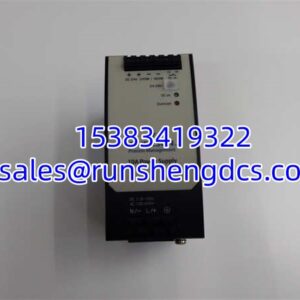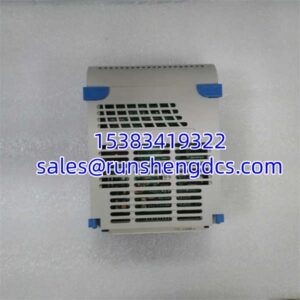
Description
Key Technical Specifications
- Product Model: DS200DCFBG1BNC
- Manufacturer: General Electric (GE)
- Product Category: Power Supply Board / Circuit Board Assembly
- System Compatibility: Mark V Speedtronic, DC2000, AC2000, CB2000, ME2000, FC2000 Drives
- Input Voltage Range: 38 to 115 VAC
- Frequency Range: 0 to 500 kHz (Dependent on Input Voltage)
- Output Voltage: +24 VDC / -24 VDC Control Level Power
- Hardware Configuration: 7x 4-Position DIP Switches, 12x Configurable Jumpers
- Diagnostic Indicators: 1x Neon Lamp (115VAC Fuse), 2x LEDs (+24VDC/-24VDC Fuses)
- Protection: Triple Fuse Protection for Surge/Interruption Defense
- Condition: New Surplus / Refurbished Original Equipment
Product Introduction
When a Mark V Speedtronic system or legacy DC2000 drive loses control-level power, the entire turbine management process halts, and the GE DS200DCFBG1BNC is usually the board that needs immediate replacement. This isn’t a generic power supply; it’s a highly specialized circuit board assembly engineered to deliver precise +24 VDC and -24 VDC control signals while simultaneously powering the drive cabinet’s cooling fans. Finding a functional GE DS200DCFBG1BNC today is strictly a legacy support operation, as GE has long since discontinued the Mark V platform in favor of newer architectures.
The engineering reality of this board is that it takes a severe electrical beating. Handling 38-115VAC inputs at frequencies up to 500kHz means the GE DS200DCFBG1BNC is constantly exposed to transient spikes, harmonic distortion, and thermal cycling. It features 7 DIP switches and 12 jumpers, making it highly configurable but also highly sensitive to incorrect settings. Bottom line: if your turbine drive is throwing control power faults or the cabinet fans have stopped spinning, this board is the prime suspect. Keep a tested spare on the shelf; migrating away from Mark V is a multi-million dollar project, not a weekend fix.
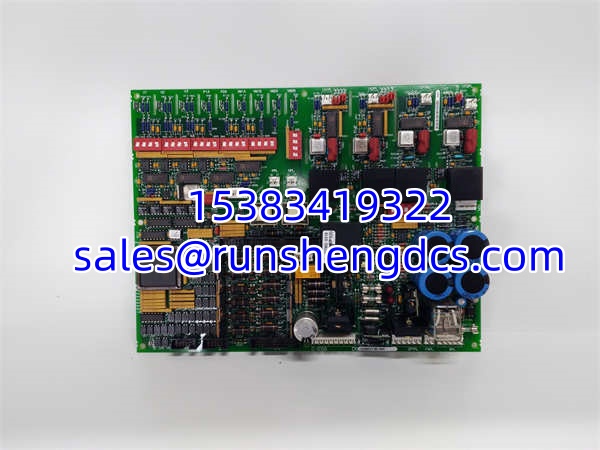
GE DS200DCFBG1BNC
QA/QC Transparency SOP
- Intake & Origin Verification: We trace the GE DS200DCFBG1BNC serial numbers and board revisions against GE’s manufacturing records to rule out known counterfeit batches. Visual inspection includes checking for cold solder joints on the DIP switches and ensuring no corrosion on the backplane connector pins.
- Live Functional Testing: Each board is installed in a verified Mark V test rack. We apply a variable 38-115VAC input and verify that the +24VDC and -24VDC outputs remain stable under load, and that the cabinet fan outputs activate correctly.
- Electrical Parameter Tests: We use a Fluke 117 to check continuity across all fuse circuits and perform insulation resistance tests to ensure there is no internal trace degradation caused by years of thermal stress.
- Firmware/Config Verification: For boards with onboard logic, we read out the DIP switch and jumper configurations to ensure they match standard factory defaults or documented custom settings.
- Final QC & Anti-Static Packaging: The board is sealed in an anti-static bag with desiccant. A detailed test report documenting the verified output voltages and fan operation is included. No generic “QC Passed” stickers.
Field Engineer Gotchas
- DIP Switch & Jumper Hell: Risk: Assuming all GE DS200DCFBG1BNC boards are configured identically. Fix: They are NOT. There are 7 DIP switches and 12 jumpers. SW4 specifically regulates voltage to the VCO output bridge circuit. I’ve seen techs swap a board and spend 6 hours troubleshooting because they didn’t photograph and copy the old jumper settings. Always copy them exactly.
- Diagnostic Indicator Misinterpretation: Risk: Ignoring the neon lamp. Fix: The board has 1 neon lamp for the 115VAC fuse and 2 LEDs for the +24VDC/-24VDC fuses. If the neon lamp is out, you have a primary input issue, not a board failure. If the LEDs are off but the neon is on, check the internal fuses.
- Backplane Pin Damage: Risk: Bending pins during extraction. Fix: These boards are large and heavy. Always use the proper extraction tool and support the board’s weight. A bent pin can short the control bus and fry the CPU.
- Thermal Degradation: Risk: Replacing a failed board with a unit that has degraded internal components. Fix: Ensure your supplier performs live load testing. A board might pass a simple continuity check but fail under actual 115VAC load due to aging capacitors.
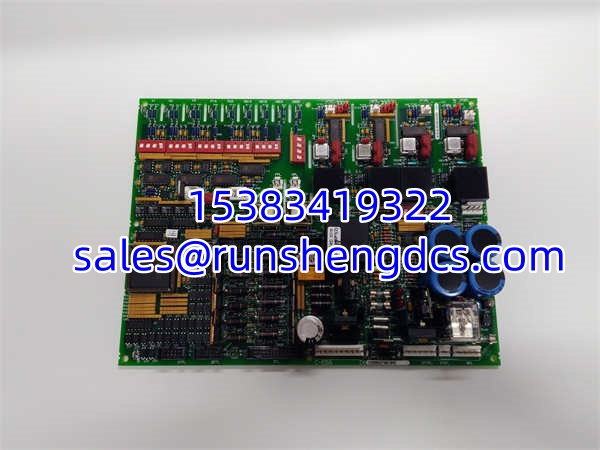
GE DS200DCFBG1BNC
Application Scenarios
- Gas & Steam Turbine Control: Maintaining the Mark V Speedtronic system in power generation plants where turbine startup sequences depend on reliable control-level power.
- Legacy Industrial Drives: Supporting DC2000, AC2000, and FC2000 drive systems in manufacturing and processing facilities that cannot justify a full drive replacement.
- Turbine Cabinet Cooling: Ensuring cabinet fan power is maintained to prevent thermal shutdowns in critical turbine control enclosures.
Case Study: A combined-cycle power plant experienced a control power failure on Unit 3’s Mark V system. Diagnostics pointed to a failed . Because the board had been obsolete for over a decade, a full Mark V to Mark VIe migration would have required a 6-month outage and 2M+ in engineering. We sourced a verified, tested unit with matching DIP switch settings, and the technician had the turbine back online in under 4 hours. Total cost: ~3,500 vs. millions in lost generation revenue.
FAQ
- Is the DS200DCFBG1BNC compatible with DC2000 and AC2000 drives?
Yes. This board is cross-compatible with DC2000, AC2000, CB2000, ME2000, and FC2000 drive systems. However, always verify the DIP switch and jumper settings match your specific drive’s requirements. - Can I hot-swap this board?
Absolutely not. This is a power supply board. Pulling it while energized will arc the backplane and likely destroy the CPU and other control modules. Lockout/Tagout is mandatory. - What does SW4 do?
SW4 regulates the voltage applied to the VCO (Voltage Controlled Oscillator) output bridge circuit. Incorrect settings here can cause motor control instability or complete drive failure. - My board has no LED lights. Is it dead?
First, check the 115VAC input and the neon lamp. If the neon is lit but the LEDs are off, the +24VDC or -24VDC fuses have blown. These are replaceable, but verify there isn’t a short downstream before replacing them. - Are these tested under actual load?
Yes. Our QA process includes applying variable 38-115VAC input and verifying output stability under load, not just checking for dead shorts. A continuity test isn’t enough for a power board this old. - What is the expected lifespan of a surplus unit?
We provide a 12-month functional warranty. Realistically, if kept in a climate-controlled cabinet (<40°C), these boards can run for another 5-10 years. Heat and voltage spikes are the enemies of legacy electrolytic components.