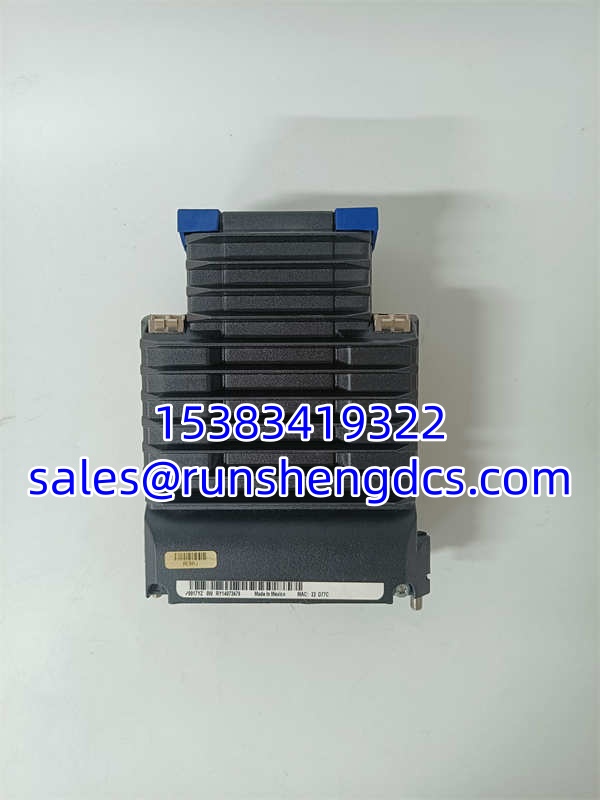

Description
Key Technical Specifications
| Parameter | Specification |
|---|---|
| Memory | 16 MB SDRAM / 32 MB Flash |
| Input Voltage | 24 VDC (Typical) |
| Power Consumption | Max 8.5 W (per non-fault-tolerant module) |
| Operating Temp | 0°C to +60°C (+32°F to +140°F) |
| Network Connection | 100 Mbps Standard Fiber Optic Ethernet |
| FBM Support | Up to 32 Series 200 FBM modules |
| Extended FBM Support | Up to 128 Series 200 FBM (via FEM100) |
| Environmental Rating | G3 Class Harsh Environment |
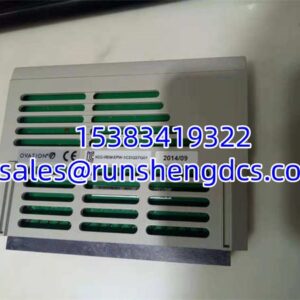
| Enclosure | Die-Cast Aluminum (CE Certified) |
| Dimensions | 14.7 cm x 5.15 cm x 11.4 cm |
| Weight | 0.6 kg |
Product Introduction
Ground loops and backplane noise in centralized DCS racks can turn a minor sensor fault into a full system crash. The FCP270 P0917YZ solves this by pushing the processing power directly to the field, mounting right next to the I/O modules in localized, unventilated NEMA cabinets. It acts as the brain for up to 32 Series 200 Fieldbus Modules (FBMs), handling regulatory control, logic, and data acquisition locally while communicating back to the Foxboro Evo control network over standard 100 Mbps fiber optics.
Why deploy this specific controller? It comes down to deterministic fault tolerance. The patented dual-module configuration runs two processors in parallel, comparing output bits before they ever leave the chassis. If one module fails, the other takes over instantly without sending corrupted data to the field. Rated for G3 class harsh environments and operating continuously up to 60°C without forced ventilation, it eliminates the need for expensive, air-conditioned local panels. Bottom line — it keeps the process running when lesser controllers would trip.
QA/QC Transparency SOP
- Intake & Origin Verification: Inspect the die-cast aluminum enclosure for physical damage, bent pins on the FBM connectors, and verify the P0917YZ part number against OEM manufacturing date codes. Check for signs of moisture ingress or corrosion.
- Live Functional Testing: Mount on a verified I/A Series test rack. Load a baseline control strategy, verify 100 Mbps fiber optic link integrity, and confirm the module successfully polls connected FBM200s without fieldbus timeouts.
- Electrical Parameter Tests: Inject 24 VDC and measure actual current draw to ensure it stays under the 8.5 W maximum. Perform continuity checks on the redundant FBM interconnects to verify the fault-tolerance hardware paths.
- Firmware/Config Verification: Read the flash memory checksum and verify compatibility with I/A Series v8.4-v8.8 or Foxboro Evo v9.0+. Backup existing configuration blocks to prevent data loss during deployment.
- Final QC & Anti-Static Packaging: Execute a 4-hour thermal soak test at 50°C to weed out early-life failures. Pack in ESD-safe shielding with silica gel, ensuring the fiber optic ports are capped to prevent dust contamination.
Field Engineer Gotchas
- Firmware Rev Mismatch: Mixing software versions on redundant FCP270 pairs causes synchronization failures and network drops. Fix: Flash both modules to the exact same firmware revision before pairing. War Story: Saw a plant trip because a tech dropped in a “new” spare that was three minor revs ahead of the running system. The controllers refused to sync.
- FBM Population Limits: Exceeding the 32-module limit without an FEM100 causes unpredictable scan time degradation. Fix: Hard-count your I/O before commissioning. Warning: The controller won’t always throw a hard fault; it just starts missing scan deadlines.
- Fiber Optic Routing: Bending standard fiber below the minimum radius causes micro-fractures and intermittent packet loss. Fix: Use proper bend-radius guides in the cabinet. Reality: I’ve chased “ghost” network faults for days that turned out to be a fiber pinched behind a DIN rail.
- Power Supply Sizing: Underestimating the 24 VDC load when adding multiple FBMs causes brownouts during peak processing. Fix: Calculate total backplane draw plus 20% headroom. Warning: The FCP270 pulls 8.5W, but a fully loaded FBM200 series card can add significant load. Size your PSU correctly.
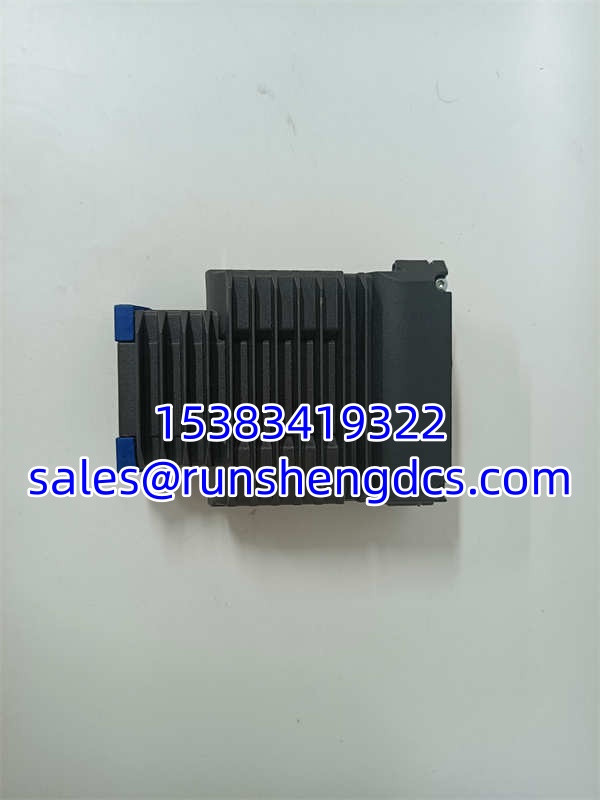
FOXBORO FCP270 P0917YZ
Application Scenarios
- Offshore Oil & Gas Separators: Deployed in unventilated, salt-air environments where centralized control rooms are physically distant from the process skids.
- Power Plant Boiler Feedwater Control: High-speed regulatory control requiring deterministic scan times and zero-tolerance for controller failover data corruption.
- Chemical Batch Reactor Sequencing: Complex, multi-step batch logic where a controller fault mid-batch results in ruined product and costly cleanup.
FAQ
Q: Can I hot-swap an FCP270 P0917YZ while the process is running?
A: Only if configured in the fault-tolerant dual-module setup. The secondary module takes over seamlessly while you pull the primary. Single-module setups will cause a process interruption. Always verify your redundancy configuration first.
Q: My FCP270 shows a solid red fault LED after power-up. What’s wrong?
A: Typically indicates a firmware mismatch, failed self-test, or backplane communication failure. Check the I/A Series diagnostic logs. If it’s a new spare, verify the flash image matches your system version.
Q: Does this controller support Modbus or OPC natively?
A: No. The communicates exclusively over the Foxboro proprietary fieldbus to FBMs and 100 Mbps Ethernet to the control network. Protocol conversion requires a dedicated gateway or upper-level node.
Q: Can I use standard copper Ethernet instead of fiber?
A: No. The network interface is strictly 100 Mbps fiber optic. Using copper requires a media converter, which adds a failure point and is not recommended for harsh environments.
Q: What is the MTBF for this module?
A: Foxboro typically rates the series in excess of 200,000 hours MTBF in fault-tolerant configuration. Verify the exact datasheet for your specific revision and operating temperature.
Q: Is the P0917YZ still supported by Schneider Electric?
A: Yes. While newer platforms exist, the I/A Series remains in active support. New surplus and refurbished units are readily available with full documentation.
Q: How do I verify the fault-tolerance is actually working?
A: Run a controlled failover test during a maintenance window. Pull the primary module and verify the secondary takes over without dropping the fieldbus or sending corrupted outputs. Log the switchover time.