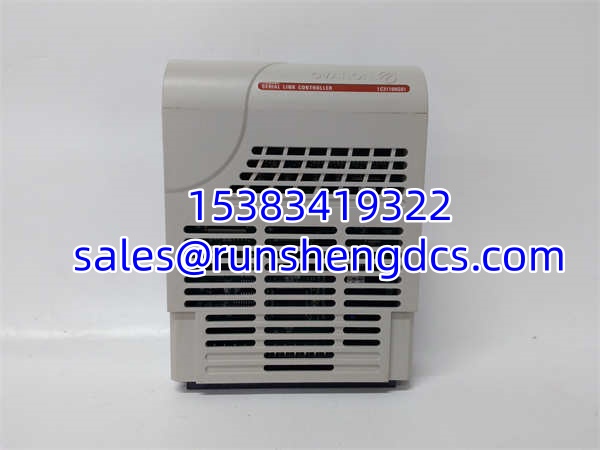

Description
Product Introduction
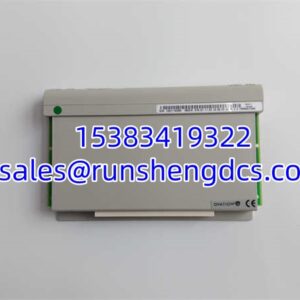
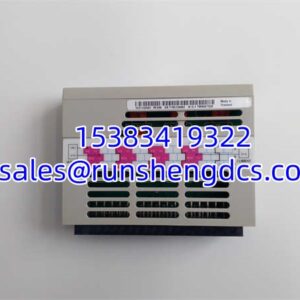
When integrating third-party equipment into an Ovation DCS, the 1C31166G01 is the bridge you rely on. It acts as the Serial Link Controller, translating Ovation’s internal network traffic into standard serial protocols like Modbus RTU to talk to remote PLCs, smart instruments, or sub-systems.
Sitting in the logic solver rack, this module handles the heavy lifting of polling, data mapping, and error checking. It isolates the sensitive DCS backplane from the noisy, electrically harsh serial communication lines running across the plant floor, ensuring your data link remains stable and deterministic.
Key Technical Specifications
- Module Type: Serial Link Controller (LC EMOD)
- Communication Protocol: Modbus RTU
- Physical Interface: RS-232 / RS-485
- Baud Rate: Programmable (typically up to 19.2 kbps or higher)
- Data Format: Configurable Data Bits, Stop Bits, Parity
- Isolation: Field-to-Logic (Opto-coupler)
- Status Indication: Module OK, Communication Active, Fault LEDs
- Backplane Interface: Ovation Chassis
- Compliance: CE, UL Listed
Compatibility & Replacement Matrix
- 1C31166G01 → 1C31166G01: Direct Replacement — exact match.
- 1C31169G02 → N/A: Not a direct replacement. The 1C31169G02 is the Characteristic Module (P-Mod) that pairs with this E-Mod for RS-485 wiring.
- 1C31166G02 → 1C31166G01: Direct Replacement — verify firmware revision and backplane compatibility before swapping.
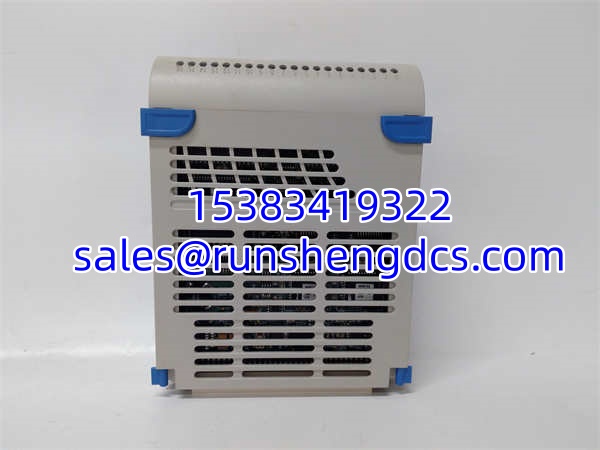
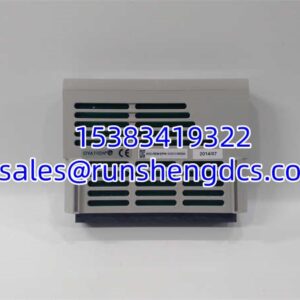
Emerson 1C31166G01
Quality Inspection & SOP Transparency
Incoming Inspection
We verify the Emerson part number and serial number on the label. The unit must be free of physical damage, bent pins, or corrosion. We check the anti-static packaging to ensure it was stored correctly.
Live Functional Test
The module is installed in an Ovation rack and paired with a known-good 1C31169G02 P-Mod. Using a calibrated Modbus simulator, we force read/write requests to verify the module’s response. We check the communication LEDs and ensure the Ovation console reports a healthy link status without timeout errors.
Electrical Parameter Test
We perform an insulation resistance test between the serial port pins and the logic ground to ensure the opto-isolators are intact. A continuity check is performed on the backplane connector pins to rule out any internal bus faults.
Firmware Verification
The module’s firmware revision is read via the Ovation cabinet software. We note if it requires a specific patch level to run on older cabinet versions.
Final QC & Packaging
After a 24-hour powered burn-in, the unit is sealed in an anti-static bag with a “Tested & Passed” label. The outer box uses double-wall cardboard to prevent crushing during shipping.
Common Replacement Pitfalls
E-Mod vs. P-Mod Confusion
This is the most common mistake. The 1C31166G01 is only the electronic module. It has no physical RS-485 terminal blocks on it. It must be plugged into a base that holds a characteristic module (like the 1C31169G02). If you only order the 1C31166G01 and your old P-Mod is fried, your system won’t communicate. Always check both part numbers.
Firmware Revision Mismatch
Older Ovation cabinets sometimes reject newer module firmware. The module powers up but shows “Fault” on the console. Always check the cabinet’s software revision before ordering. If your cabinet is on R5.0, a module shipped with R6.0 firmware might need a downgrade.
Wiring Termination
The field serial wiring connects to the P-Mod terminal block, not the E-Mod. Do not attempt to wire directly to the electronic module. If you are replacing the entire assembly, take a photo of the wiring on the old terminal block before disconnecting. Pay special attention to the termination resistor settings on the P-Mod.
ESD Precautions
The logic board is sensitive. Always clip a wrist strap to the grounded rack before handling. I’ve seen a module kill its internal opto-isolators because an engineer pulled it from the box while wearing a wool sweater. It worked for two days, then died mysteriously.
Ground Loops
RS-485 networks are notorious for ground loops. If you replace this module and it keeps failing, check the shield grounding. The shield should be grounded at the cabinet end only. A floating ground or dual-ground will fry the serial transceivers over time.
Get these five right and you’ll cut rework time by most of the afternoon.
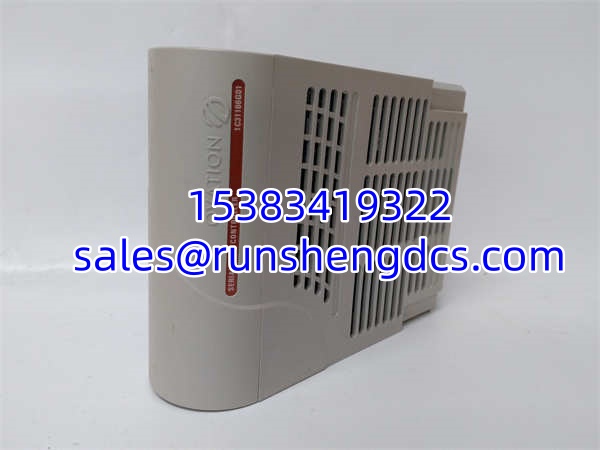
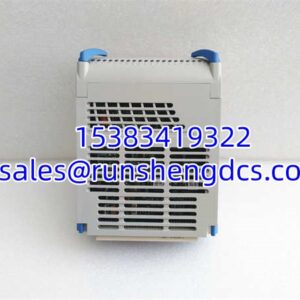
Emerson 1C31166G01
FAQ
Q: Is the 1C31166G01 a complete module?
A: It is the electronic portion. It must be paired with a characteristic module (P-Mod) like the 1C31169G02 to function as a complete serial link. The P-Mod provides the RS-485 interface and terminal blocks.
Q: What’s the deal with the firmware? Will it work on my old R4.5 system?
A: The 1C31166G01 typically ships with firmware compatible with R5.0 and R6.0 systems. If your cabinet is on R4.5, the module will power up but show “Incompatible” on the console. You’ll need to order the module with the older firmware loaded, or upgrade the entire cabinet. Verify your system revision first.
Q: Can I hot-swap this module?
A: Yes. The Ovation system supports hot swapping for I/O modules. However, ensure the field serial wiring is disconnected or de-energized before disconnecting the terminal block on the P-Mod. The logic side is safe to swap live, but the field side carries voltage—treat it like live electrical work.
Q: Is this brand new or refurbished?
A: We only list New Original (New Surplus) units. These are excess stock from decommissioned projects, never installed in an operating plant. They come in the original sealed box or with a verified anti-tamper seal.
Q: What if the communication LED is blinking but no data is passing?
A: This usually indicates a protocol mismatch. Double-check the Modbus RTU parameters: Baud rate, parity, stop bits, and the slave ID. Even a single mismatched parameter will cause the module to see traffic but reject it as invalid.
Q: Do you have the matching P-Mod?
A: Yes, the standard P-Mod for this E-Mod is the 1C31169G02 (RS-485 wire interface). Let us know your specific serial communication requirements and we can quote the complete assembly.