
Description
Product Introduction
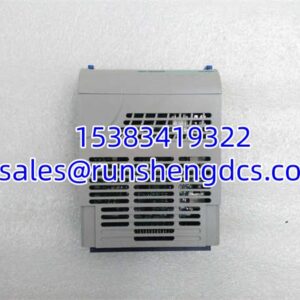
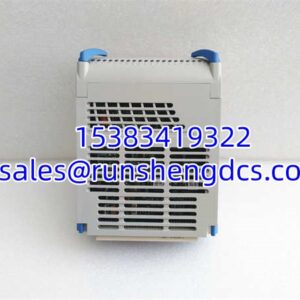
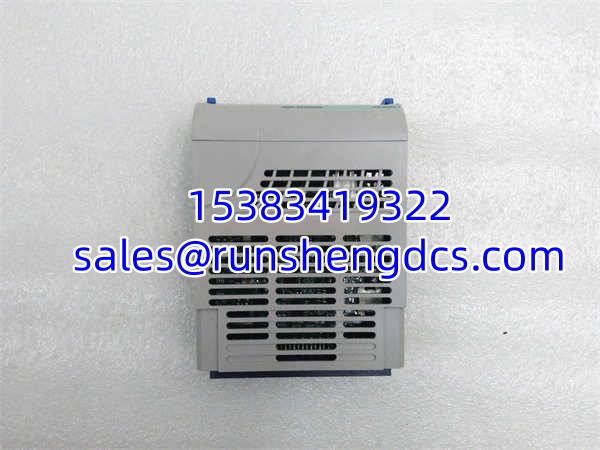
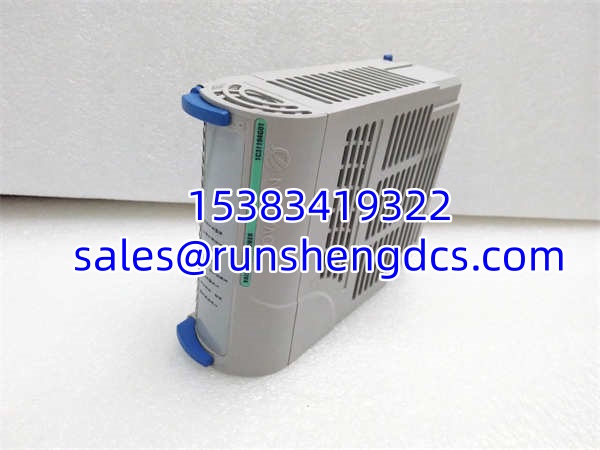
For the engineer responsible for DEH system stability, the Emerson 1C31194G01 is the component that keeps the turbine valves tracking accurately. It sits at the heart of the Ovation DCS valve control loop, specifically handling the sensitive LVDT excitation.
This module delivers a precise 17VAC signal at 3KHz. That specific frequency and voltage are what allow the system to read the valve stem position without drifting. If you’re maintaining a 600MW unit, this is the card you verify first when seeing valve hunting.
Key Technical Specifications
- Product Type: Valve Positioner Electronic Module (E-Mod)
- Brand: Emerson
- Compatible System: Ovation DCS, Westinghouse WDPF
- LVDT Drive Signal: 17 VAC peak-to-peak
- Drive Frequency: 3 KHz
- Function: Provides excitation power for Linear Variable Differential Transformers (LVDTs)
- Mounting: Ovation I/O Chassis (DIN-rail compatible)
- Role: Must be paired with a Characteristic Module (P-Mod) for complete valve control
Compatibility & Replacement Matrix
- 1C31194G01 → 1C31194G01: Direct Replacement — Exact match, no adaptation needed.
- 1C31194G01 → 1C31194G02: Incompatible — Do not swap. The G02 outputs 23.75VAC; using it with a G01-configured loop will damage the LVDT or cause control faults.
- 1C31194G01 → 1C31197G01: Requires Adaptation — The 1C31197G01 is a P-Mod (Characteristic Module). It must be mated with the 1C31194G01 to form a complete VP assembly.
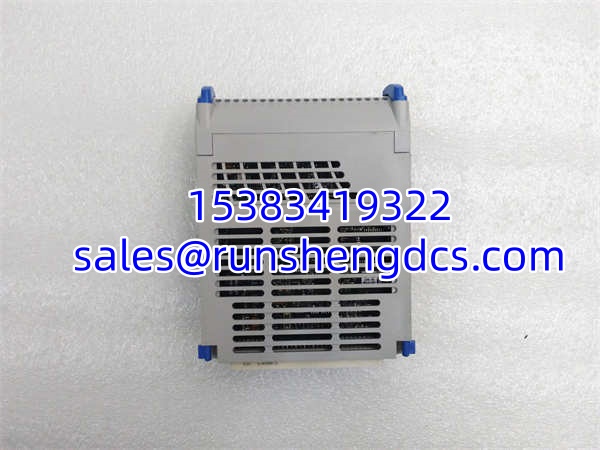
Emerson 1C31194G01
Quality Inspection & SOP Transparency
Incoming Inspection
We verify the provenance of every 1C31194G01. The serial number is cross-checked against Emerson’s public databases to rule out known field failures or recalls. Visually, we inspect the epoxy potting around the transformer for any signs of overheating (discoloration) or previous rework (uneven seams). The status LEDs are checked for clouding.
Live Functional Test
Each module is tested on a live Ovation rack. We power it using a 24 VDC Fluke-referenced supply. Using an oscilloscope (Tektronix TBS1000), we probe the LVDT excitation terminals to confirm the output is precisely 17VAC at 3KHz under load. We simulate feedback signals to verify the closed-loop reading in the controller matches the physical input.
Electrical Parameter Test
The isolation barrier is tested using a 500 V megger. We verify insulation resistance between the logic side and the field side exceeds 100 MΩ. Any reading below 10 MΩ triggers a fail.
Firmware Verification
We record the EEPROM version. While the 1C31194G01 is primarily analog hardware, the firmware handles diagnostic reporting. We ensure it matches the baseline standard for the specific Ovation controller version it will be deployed on.
Final QC & Packaging
After the 24-hour burn-in, the module is sealed in an anti-static bag with a desiccant pack. The final label includes the test date and the oscilloscope waveform printout of the 3KHz signal.
Common Replacement Pitfalls
- Swapping G01 for G02 (or vice versa): This is the most expensive typo. The 1C31194G01 (17V) and G02 (23.75V) are physically interchangeable but electrically lethal to each other’s feedback circuits. Double-check the label voltage before insertion.
- Ignoring the P-Mod Pairing: The 1C31194G01 is only half the solution. It generates the signal, but it needs the 1C31197G0x (P-Mod) to drive the servo current. Installing just the E-Mod results in a “No Output” fault.
- LVDT Cable Shielding: In turbine halls, EMI is brutal. The LVDT feedback cables must be shielded, and the shield grounded at one end only (usually the cabinet end). Grounding both ends creates a ground loop that injects noise into the 3KHz signal, causing the valve to jitter.
- Firmware Version Drift: If you’re replacing one card in a redundant pair, ensure the firmware version matches the mate exactly. A version mismatch can prevent the standby card from synchronizing.
- Forcing the Rack Insertion: The backplane connector is delicate. If the card doesn’t slide in smoothly, stop. Misaligned guide rails or a bent pin will destroy the connection. This design choice is actually clever but unforgiving.
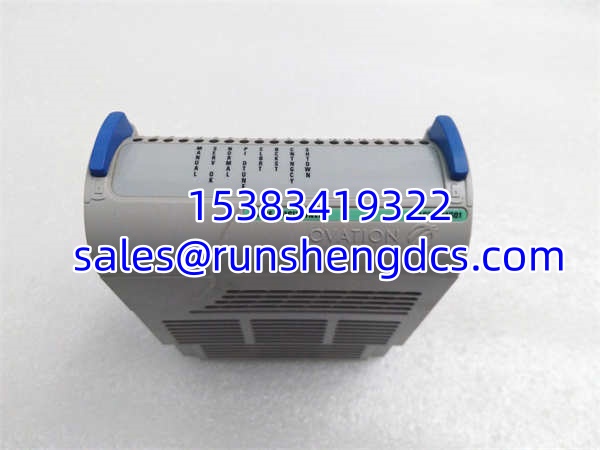
Emerson 1C31194G01
FAQ
Q: Can I hot-swap this module while the turbine is running?
A: Yes, provided you have a redundant VP setup. In a “1-out-of-2” configuration, pulling the primary 1C31194G01 will cause the secondary to take over instantly. However, if this is the only VP card, pulling it will cause the valve to close (fail-safe).
Q: Is the 1C31194G01 compatible with the 1C31197G03 P-Mod?
A: Yes. The 1C31194G01 (E-Mod) mates with several 1C31197G0x P-Mods. The specific P-Mod (G01, G02, G03, or G04) depends on the servo coil resistance of your valve actuator, not the E-Mod version.
Q: My old module says 1C31194G01A, is this the same?
A: Usually. The “A” suffix often denotes a minor revision. While the core 17VAC spec remains, you should verify the firmware version matches your system baseline. Sometimes an “A” requires a different patch level in the controller.
Q: What’s the most common failure mode?
A: Transformer saturation or capacitor leakage in the oscillator circuit. In the field, we often see the output voltage drop from 17VAC to 10-12VAC when the internal caps degrade. This causes the valve position reading to become erratic.
Q: Do you offer a warranty on this item?
A: We stand by our testing. This New Surplus unit carries a 12-month warranty. If it fails the functional test we described, we replace it at no cost.