
Description
Key Technical Specifications
| Parameter | Value |
|---|---|
| Product Type | Pulse / trigger control board |
| Brand | ABB |
| Model | SCYC51020 58052582H |
| Series | SCYC51020 |
| Typical Application | ABB drive and power-electronics pulse control |
| Related Variant | SCYC51020 58052582G |
| Encoder Signal Frequency | Up to 200 kHz (reference from related variant) |
| Encoder Supply Options | 15 V or 24 V DC via jumper selection (reference from related variant) |
| Encoder Input Levels | Differential A+, B+, Z+ with defined high/low thresholds (reference from related variant) |
| Communication / Interfaces | Pulse, trigger, and encoder signal interfaces |
| Mounting | Board-level module for ABB control assemblies |
| Availability | Surplus / refurbished market |
Product Introduction
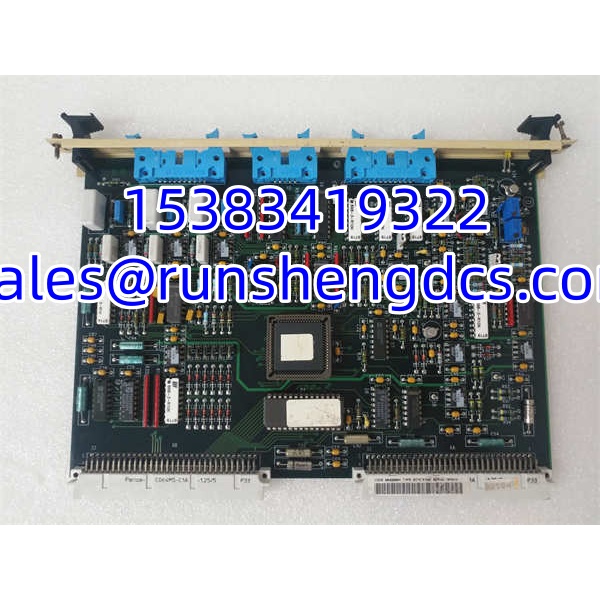
When an ABB drive or excitation system starts throwing pulse or encoder faults, the controller itself is not always the problem. The SCYC51020 58052582H sits in the signal path between the control logic and the power stage, handling pulse/trigger conditioning and encoder interface functions. Get this board wrong, and the drive may refuse to fire, trip on speed feedback loss, or behave unpredictably during startup.
This module belongs to the ABB pulse control board family, which appears across surplus listings as a trigger/pulse control card for industrial drive and power-electronics systems. The related 58052582G variant documents a 200 kHz encoder interface with selectable 15 V or 24 V encoder supply, differential A/B/Z channels, and shielded encoder cabling. Treat those figures as reference points rather than guaranteed H-revision specs. Bottom line — confirm the revision, jumper settings, and connector pinout before swapping it into a live cabinet.
QA/QC Transparency SOP
- Intake & Origin Verification: Record full part number 58052582H, serial/lot code, and supplier origin. Photograph the board label, connectors, jumpers, and any revision markings.
- Visual & Mechanical Inspection: Check for burnt components, cracked solder joints, damaged connectors, corrosion, or missing jumpers. Verify that the board matches the expected form factor.
- Live Functional Testing: Power the board from a controlled supply matching the system requirement. Verify encoder channel response, pulse/trigger outputs, and communication with the parent controller or test rack.
- Electrical Parameter Tests: Measure encoder supply voltage at 15 V and 24 V jumper positions if applicable. Check signal integrity on A+, B+, Z+ channels and confirm isolation where specified.
- Final QC & Anti-Static Packaging: Document test results, revision, jumper configuration, and condition grade. Pack in anti-static packaging with clear labeling to prevent G/H revision mix-ups.
Field Engineer Gotchas
G vs. H revision mismatch. The family includes 58052582G and 58052582H variants. They may look similar but can differ in firmware, jumper defaults, or signal timing. Installing the wrong revision can cause encoder faults or missing pulse outputs. Always match the full part number.
Encoder supply jumper errors. The related 58052582G variant uses jumpers to select 15 V or 24 V encoder supply. If the replacement board is set differently from the original, the encoder may underpower, overheat, or return invalid signals. Check jumper position before powering the encoder.
Shield and differential wiring mistakes. Encoder channels A+, B+, and Z+ are differential and sensitive to noise. If the shield is not grounded correctly, or if single-ended wiring is used where differential is expected, speed feedback can become unstable. Verify cable shielding and terminal assignments.
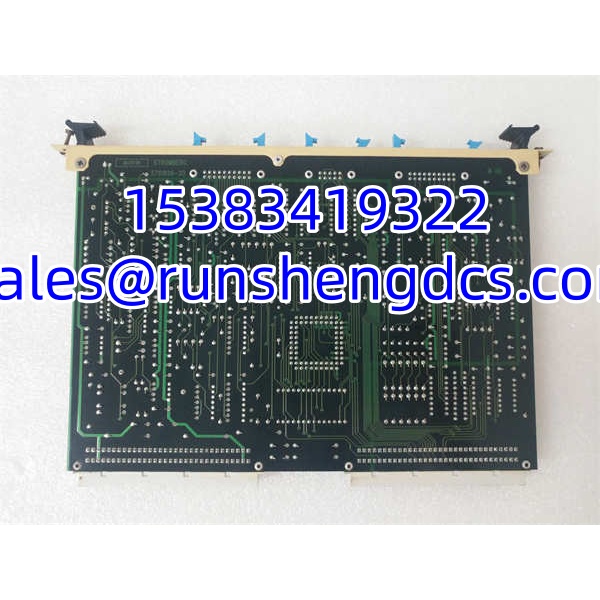
ABB SCYC51020 58052582H
Application Scenarios
ABB drive pulse/trigger maintenance. When a drive loses firing pulses or reports encoder feedback faults, the board may be the interface component requiring replacement.
Encoder signal conditioning in power-electronics assemblies. The board can sit between an encoder and the drive control stage, converting raw encoder signals into usable timing references.
Surplus replacement for legacy ABB systems. For older installations where OEM lead times are long, a verified 58052582H can reduce downtime — provided revision and jumper settings match.
Anonymized field note: A plant reported intermittent drive trips after an encoder cable replacement. The encoder itself tested fine, but the drive continued to lose speed feedback. The issue traced back to a recently swapped pulse control board with incorrect encoder supply jumpers. After matching the jumper configuration to the original unit, the encoder signals stabilized and the trips stopped.
FAQ
Is 58052582H the same as 58052582G?
Not necessarily. Both belong to the pulse control board family, but the H and G revisions may differ. Always match the full part number before replacement.
What does this board do?
It is a pulse/trigger control board used in ABB drive and power-electronics systems, typically handling encoder interface and pulse signal conditioning.
Can I use it without checking jumpers?
No. Encoder supply voltage and signal configuration may depend on jumper settings. Verify them against the original board or OEM documentation.
Does it support 200 kHz encoder signals?
The related 58052582G variant supports up to 200 kHz encoder frequency. Treat this as a reference value for the H revision until confirmed on the installed unit.
Is this a PLC module?
No. It is a pulse/trigger control board for ABB drive or power-electronics assemblies, not a standalone PLC CPU.
Where can I find the official datasheet?
Public OEM documentation for the 58052582H revision is limited. Use the installed unit nameplate, system manual, or ABB service documentation as the primary reference.