
Description
Key Technical Specifications
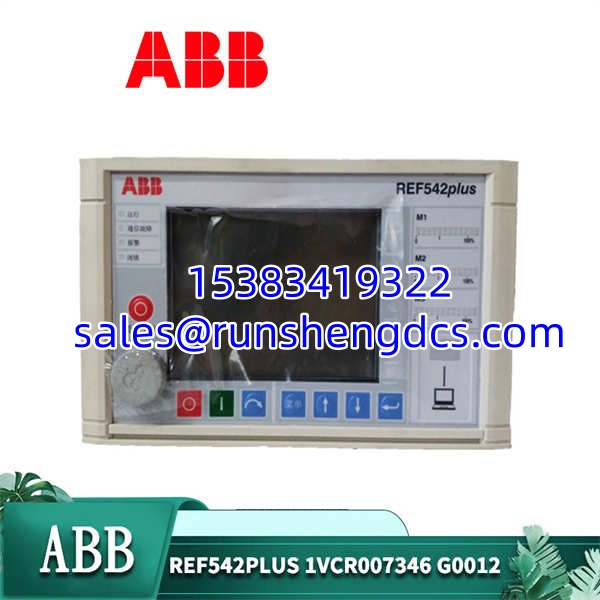
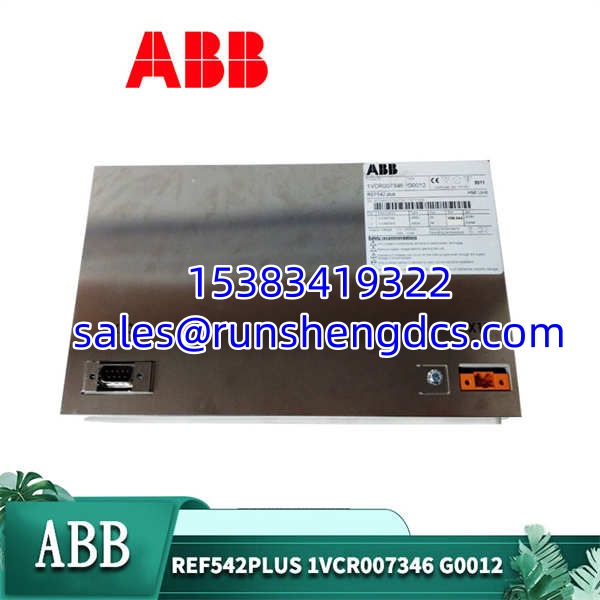
- Product Model: REF542plus / REF542PLUS
- Brand: ABB
- Product Type: Multifunction protection and control relay / feeder terminal
- Application Voltage Class: Medium voltage, typically 3 kV–36 kV systems
- Protection Functions: Overcurrent, ground fault, thermal overload, voltage, frequency, motor/transformer-related protection
- Measurement: Current, voltage, power, frequency, energy, and related electrical parameters
- Control Modes: Local, remote, and no-control / blocked modes
- Digital I/O: Up to approximately 14 programmable digital inputs and 8 relay outputs, depending on configuration
- Communication Ports: RS485 serial interface commonly used
- Supported Protocols: Modbus RTU and IEC 60870-5-103 commonly referenced; verify per unit
- Auxiliary Supply: DC 24 V / 48 V / 110 V / 220 V or AC 110 V / 230 V, depending on variant
- Operating Temperature: Approximately -25°C to +70°C
- Front Panel Protection: Around IP51 for the front panel area
- Diagnostics: Self-monitoring, event recording, and fault recording functions
Product Introduction
In a medium-voltage switchgear lineup, the REF542plus is the kind of unit that lives at the bay level. It watches the feeder, measures current and voltage, decides when a fault is real, and then trips or alarms through its relay outputs. It replaces the old mess of separate overcurrent relays, meters, annunciators, and hardwired control logic with one configured digital unit.
Its real value is as a configured spare, not a blank box. A working REF542plus can restore feeder protection, motor protection, or transformer protection quickly — but only if the firmware, I/O mapping, protection settings, communication protocol, and application program match the failed unit. Without that match, you may have a physically correct ABB relay that still will not run the bay correctly.
Troubleshooting Quick Reference
| Fault | Likely Cause | Quick Check | Fix |
|---|---|---|---|
| Unit has no display / no power | Auxiliary supply missing, fuse open, or wiring fault | Measure aux supply at terminals; check fuses | Restore correct DC/AC supply; replace fuse only after checking for shorts |
| Communication fault with SCADA/DCS | Wrong protocol, baud rate, address, or cable fault | Check RS485 wiring, polarity, termination, and station address | Match Modbus/IEC settings; verify cable shielding and grounding |
| Protection does not trip | Wrong settings, blocked outputs, or control mode issue | Check control mode: Local / Remote / No control | Verify protection settings, output relays, and trip circuit continuity |
| False overcurrent / ground fault alarm | CT wiring, burden, polarity, or external noise | Inspect CT connections and secondary wiring | Correct CT polarity/wiring; check for loose terminals or damaged cables |
| Relay output does not operate | Output blocked, logic not enabled, or hardware fault | Monitor output status in local HMI or tool | Check interlocks, logic signals, and output relay health |
| Unit powers up but behaves wrong | Firmware or configuration mismatch | Compare nameplate, order code, and firmware version | Reload approved configuration; do not mix random backups |
REF542PLUS
Application Scenarios & Pain Points
- Medium-voltage feeder protection: Needs fast overcurrent and ground-fault response. Pain point: wrong protection settings or CT polarity can cause nuisance trips or failure to trip.
- Motor feeder protection: Motor starting current, locked rotor, thermal overload, and unbalance must be set correctly. Pain point: a generic feeder setting can trip a healthy motor during start.
- Transformer feeder protection: Overload, thermal protection, and voltage supervision matter. Pain point: replacing the unit without restoring the original logic can leave transformer alarms or interlocks broken.
- Substation automation integration: SCADA or DCS must read measurements and send control commands. Pain point: Modbus address, IEC 103 mapping, or RS485 termination mismatch will kill communication.
- Aging switchgear retrofit: Older panels may still depend on REF542plus for protection and control. Pain point: surplus units are available, but firmware and application files are often missing.