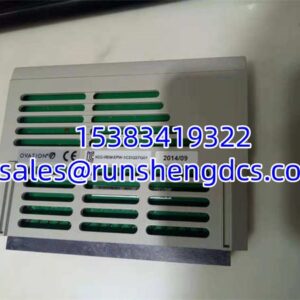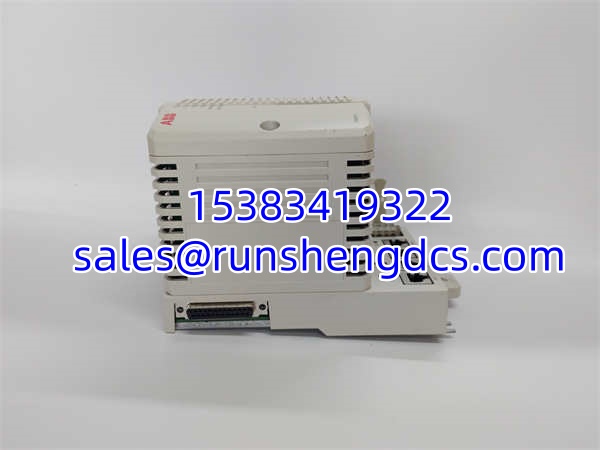
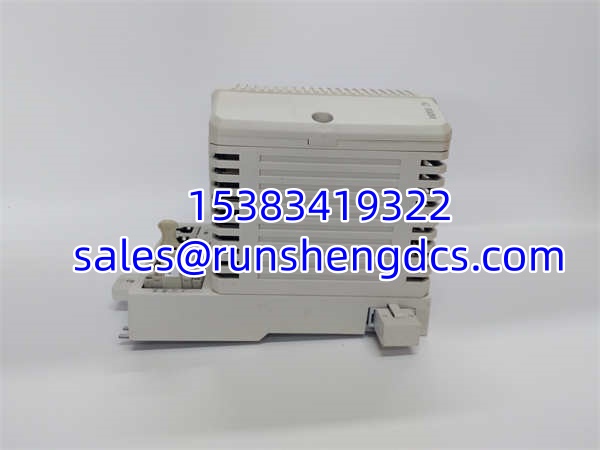

Description
Key Technical Specifications
- Product Model: PM861AK01 (3BSE018157R1)
- Manufacturer: ABB
- Product Type: Redundant Processor Unit
- Processor: MPC860 (48MHz)
- Memory: 16MB Total (7.155MB Application RAM, 2MB Flash)
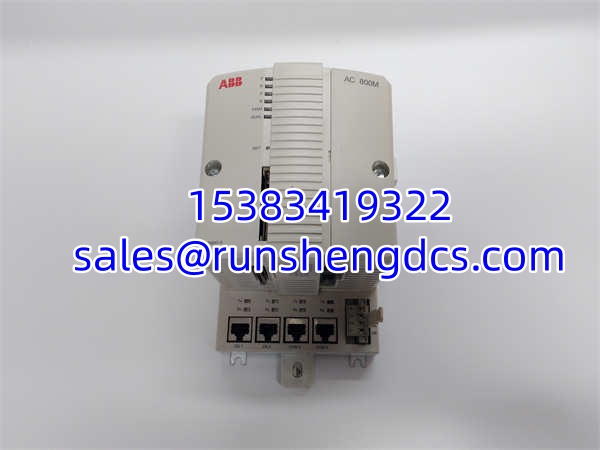
- Communication Ports: 2x RJ45 Ethernet, 2x RJ45 Serial (COM3, COM4)
- Power Supply: 24V DC (19.2–30V DC range)
- I/O Capacity: Up to 84 modules (Redundant configuration)
- Data Retention: 3.6V Lithium Battery
- Dimensions: 189mm (H) × 135mm (W) × 119mm (D)
Product Introduction
When your distributed control system demands zero downtime, the ABB PM861AK01 (3BSE018157R1) serves as the redundant processing brain of the AC 800M architecture. Unlike standard CPUs, this specific processor unit is engineered to operate in a hot-standby pair, continuously synchronizing state data with its partner to guarantee an immediate, bumpless transfer if a primary failure occurs. It translates complex field data into actionable control logic using a 48MHz MPC860 processor and 16MB of onboard memory.
Why specify this exact module? Because it provides deterministic performance for mission-critical applications. The ABB PM861AK01 supports up to 84 I/O modules in a redundant setup and features dual Ethernet ports for high-speed control network communication. With an integrated 3.6V lithium battery for data retention during power loss, the PM861AK01 ensures your historical records and firmware remain intact. Bottom line — it’s a dedicated silicon solution for continuous process availability. (Always verify your firmware revision matches the redundant pair before installation.)
QA/QC Transparency SOP
- Intake & Origin Verification: We inspect the ABB PM861AK01 for authentic branding, correct 3BSE018157R1 labeling, and physical damage. Boards with suspicious soldering or missing labels are immediately quarantined.
- Live Functional Testing: The PM861AK01 is seated into an AC 800M test rack. We verify the MPC860 processor boots correctly, executes 1,000 Boolean operations within the 0.23ms spec, and synchronizes with a redundant partner.
- Electrical Parameter Tests: Using a Fluke multimeter, we verify the 24V DC input circuitry, check the 3.6V lithium battery voltage, and confirm the dual Ethernet and serial transceivers meet signal integrity standards.
- Firmware/Config Verification: We read the 2MB Flash memory to log the firmware version and back up any existing configuration. The unit is then cleared to factory defaults to prevent hidden parameter conflicts.
- Final QC & Anti-Static Packaging: After a 4-hour continuous burn-in test under simulated redundant load, the is cleaned, placed in an anti-static bag with desiccant, and shipped with a Certificate of Conformance and 1-year warranty.
Field Engineer Gotchas
- Redundancy Sync Failures: Swapping a single ABB without matching the firmware revision of its redundant partner will cause sync timeouts. War Story: A tech replaced a failed CPU with a newer revision, and the system spent 20 minutes in “Sync Pending” state before finally tripping. Solution: Always match firmware revisions exactly, or plan for a full redundant pair replacement during a shutdown.
- I/O Capacity Misconfiguration: The supports up to 84 modules in redundant mode (96 in non-redundant). If you exceed this limit, the CPU will fault during startup. Blunt truth: Check your hardware configuration in Control Builder. Exceeding the 84-module limit for redundant CPUs is a common cause of “System Configuration Error” alarms.
- Battery Replacement Timing: The 3.6V lithium battery retains memory during power loss. If the battery dies while the CPU is powered down, you’ll lose your program and historical data. Warning: Monitor battery voltage via diagnostics. Replace the battery during scheduled maintenance, not after a power outage causes data loss.
- Backplane Connector Damage: The AC 800M backplane connector is fragile. If you force the into the slot without aligning the guide rails, you’ll bend pins and cause intermittent faults. Solution: Always use the extraction tool for removal, and apply even pressure during installation. Half-seated CPUs are the #1 cause of “new spare doesn’t work” tickets.
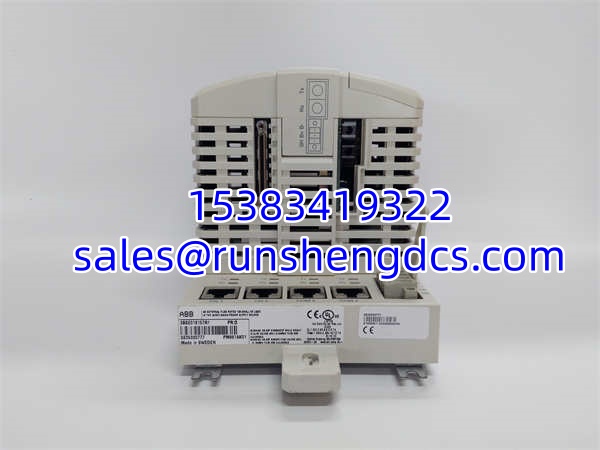
ABB PM861AK01 3BSE018157R1
Application Scenarios
- Oil & Gas Refinery Control: High-availability processes require redundant processing. The ABB executes safety-critical logic and ensures bumpless failover during primary CPU maintenance or failure.
- Power Generation Turbine Control: Steam and gas turbines demand deterministic cycle times. The ’s 48MHz processor handles complex PID loops and turbine protection logic without latency.
- Pulp & Paper Machine Control: Continuous paper production cannot tolerate unplanned downtime. The ABB ’s hot-standby capability ensures seamless failover during drive faults or network interruptions.
- Real-World Case Study: A chemical plant experienced intermittent control losses on their AC 800M system. Diagnostics showed the was functioning, but the redundant sync cable was routed parallel to a 480V VFD output line, causing EMI-induced sync errors. Resolution: Rerouted the sync cable through grounded metallic conduit and added a ferrite core. The worked perfectly once the physical layer was fixed. Lesson: The CPU is only as reliable as the network it lives on.
FAQ
Yes, the supports hot-swapping in redundant configurations. The standby CPU can be replaced without interrupting process control. However, always verify the system is in a stable state and the redundant partner is fully synchronized before removal. Guessing wrong can corrupt the sync.
No. Redundant CPUs must be identical in hardware revision and firmware. Mixing and PM864AK01 will cause sync failures and unpredictable behavior. Bottom line: Always replace with the exact same model and revision.
The LEDs only indicate power and basic link status. If the redundant partner isn’t sending valid sync data or the firmware doesn’t match, the CPU will fault even if the hardware is healthy. Check your redundancy configuration, verify the sync cable, and use Control Builder to read the sync error word.
Does this CPU support CEX bus communication modules?
Yes. The ABB supports up to 12 communication modules on the CEX bus with a maximum supply current of 2.4A. Verify your CEX module power draw doesn’t exceed this limit.
What is the expected lifespan of the 3.6V battery?
The lithium battery typically lasts 3-5 years depending on operating temperature and power cycle frequency. Warning: If you’re in a high-temperature environment, plan for battery replacement every 2-3 years. Monitor battery voltage via diagnostics to avoid unexpected data loss.
Yes. The PM861AK02 (3BSE018160R1) is a direct hardware replacement for the . However, always verify firmware compatibility. A newer suffix may require a CPU firmware update, while an older suffix may not support newer features. When in doubt, provide the full part number to your supplier for cross-reference.
No, the draws its operating power directly from the AC 800M backplane (24V DC, typical 250mA). However, ensure your power supply can handle the inrush current during startup, especially in fully populated racks.