
Description
Key Technical Specifications
| Parameter | Specification |
|---|---|
| Product Model | PM150V08 3BSE009598R1 |
| Manufacturer | ABB |
| Product Type | Processor Control Module |
| Memory Capacity | 8 MByte |
| Input Power | 24 VDC / 120 VAC |
| Output Frequency | 50-60 Hz |
| Dimensions | 234 mm x 99 mm x 216 mm (W x H x D) |
| Weight | 2.85 kg |
| Mounting | Rack Mount (Advant Chassis) |
| Operating Environment | Designed for harsh industrial environments |
Product Introduction
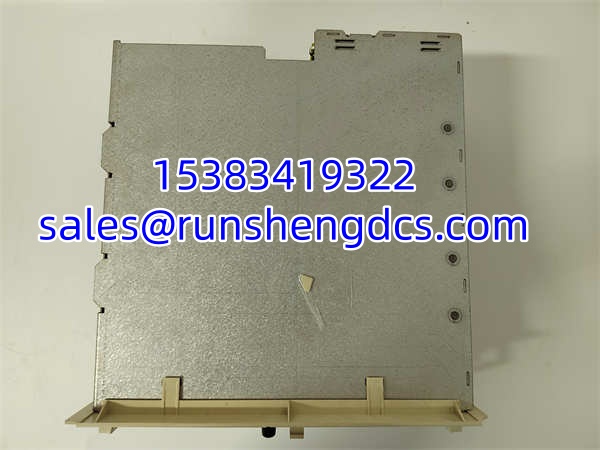
Tracking down a working CPU for a 20-year-old Advant OCS system usually means accepting a high price tag and hoping the silicon hasn’t degraded. The PM150V08 3BSE009598R1 is the central processing unit for the Advant Controller 410 platform, serving as the primary execution engine for legacy ABB distributed control systems. It handles the heavy lifting of real-time logic, I/O scanning, and data communication for entire plant units, bridging the gap between field devices and upper-level management systems.
Engineers keep this specific PM150V08 3BSE009598R1 in their critical spares inventory because the 8 MByte memory footprint is the exact threshold required to run standard Advant Controller 410 applications without hitting memory limits. It accepts both 24 VDC and 120 VAC power, which simplifies cabinet wiring in older installations where DC power distribution wasn’t standardized. Bottom line — it’s an aging workhorse, but as long as the backplane is clean, it will keep your legacy unit running until you can justify a full migration.
QA/QC Transparency SOP
Legacy CPUs are the highest-risk components in any control system. Every PM150V08 3BSE009598R1 undergoes a rigorous validation process to ensure it won’t fail on day one:
- Intake & Origin Verification: We verify the 3BSE009598R1 order code against ABB’s historical manufacturing records and inspect the PCB for signs of rework or counterfeit components.
- Live Functional Testing: The module is installed in a live Advant Controller 410 test rack. We download a test program and verify that the CPU executes logic, scans I/O, and maintains backplane communication without dropping packets.
- Electrical Parameter Tests: Using a calibrated multimeter, we verify the 24 VDC and 120 VAC power regulation circuits and check for excessive current draw that would indicate failing internal components.
- Firmware/Config Verification: We read the onboard firmware revision and compare it against the customer’s existing system version to prevent compatibility issues. A backup of the test configuration is archived.
- Final QC & Anti-Static Packaging: The module is cleaned, inspected for physical damage, and sealed in an anti-static bag with desiccant. A printed test report is included with every shipment.
Field Engineer Gotchas
- Firmware Rev Mismatch: Do not assume a newer PM150V08 3BSE009598R1 will work in an older Advant Controller 410 chassis. War story: Installed a “newer” CPU, got a solid red fault LED, and spent six hours realizing the backplane firmware needed an update to recognize the new processor. Always match the exact revision.
- SIMM Memory Seating: This module uses removable SIMM memory (part 3BSC120004R5). Warning: If you receive a module with memory issues, reseat the SIMM before RMA’ing it. I’ve seen perfectly good CPUs get sent back because the memory wasn’t fully clicked into place during shipping.
- Power Supply Compatibility: The dual 24 VDC / 120 VAC input is convenient, but verify your cabinet’s power distribution matches the module’s configuration. Applying 120 VAC to a module configured for 24 VDC will destroy the internal power supply instantly. Check the jumper settings on the front panel.
- Backplane Corrosion: Advant racks are notorious for oxidized backplane connectors. Before installing a new PM150V08 3BSE009598R1, inspect and clean the backplane pins. A bad connection will mimic a dead CPU, and you’ll waste time troubleshooting a perfectly good replacement.
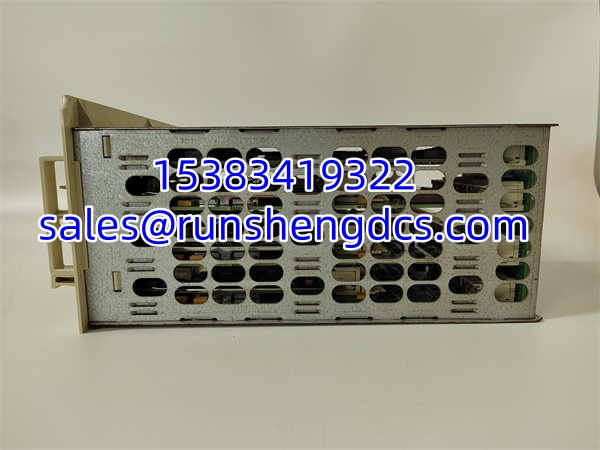
ABB PM150V08 3BSE009598R1
Application Scenarios
- Legacy Power Plant DCS: Executing real-time boiler control logic in 30-year-old power generation facilities where a full system migration is not yet budgeted.
- Pulp & Paper Mill Control: Managing continuous process control for paper machines and digesters using the original Advant Controller 410 hardware.
- Mining & Mineral Processing: Running concentrator and mill control systems in harsh, dusty environments where the ’s rugged design is still operational.
- Real-World Case Study: A pulp mill experienced a catastrophic CPU failure during a scheduled outage, with no spare on site. We provided a tested replacement within 24 hours. The module was installed, the existing program was downloaded, and the mill was back online within the planned outage window, avoiding an estimated $50,000/day in lost production.
FAQ
Can I use this module in an Advant Controller 410 version 1.5 system?
Yes, the is compatible with Advant Controller 410 versions 1.5 and later. However, verify the exact firmware revision on your existing CPUs to ensure seamless integration.
Is the 8 MByte memory sufficient for my application?
For most standard Advant OCS applications, 8 MByte is adequate. If your system uses advanced process control (APC) or extensive data logging, you may need to evaluate whether a higher-capacity CPU is required. Check your current memory utilization in the Advant OCS configuration tool.
What is the replacement SIMM memory part number?
The compatible SIMM memory module is 3BSC120004R5. If you experience memory errors, try reseating this module before replacing the entire CPU.
Does this module support hot-swapping?
No. The must be installed with the rack powered down. Hot-swapping will cause a backplane fault and may damage the module.
Can I use this in place of a PM150V07?
The is generally an upgrade from the V07, but verify with ABB documentation or your system integrator before substituting. The memory and processing capabilities differ, and your application may require specific firmware support.
What is the expected MTBF for this module?
ABB does not publish a specific MTBF for this legacy module. In field experience, these CPUs typically last 15-20 years in controlled environments. Keep a tested spare on hand for any critical application.