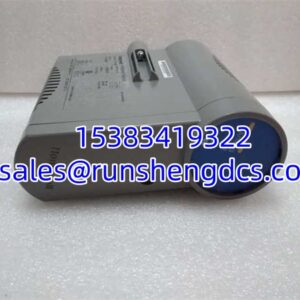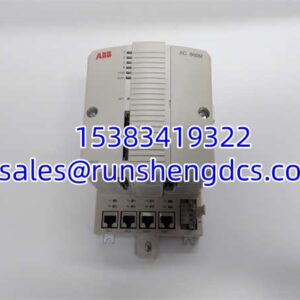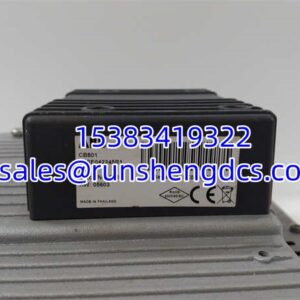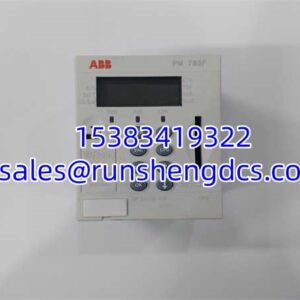

Description
Key Technical Specifications
| Parameter | Specification |
|---|---|
| Model | NF93A-2 |
| Internal Material Code | HESG440280R2 |
| Companion Modules | HESG323662R1, HESG216665/K |
| Brand | ABB |
| Country of Origin | Switzerland (Made in Switzerland) |
| Input Voltage (Ue) | 82–156 VDC |
| Output Voltage (Ua) | ±15V / ±24V |
| Input Current | 5A (per label marking) |
| Insulation Rating | 2 kVeff per IEC 255 |
| Application | Generator excitation control, power system regulation |
| Control Functions | Voltage/current/frequency monitoring, device start/stop, load distribution, protection logic |
| Communication | Supports data exchange with other control and monitoring systems (specific protocol depends on system configuration) |
| Programmability | Programmable control logic for application-specific requirements |
| Operating Environment | Industrial environment — requires clean, dust-free, well-ventilated installation |
Product Introduction
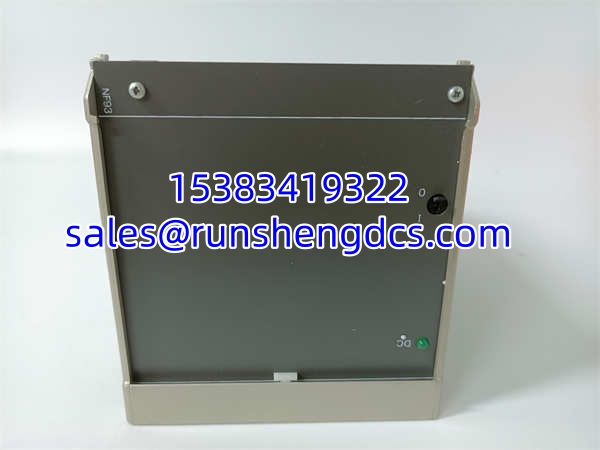
The NF93A-2 (HESG440280R2) is a legacy excitation control module from ABB’s power electronics product line, manufactured in Switzerland. It belongs to ABB’s excitation control system family and is designed to regulate generator field excitation in power generation applications — managing voltage setpoint, field current, reactive power output, and protective functions for synchronous generators.
The “NF93A-2” is the functional model designation, while “HESG440280R2” is ABB’s internal material number for the same board. The module is typically deployed alongside companion modules HESG323662R1 and HESG216665/K, which together form a complete excitation control assembly. The label marking on the module confirms the electrical specifications: 82–156 VDC input, ±15V/±24V outputs, 5A input current, and 2 kVeff insulation rating per IEC 255 — indicating it is designed for industrial power system environments with significant electrical stress.
The module performs real-time monitoring and adjustment of electrical parameters — voltage, current, frequency — and executes protection logic including device start/stop sequencing, load distribution, and fault response. It supports communication with upstream control systems for remote monitoring and parameter adjustment, and the control logic is programmable to match specific generator and plant configurations.
Troubleshooting Quick Reference
| Fault | Likely Cause | Probability | Quick Check | Fix |
|---|---|---|---|---|
| Module not powering up | Input voltage outside 82–156 VDC range or supply wiring fault | 55% | Measure DC input voltage at module terminals | Verify supply voltage within range; check wiring connections and fuses |
| Erratic excitation output | Companion module mismatch or degraded inter-module connection | 50% | Verify HESG323662R1 and HESG216665/K are seated and matched | Reseat companion modules; verify part number compatibility |
| Communication lost with supervisory system | Serial/network cable fault or protocol configuration mismatch | 45% | Check communication cable continuity; verify baud rate and addressing | Replace cable; reconfigure communication parameters |
| Overheating or thermal shutdown | Insufficient ventilation or accumulated dust/debris | 40% | Inspect module and surrounding area for dust; verify airflow | Clean module and cabinet; ensure adequate ventilation per installation requirements |
| Protection trip / fault indication | Generator parameter out of range or internal fault detection | 50% | Check generator voltage, current, frequency readings; review fault log | Address root cause of parameter deviation; reset fault after correction |
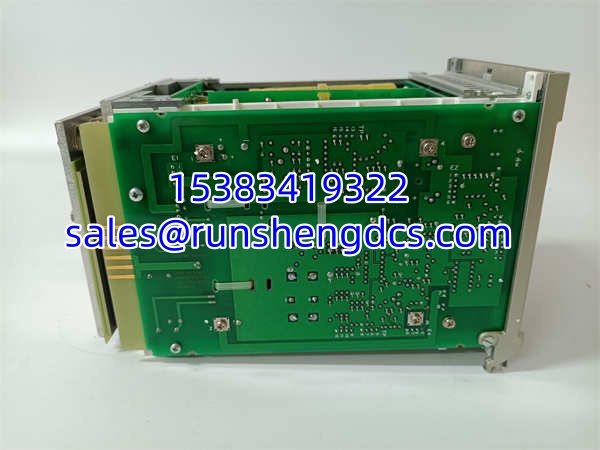
ABB NF93a-2 HESG440280R2
Application Scenarios & Pain Points
Power plant generator excitation systems. NF93A-2 modules deployed in ABB excitation control cabinets for synchronous generator regulation. Pain: this is a legacy Swiss-manufactured module, and ABB no longer produces it as a standard spare. Plants running these systems face increasing difficulty sourcing replacement modules — surplus inventory is finite, and lead times from secondary market suppliers can stretch to weeks. The module’s integration with companion boards (HESG323662R1, HESG216665/K) means that replacing a single failed module requires verifying that the replacement is compatible with the existing companion set.
Industrial cogeneration and refinery power systems. Smaller-scale power generation installations using ABB excitation control for turbine-driven generators. Pain: the 82–156 VDC input range is specific to this module’s design. If a plant’s DC supply voltage has drifted over years of operation (due to aging rectifiers or battery banks), a replacement module may behave differently than the original. Voltage margin verification is essential before commissioning a surplus replacement.