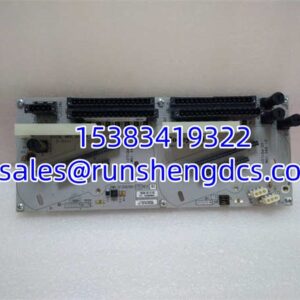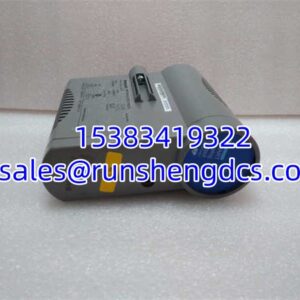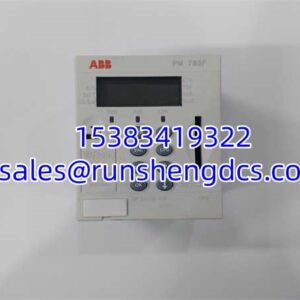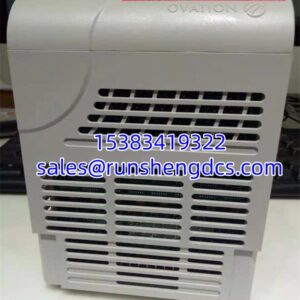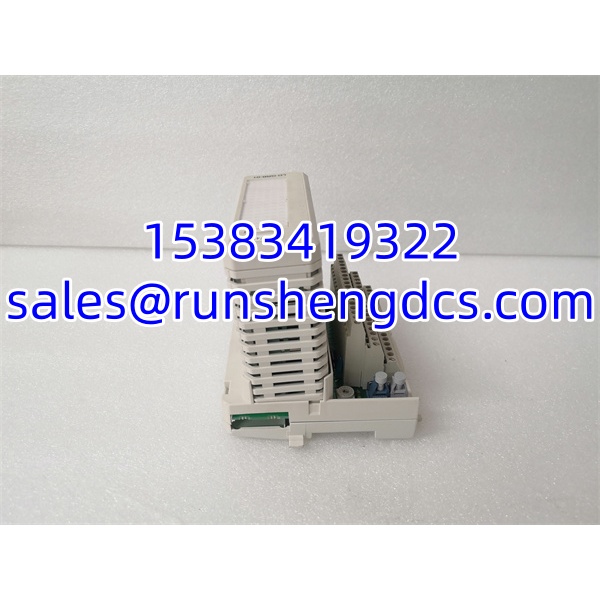

Description
Key Technical Specifications
| Parameter | Value |
|---|---|
| Product Type | Signal Conditioning / I/O Interface Module |
| Brand / Series | ABB / IndustrialIT 800xA, Symphony Plus |
| Part Number | LDGRB-01 / 3BSE013177R1 |
| Supported Signals | Analog (4–20 mA, 0–10 V), digital I/O; TC/RTD on configured variants |
| Channel Configurations | Varies — commonly 8 AI or 16 DI/DO depending on sub-variant |
| Signal Accuracy | Up to ±0.1% FS (verify per datasheet) |
| Electrical Isolation | Up to 1500 VDC between channels and system |
| Communication | Backplane bus to ABB controller; HART support on configured AI/AO variants |
| Supply Voltage | Typically 24 VDC |
| Operating Temperature | −25 °C to +70 °C |
| Protection Rating | IP20 (cabinet installation required) |
| Configuration Tool | ABB Control Builder / System 800xA engineering environment |
| Diagnostic Features | LED status indicators; system-level diagnostics via HMI |
Product Introduction
In a live DCS or process control rack, a misidentified I/O module is not a procurement inconvenience — it is a loop integrity risk. The ABB LDGRB-01 (3BSE013177R1) serves as a signal conditioning and isolation interface within the ABB IndustrialIT 800xA and Symphony Plus ecosystems. It accepts field signals — typically 4–20 mA analog loops, 0–10 V signals, or digital status inputs — and conditions them for reliable communication with the controller over the backplane bus. High channel-to-channel and channel-to-system isolation (up to 1500 VDC) protects the control system from ground loops, transients, and field-side faults.
This module is commonly deployed in continuous process industries — refining, chemical, power generation, and utilities — where signal fidelity and electrical isolation directly affect loop stability and alarm integrity. Some variants support HART communication on analog channels, enabling smart-instrument diagnostics to pass through to the engineering station. For surplus procurement, the critical diligence items are channel configuration matching, isolation specification verification, and confirming the module’s firmware and slot assignment are compatible with the target ABB controller and project configuration.
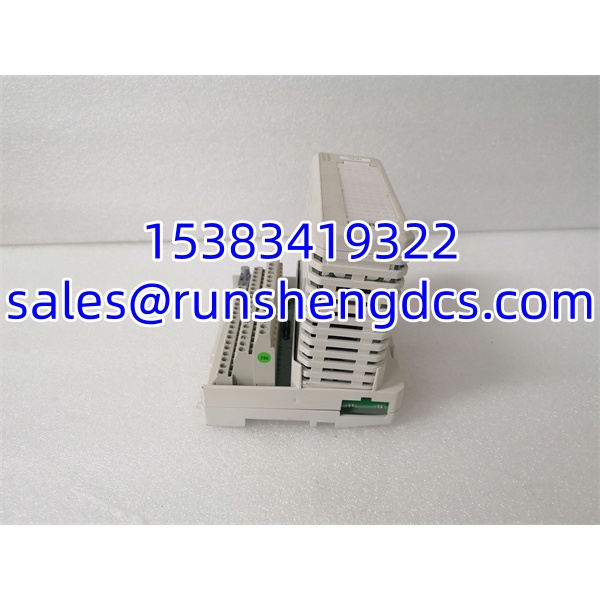
QA/QC Transparency SOP
- Intake & Origin Verification — Confirm ABB branding, LDGRB-01 model, 3BSE013177R1 part number, serial number, and revision code. Photograph all labels and the backplane connector. Reject units with corrosion, cracked housings, or bent backplane pins.
- Live Functional Testing — Install in a compatible ABB rack with proper 24 VDC supply. Verify power-up LED sequence, backplane communication, and channel status indicators. Apply known test signals (4 mA, 12 mA, 20 mA or equivalent digital states) and verify correct reporting to the engineering station.
- Electrical Parameter Tests — Measure supply current at no-load and under loaded channel conditions. Verify isolation resistance between channels and to the backplane. Flag any channel with drift exceeding ±0.1% FS or intermittent communication faults.
- Configuration Verification — Read module identity, firmware revision, and channel configuration via Control Builder or the system HMI. Archive the configuration dump. Do not reconfigure a surplus module without a verified project backup from the end user.
- Final QC & Anti-Static Packaging — Seal in ESD bags with desiccant. Include test summary, channel calibration readings, LED status photos, and configuration readout. No generic “tested OK” label without logged data.
Field Engineer Gotchas
- Channel Configuration Mismatch — The LDGRB-01 family has variants with different channel counts and signal types. Dropping an 8-channel AI module into a slot configured for 16 DI/DO will cause channel mapping errors or controller faults. Fix: Read the slot configuration from the existing module or project file before removal. Warning: Do not assume “same part number = same configuration.”
- HART Capability Assumption — Not every LDGRB-01 channel supports HART pass-through. If the loop relies on HART diagnostics from a smart transmitter, a non-HART variant will break that communication path. Fix: Verify HART support in the module datasheet and the loop configuration. War story: A chemical plant replaced an AI module and lost valve positioner diagnostics — the replacement lacked HART capability despite the same base part number.
- Isolation Integrity on Surplus Units — A module that passed functional tests can still have degraded isolation barriers from prior surge events. Fix: Perform insulation resistance testing between channels and to the backplane. Blunt advice: If isolation is below spec, the module is a latent ground-loop generator.
- Backplane Connector Seating — ABB I/O modules use dense backplane connectors. A partially seated module can cause intermittent channel dropouts that mimic field wiring faults. Fix: Remove power, reseat firmly, and verify mechanical locking. Warning: Forcing the module can bend backplane pins on adjacent slots.
- Project Configuration Dependency — Unlike a standalone signal isolator, this module’s behavior is defined by the ABB project configuration. A correctly wired module with the wrong slot assignment or channel type in the project will report bad quality or fault. Fix: Verify the hardware configuration in Control Builder matches the physical installation.
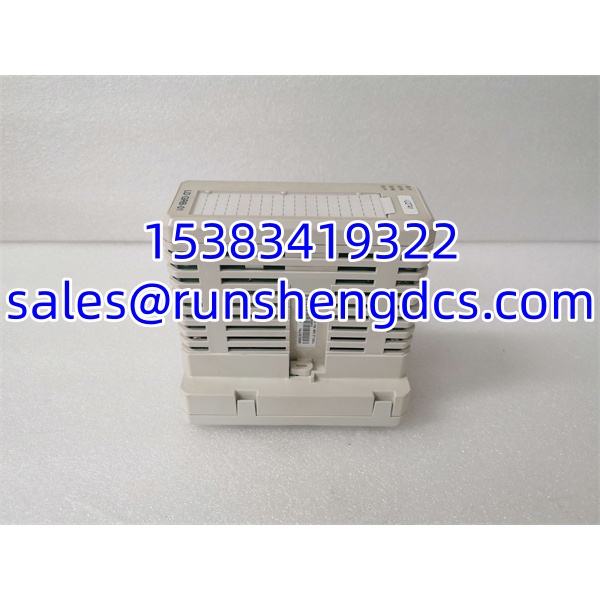
ABB LDGRB-01 3BSE013177R1
Application Scenarios
- Refinery DCS I/O replacement — A failed LDGRB-01 in an 800xA rack must be replaced during a planned shutdown while maintaining analog loop accuracy for pressure and temperature transmitters.
- Power plant turbine monitoring — The module conditions 4–20 mA signals from vibration and temperature sensors, with isolation protecting the controller from field-side transients.
- Chemical process control upgrade — HART-enabled channels pass smart transmitter diagnostics to the engineering station, enabling predictive maintenance without additional hardware.
- Water treatment facility retrofit — Digital input channels monitor pump status and valve position feedback, with the module’s isolation preventing ground loops across distributed field devices.
FAQ
A: It is a signal conditioning and I/O interface module, not a standalone controller. It connects to an ABB controller (800xA or Symphony Plus) via the backplane bus.
Q: What signals does it support?
A: Typically analog (4–20 mA, 0–10 V) and digital I/O. Some variants support TC/RTD temperature inputs and HART communication. Verify the exact configuration from the nameplate and project file.
Q: Can I substitute it with any ABB I/O module?
A: No. The slot configuration, channel count, and signal type must match the ABB project. Substituting a different module type requires reconfiguration and testing.
Q: What software configures it?
A: ABB Control Builder or the System 800xA engineering environment, depending on the controller platform.
Q: Does it support HART?
A: Some variants do. HART support is configuration-dependent — verify with the module datasheet and the loop configuration in the project.
Q: What is the isolation rating?
A: Up to 1500 VDC between channels and between channels and the system. Verify the exact rating for your specific variant.
Q: Is this module still in production?
A: Availability varies. Much of the market supply is surplus or refurbished. Confirm lead times and condition with your supplier, and always verify compatibility with your installed ABB system before purchase.