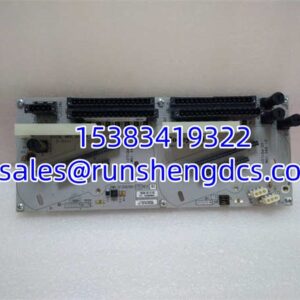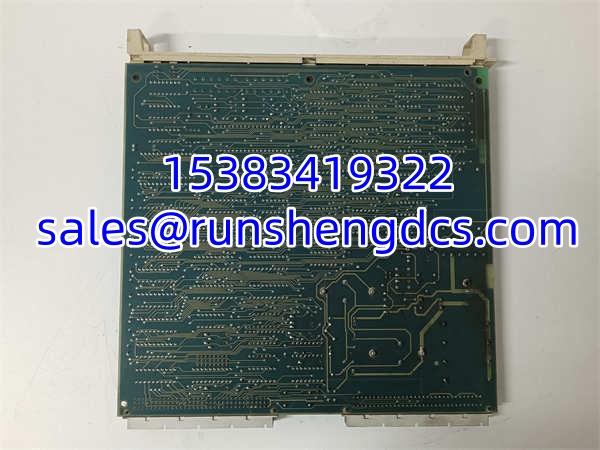

Description
Key Technical Specifications
| Parameter | Specification |
|---|---|
| Model Number | DSMC112 |
| Order Code | 57360001-HC |
| Brand | ABB |
| Product Type | DCS Control Module (Hybrid I/O) |
| I/O Circuits | 8 identical 115VAC circuits, each configurable as input or output |
| Input Filtering | Selectable 10ms to 100ms |
| Output Feedback | Supported (for monitoring output state) |
| Output Hold | Holds last state or default value on fault |
| Output Pulse Test | Supported |
| Electronic Fuse | Per-circuit: trips at >30A within 5ms (output on); trips at 20A after 2 cycles |
| Bus Switch Control | Supported |
| Operating Temperature | 0°C to +60°C |
| Storage Temperature | -40°C to +100°C |
| Humidity | 5% to 95% (non-condensing) |
| Origin | Sweden / Switzerland (varies by production batch) |
| Reference Price | USD 6 – 9,999 (surplus channel; varies significantly by supplier, condition, and availability) |
Product Introduction
The DSMC112 occupies a specific niche in ABB’s DCS ecosystem: it is a compact control module that gives you 8 configurable 115VAC circuits on a single card. Each circuit can function as either an input or an output — making it a flexible hybrid I/O module rather than a fixed-function card.
This flexibility matters in legacy DCS installations where rack space is limited and process requirements have evolved since the original system design. Instead of dedicating separate input and output cards for a handful of 115VAC signals, a single DSMC112 can handle the mix.
The module also includes per-circuit electronic fuse protection — a critical safety feature when switching 115VAC loads. If an output channel experiences an overcurrent condition, the electronic fuse trips in milliseconds, isolating the fault to a single channel without taking down the entire module or affecting adjacent circuits. This level of protection reduces downtime and simplifies fault diagnosis in the field.
The DSMC112 is found in ABB’s Advant OCS and related DCS platforms, commonly deployed in power generation, chemical processing, oil and gas, and water treatment facilities.
QA/QC Transparency SOP
- Intake & Origin Verification
Photograph the module label. Capture the DSMC112 designation, the 57360001-HC order code, serial number, and any ABB manufacturing markings or date codes. Cross-reference against the target DCS system’s configuration documentation to confirm this module matches the required I/O assignment. - Visual & Mechanical Inspection
Inspect the PCB for cracked solder joints, corrosion, burnt components, or signs of moisture ingress. Check all connector pins and terminal blocks for damage or oxidation. Verify the module slides into the target rack slot without forcing or binding. - Electrical Parameter Tests
Measure insulation resistance on all 115VAC circuit terminals. Verify continuity on signal paths. Check for short circuits between circuits and ground. Confirm isolation between adjacent channels meets specification. - Functional Verification
If test infrastructure permits, apply 115VAC test signals to input-configured circuits and verify correct state reporting. For output-configured circuits, command state changes and verify correct voltage output. Test electronic fuse trip behavior by simulating overcurrent conditions (if test setup allows). Confirm input filtering responds correctly at both 10ms and 100ms settings. - Final QC & Anti-Static Packaging
Label with QC pass status, test date, and any revision markings. Pack in an anti-static shielding bag with foam protection on all connectors. Include documentation noting that each circuit’s I/O configuration must match the DCS application before commissioning.
Field Engineer Gotchas
- Each Circuit Must Be Explicitly Configured as Input or Output
The DSMC112’s 8 circuits are not auto-detecting. Each circuit must be explicitly configured in the DCS configuration as either an input or an output. If you install a surplus module without verifying or reprogramming the I/O assignment, circuits may behave opposite to what the process expects — reading outputs as inputs or driving inputs as outputs. Pull the original configuration or reprogram from scratch. - 115VAC Is Not Low Voltage — Respect the Hazard
These circuits operate at 115VAC. This is not a 24VDC signal-level module. Ensure proper lockout/tagout procedures are followed during installation and maintenance. Verify that the DCS rack’s power distribution and isolation are rated for 115VAC switching. - Electronic Fuse Behavior Is Fast but Not Instantaneous
The electronic fuse trips at >30A within 5ms or at 20A after 2 cycles. This is fast, but not instantaneous. Downstream wiring and loads must be sized to prevent sustained overcurrent conditions that could damage the circuit before the fuse trips. The electronic fuse protects the module — it is not a substitute for proper circuit protection design. - Input Filtering Affects Response Time
The selectable input filtering (10ms–100ms) directly affects how quickly the module responds to input state changes. A 100ms filter will reject more noise but will also delay the module’s response to fast-changing signals. If your process requires fast input response (e.g., interlock signals), use the shortest practical filter setting. If the input is subject to contact bounce or EMI, increase the filter time. - Output Hold Behavior Must Match Process Safety Requirements
On fault or communication loss, the output can hold its last state or revert to a default value. The correct behavior depends entirely on the process. A valve that must fail-safe to closed should not be configured to hold its last state. Verify the output hold setting against the process safety analysis before commissioning.
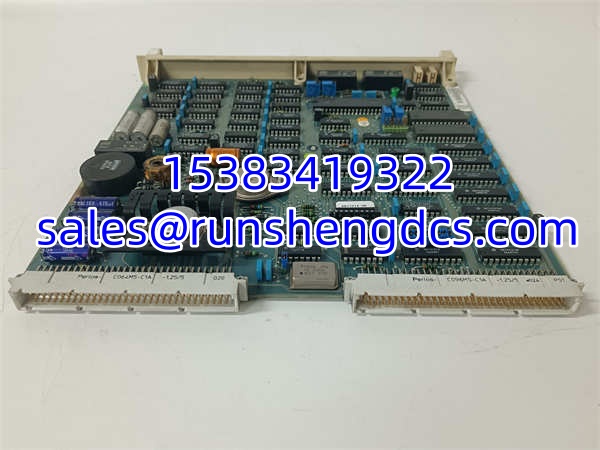
ABB DSMC112 57360001-HC
Application Scenarios
- Power plant auxiliary systems — Controls and monitors 115VAC auxiliary equipment (pump starters, fan dampers, lube oil heaters) where a mix of input status and output commands share the same rack slot.
- Chemical process control — Manages 115VAC solenoid valves and motor starters in batch process sequences, using the electronic fuse protection to isolate individual channel faults without disrupting the entire batch.
- Water treatment facilities — Monitors pump run status (input) and controls pump start/stop (output) on the same module, reducing rack space requirements in compact I/O cabinets.
- Legacy DCS upgrades — In older ABB DCS installations where rack space is fully populated, the ‘s hybrid I/O capability allows adding new process points without requiring a dedicated input or output card slot.
FAQ
Neither. It is a hybrid I/O module with 8 configurable 115VAC circuits. Each circuit can be individually configured as either an input or an output through the DCS configuration software.
What voltage do the I/O circuits operate at?
The circuits are rated for 115VAC. This is not a low-voltage DC module. Ensure proper safety procedures and rack power distribution for 115VAC operation.
Yes. Each of the 8 circuits must be explicitly configured as input or output in the DCS configuration. The module does not auto-detect circuit function. A surplus module pulled from one application will not work correctly in another without reconfiguration.
How does the electronic fuse protection work?
Each circuit has independent electronic fuse protection. If an output channel exceeds 30A while energized, the circuit shuts down within 5ms. At 20A, it trips after 2 AC cycles. This isolates the fault to a single channel without affecting other circuits on the module.
Can this module replace a dedicated input or output card?
Functionally, yes — if the application uses 115VAC signals and the total channel count fits within 8. However, the must be configured correctly for the specific I/O assignment. It is not a drop-in mechanical replacement for all ABB dedicated I/O cards.
Is this module still supported by ABB?
Verify directly with ABB. The belongs to ABB’s legacy DCS product family. Confirm current support status, spare parts availability, and any recommended replacement before specifying it for a new installation.