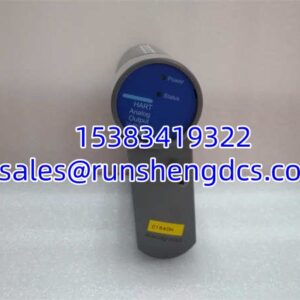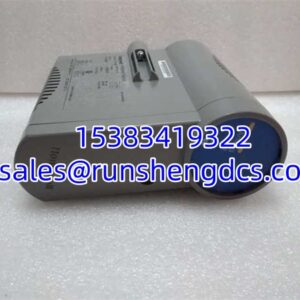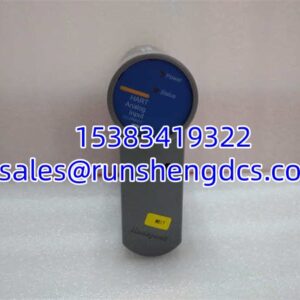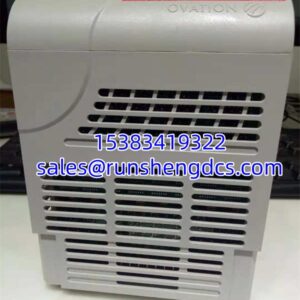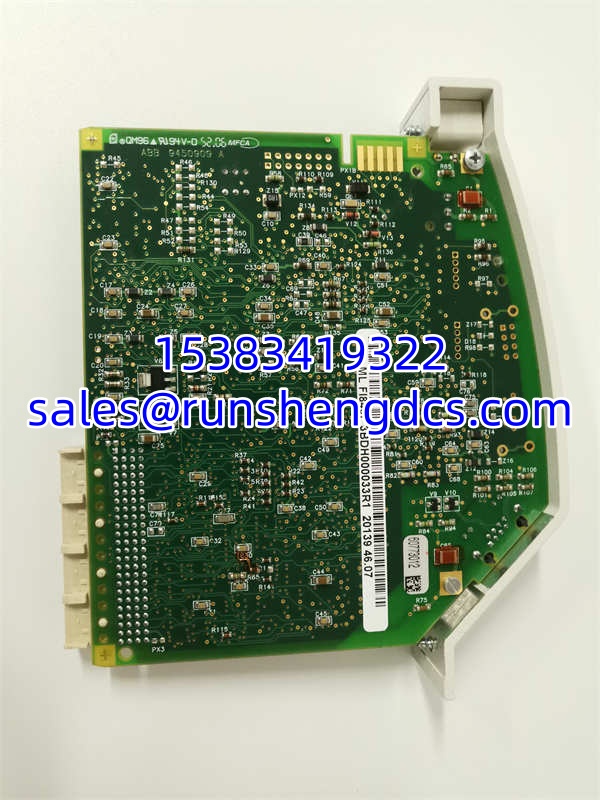

Description
Key Technical Specifications
| Parameter | Value |
|---|---|
| Manufacturer | ABB |
| Product Line | Advant OCS / MasterPiece 200 |
| Module Type | Fiber Optic I/O Interface (FI840F) |
| Part Number | 3BDH000033R1 |
| I/O Capacity | 16 DI / 16 DO (Typical Config) |
| Communication | Fiber Optic Bus (Immune to EMI) |
| Isolation | 2500V DC (Channel-to-Bus) |
| Operating Temp | -20°C to +70°C |
| Mounting | DIN Rail / Backplane |
| Diagnostics | LED Status for Fiber Link & I/O |
| Protocol | Proprietary Advant Fieldbus |
Product Introduction
Copper cables in a plant full of VFDs and welding stations are just antennas waiting to corrupt your data. The ABB 3BDH000033R1 (FI840F) solves this by moving the signal to light. It’s a fiber optic I/O interface for the Advant OCS system, letting you push digital I/O out to harsh remote panels without the noise, ground loops, or voltage spikes that kill copper-based cards.
We stock the ABB 3BDH000033R1 because Advant systems are aging, but the fiber infrastructure is still solid. This module gives you 16 digital inputs and 16 outputs over a link that ignores electromagnetic interference entirely. It’s not about speed; it’s about survival in high-noise environments like steel mills or traction substations. Just remember: fiber is fragile. If you kink the cable during install, you’re buying a new patch cord, not just reseating a connector.
QA/QC Transparency SOP
- Intake & Origin Verification: We trace the ABB 3BDH000033R1 to its decommissioned site. Visual inspection focuses on the fiber port housing for cracks and the backplane pins for corrosion or bending.
- Live Functional Testing: The module goes on an Advant test rack. We inject I/O signals and verify the fiber link LED stays solid. No “blink test” here; it must pass data.
- Electrical Parameter Tests: Using a Fluke 115, we check isolation resistance between the fiber interface and the backplane. Power rail ripple is measured to ensure the internal optics aren’t starving.
- Firmware/Config Verification: We read the onboard ID to confirm it’s a true FI840F and not a mislabeled FI830F. Jumper settings for I/O mapping are photographed and logged.
- Final QC & Anti-Static Packaging: After passing, it gets a test sheet, anti-static bag, and desiccant. If the fiber link is intermittent, it’s scrapped. No “as-is” sales on comms gear.
Field Engineer Gotchas
- Fiber Type Mismatch: The ABB 3BDH000033R1 typically uses multimode fiber, but older installs might have single-mode cabling. Risk: No link light, total communication failure. Fix: Check the cable jacket and core size. I’ve seen a tech spend 4 hours troubleshooting a “dead” module that was actually just plugged into the wrong fiber plant.
- Connector Contamination: Fiber ports hate dust. Risk: Intermittent errors or high bit-error rates. Fix: Clean the connector end-face with a proper fiber pen before insertion. Don’t blow on it. I’ve seen a plant’s entire remote I/O rack go offline because someone sneezed near the patch panel.
- I/O Address Jumpers: This module often uses physical jumpers for base address or bank selection. Risk: Swapping the board and having the controller read the wrong points. Fix: Photograph the jumper block on the old board before removal. I once swapped a unit and forgot the “Bank B” jumper; the controller started tripping breakers because it was reading inputs from the wrong rack.
- Bend Radius: Fiber isn’t copper. Risk: Micro-cracks in the glass causing future failures. Fix: Respect the bend radius. Don’t zip-tie the cable tight against a sharp metal edge. Give it some slack.
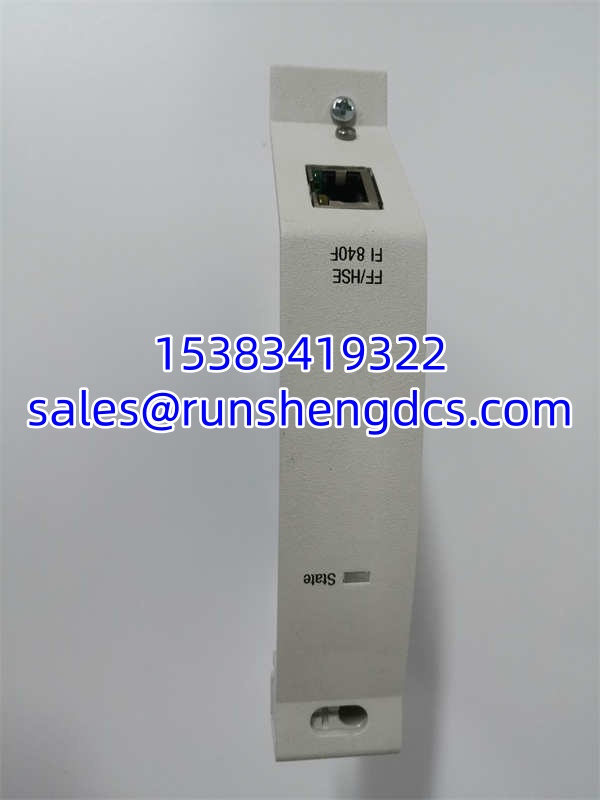
ABB 3BDH000033R1
Application Scenarios
- Traction Substations: Monitoring breaker status and alarms in high-voltage switchgear rooms where EMI from switching is extreme.
- Steel Mill Roll Tables: Reading limit switches and motor overloads right next to massive DC drives that would fry copper I/O cards.
- Remote Pump Stations: Extending Advant OCS control to outdoor panels 500m away without signal degradation or ground potential rise issues.
- Case Study: A water treatment plant had intermittent false trips on their chlorination skid. They replaced the PLC, the I/O cards, and the power supply. Finally, they swapped the ABB 3BDH000033R1. The problem vanished. The old module had a failing optical transmitter that dropped packets during high-vibration pump cycles. Bottom line — when copper fails, go fiber.
FAQ
Is the 3BDH000033R1 the same as FI840F?
Yes. 3BDH000033R1 is the ordering code; FI840F is the functional type. Verify the suffix. A missing “F” or different revision can mean different I/O mapping or firmware.
Can I use standard Ethernet fiber?
No. The ABB 3BDH000033R1 uses a proprietary fieldbus protocol over fiber, not TCP/IP. Standard Ethernet SFPs won’t work. You need the specific ABB patch cords or compatible industrial fiber.
Why is my link light blinking?
Check the fiber continuity. A blinking light usually means the module is transmitting but not receiving. Clean the connectors. If that fails, the remote end’s receiver might be dead. Don’t assume the local module is bad.
Does this support hot-swapping?
Generally, no. Pulling the ABB 3BDH000033R1 while powered can disrupt the fieldbus token passing. Plan a brief pause in monitoring or a shutdown window.
What if I lost the jumper block?
Don’t guess. The ABB 3BDH000033R1 address jumpers are critical. Call us or check the OEM manual for the default map. Wrong addressing = wrong control.
Is this obsolete?
Yes. The Advant OCS platform is legacy. The ABB 3BDH000033R1 is no longer manufactured. Stock is finite. If you have a critical fiber link, buy a spare now.
How do I know if it’s truly tested?
Ask for the fiber link test report. If the seller can’t show you a pass/fail on the optical transceiver, walk away. Comms modules are the nervous system. “Tested” is a marketing word; data is engineering.