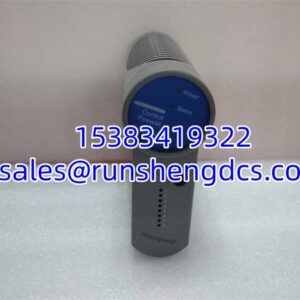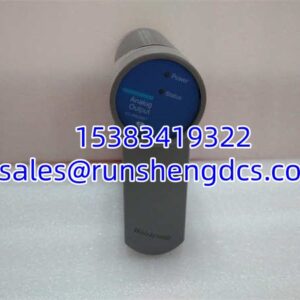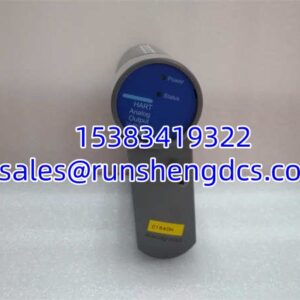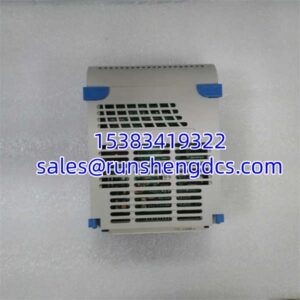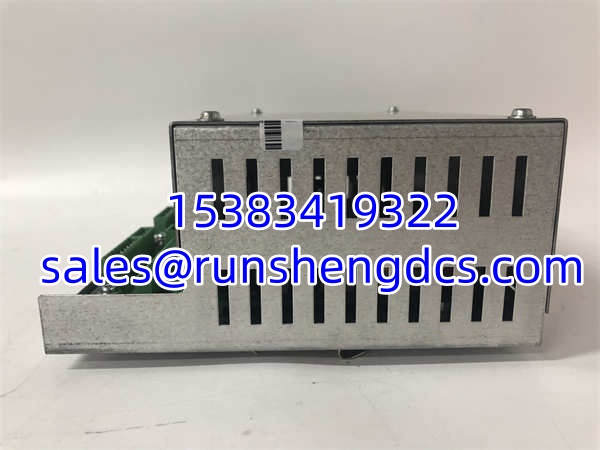
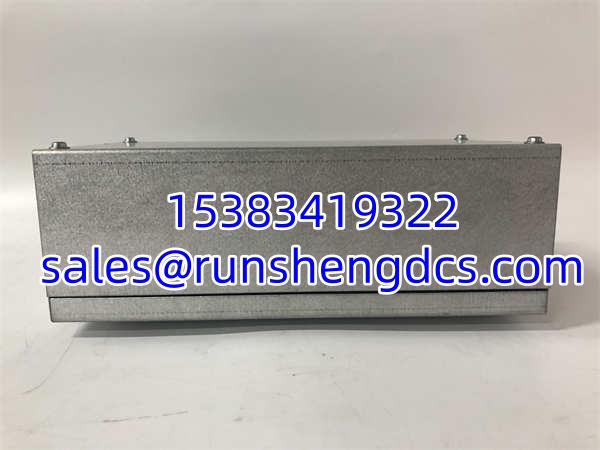

Description
Key Technical Specifications
- Product Model: 0504994880
- Manufacturer: ABB
- Product Type: SIB V Stabilizer Module / Option Board
- Power Supply: 24 VDC
- Power Consumption: 5 W
- Communication Interfaces: Ethernet, RS-232, RS-485, PROFIBUS DP
- Expansion: 8 Sub-module Slots
- Operating Temperature: -20°C to +55°C
- Storage Temperature: -40°C to +85°C
- Humidity: 0% to 95% (Non-condensing)
- Dimensions: 255 mm x 185 mm x 100 mm
- Weight: 1.77 kg
Product Introduction
Keeping a legacy ABB welding cell running when the OEM has moved on is a constant battle against downtime. The ABB 0504994880 is a critical SIB V stabilizer module designed to provide a clean, regulated power interface and signal conditioning for the robot controller. It sits between the main control cabinet and the welding equipment, ensuring that voltage sags or electrical noise from the arc don’t corrupt the control signals or cause erratic robot motion.
Engineers value this module for its robust 24 VDC regulation and comprehensive communication suite, including Ethernet, RS-232/485, and PROFIBUS DP. With 8 sub-module slots, it offers significant expansion capability for adding I/O or specialized welding functions without replacing the entire controller. The -20°C to +55°C operating range means it can handle the thermal stress inside a control cabinet near a welding power source. Bottom line — if you’re running an ABB robot with SIB V architecture, this board is your primary defense against power-related control faults. Secure tested spares now, as new production has long since ceased.
QA/QC Transparency SOP
- Intake & Origin Verification: We verify the 0504994880 part number and revision against the silkscreen. We inspect the board for signs of thermal damage, especially around the voltage regulators and communication transceivers, which are common failure points in welding environments.
- Live Functional Testing: The module is installed in an ABB SIB V test rack. We apply a 24 VDC supply and verify the internal regulated outputs are within tolerance. We then test all 8 sub-module slots for proper backplane communication and slot detection.
- Electrical Parameter Tests: We use a Fluke multimeter to check for ripple on the 24V output under load. Insulation resistance is verified on all RS-485 and PROFIBUS ports to ensure isolation barriers haven’t been compromised by welding ground loops.
- Firmware/Config Verification: We read the module’s configuration via the Ethernet port to ensure it reports the correct hardware revision and slot population. Any latched diagnostics are cleared and re-tested.
- Final QC & Anti-Static Packaging: All status LEDs are verified for correct operation. The 0504994880 is sealed in an anti-static bag with desiccant to protect the sensitive analog front-end and communication ICs from moisture and ESD during storage.
Field Engineer Gotchas
- Ground Loop Noise on RS-485: The 0504994880 uses RS-485 for field communication, which is highly susceptible to ground loops in welding environments. Risk: Tying the RS-485 shield to chassis ground at both the module and the field device creates a ground loop that will corrupt data or fry the transceiver. Fix: Ground the shield at the 0504994880 module ONLY. I’ve seen techs spend days chasing a “bad robot” when it was just a ground loop on a brand-new stabilizer module.
- Sub-module Seating Issues: With 8 expansion slots, poor seating is a common cause of intermittent faults. Risk: Not fully seating a sub-module can cause the controller to report a “Slot Fault” or fail to recognize the expansion card. Fix: Always apply firm, even pressure until the retention clips click. Verify the slot is recognized in the controller diagnostics before powering up the welding equipment.
- ESD Damage on Communication Ports: The Ethernet and serial ports on the 0504994880 are sensitive to static discharge. Risk: Plugging in a cable without proper grounding can degrade the port’s isolation, causing intermittent communication failures that won’t show up in a basic continuity test. Fix: Always use an ESD wrist strap and verify port functionality with a known-good cable and device before installation.
- Power Supply Sag Under Load: At 5W consumption, a degraded backplane power supply can cause the module to brown out during high-channel-count operations or welding arc strikes. War story: Swapped in a new 0504994880 and it kept rebooting. The old module had failed partially and was drawing less current. The real problem was the power supply. Always check the backplane voltage under load before condemning the stabilizer module.
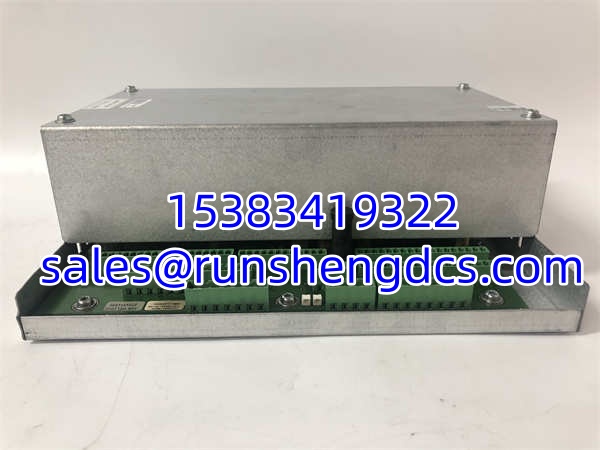
ABB 0504994880
Application Scenarios
- Automotive Welding Cells: Providing stable control power and signal conditioning for ABB IRB robots in high-duty-cycle spot welding applications, where electrical noise from the welders is extreme.
- Heavy Equipment Fabrication: Managing communication between the robot controller and external welding power sources via PROFIBUS DP, ensuring consistent weld parameters despite varying line conditions.
- Legacy System Upgrades: Expanding I/O capacity on older ABB S4/S4C controllers using the 8 sub-module slots, allowing integration of new safety scanners or vision systems without a full controller replacement.
FAQ
Is the 0504994880 still manufactured by ABB?
No. This is a legacy SIB V product. We supply new surplus and professionally refurbished units with a 1-year warranty. Stock is finite and not replenished.
Can I hot-swap this module in a live ABB robot controller?
No. The 0504994880 does not support hot-swap. Replacing it requires a full system shutdown and a controller reboot. Schedule a maintenance window and ensure you have a verified backup of the robot program and configuration.
What does the “SIB V” designation mean?
SIB V stands for “System Interface Board, Version 5.” It’s ABB’s legacy interface architecture for S4 and S4C robot controllers. The 0504994880 is a stabilizer/option board within this platform. Verify your controller generation before ordering.
How do I verify the module is functioning correctly?
Check the status LEDs on the front panel. A solid green power LED and flashing communication LED indicate normal operation. Use the robot teach pendant to navigate to the I/O or system diagnostics menu to verify all 8 sub-module slots are recognized and reporting no faults.
My module is showing a “Slot Fault” on expansion slot 3. What do I do?
First, power down and reseat the sub-module in slot 3. Inspect the connector pins for damage or debris. If the fault persists, try moving the sub-module to a different slot. If the fault follows the sub-module, the expansion card is likely faulty. If the fault stays with slot 3, the 0504994880 backplane connector may be damaged.
Does this module support modern Ethernet/IP or PROFINET?
No. The 0504994880 supports legacy Ethernet TCP/IP, RS-232, RS-485, and PROFIBUS DP. It does not support newer industrial Ethernet protocols. If you need Ethernet/IP or PROFINET, you will need a protocol gateway or a controller upgrade.
What is the expected MTBF for this module?
ABB typically rated these modules at 100,000+ hours MTBF under normal operating conditions. In practice, we see them last 15-20 years in clean, climate-controlled environments. Heat, moisture, and electrical noise from welding are the primary killers.