
Description
Key Technical Specifications
| Parameter | Typical Value / Note |
|---|---|
| Manufacturer | YASKAWA Electric Corporation |
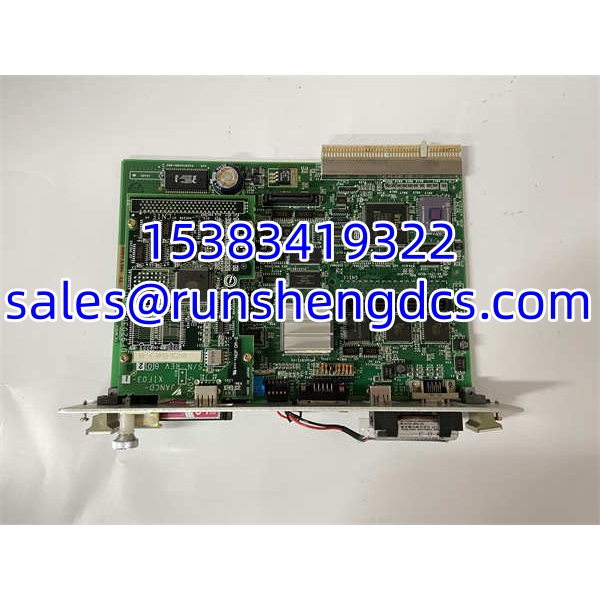
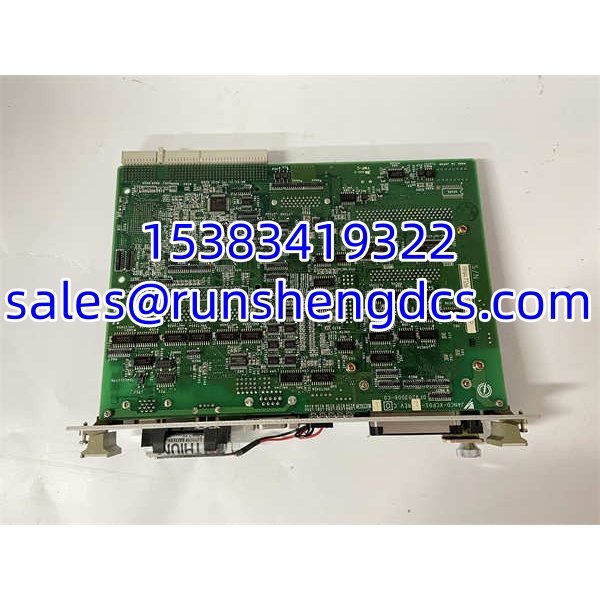
| Model | JANCD-XCP01-1 |
| Alternate Number | DF9203006-C0 |
| Product Type | CPU / Main Processor Board |
| Controller Family | Motoman XRC |
| Application | Robot motion control, job execution, system supervision |
| Mounting | Plugs into XRC controller backplane / CPU slot |
| Compatible Controllers | Motoman XRC robot controllers |
| Related Boards | JANCD-XCP01C, JANCD-XCP02, JANCD-XIF series |
| Status | Legacy / discontinued; surplus and refurbished available |
| Firmware | Controller-dependent; must match installed XRC software version |
| Supply Voltage | Controller internal backplane supply; verify with OEM manual |
Product Introduction
When an XRC cabinet throws a CPU alarm, the robot does not limp along. It stops. Production stops with it. The JANCD-XCP01-1 is the board you are looking at when that happens: the main CPU processor for the Motoman XRC controller. It is not an I/O slice, not a communications add-on, and not a generic PLC card. It sits at the center of the XRC system and executes robot jobs, manages motion control, and supervises controller operations.
This board belongs to a legacy controller family, so replacement decisions need discipline. The XRC platform still runs in welding cells, material-handling lines, and older automotive stations where a full controller upgrade is not yet budgeted. The JANCD-XCP01-1 is typically identified by the DF9203006-C0 assembly number and must match the controller’s software generation. Bottom line — do not buy it on model number alone. Confirm the CPU revision, firmware level, and backplane compatibility before pulling the old board.
QA/QC Transparency SOP
- Intake & Origin Verification: Record JANCD-XCP01-1, DF9203006-C0, serial number, and board revision. Inspect for burnt components, lifted traces, corrosion, and prior rework.
- Live Functional Testing: Install into a verified XRC controller test rack. Power up and confirm normal boot sequence, teach pendant communication, and absence of CPU/system alarms.
- Electrical Parameter Tests: Check backplane connector pins, internal rail voltages, and short-circuit conditions. Verify no abnormal current draw before full system startup.
- Firmware/Config Verification: Read CPU firmware and software version from the controller. Confirm compatibility with the customer’s existing XRC software and job structure.
- Final QC & Anti-Static Packaging: Run a full power-cycle test. Bag in ESD packaging with desiccant. Label model, revision, firmware readout, and test date.
Field Engineer Gotchas
- Firmware/Software Mismatch: A JANCD-XCP01-1 from a different XRC software generation may boot but fail to load jobs or communicate with the teach pendant. Always record the original controller software version before swapping boards.
- Board Revision Confusion: JANCD-XCP01-1, JANCD-XCP01C, and JANCD-XCP02 are not universal substitutes. The XCP02 is referenced as an optional substrate for Ethernet interface boards, not a direct CPU replacement. Verify the exact part before ordering.
- Backplane and Connector Damage: XRC boards plug into a controller backplane. Bent pins, oxidized contacts, or a damaged slot can mimic CPU failure. Inspect both the board edge connector and the backplane slot.
- Battery and Memory Risk: Older XRC systems depend on controller batteries for position and parameter retention. A weak battery during a CPU swap can cause data loss. Check battery voltage before power-down.
- Job and Parameter Backup: Never replace the CPU board without a full backup. Save jobs, system parameters, tool frames, and user frames. A working board with the wrong data is still a downtime event.
YASKAWA JANCD-XCP01-1
Application Scenarios
- Automotive spot-welding cells: Legacy XRC-controlled weld robots rely on the for job execution and motion sequencing.
- Material-handling gantries: Palletizing and transfer robots running XRC firmware use this CPU board for axis coordination and I/O supervision.
- Arc-welding stations: Older Motoman arc-welding robots in small fabrication shops often remain on XRC controllers due to validated weld procedures.
- Foundry and casting handling: Heat and dust accelerate backplane and CPU board failures in older robot cabinets.
FAQ
It is the main CPU processor board. It executes robot jobs, manages motion control, and supervises controller operations for Motoman XRC robots.
Not necessarily. Both are XRC CPU boards, but revisions and firmware compatibility can differ. Confirm the exact part number and software level before substitution.
3. Can I use JANCD-XCP02 instead?
No. JANCD-XCP02 is referenced as an optional substrate for Ethernet interface boards such as JANCD-XIF02, not as a direct CPU replacement for .
4. Is this board still available new?
The XRC platform is legacy. Most available stock is surplus, used, or refurbished. New sealed units are rare and should be verified carefully.
Not automatically. The board revision, DF9203006 suffix, and controller software version must be compatible. A mismatch can cause boot failures or job-load errors.
6. What should I check before installing a replacement?
Back up all jobs and parameters, verify controller software version, inspect the backplane slot, check controller batteries, and confirm the replacement board revision.
7. Can this board be repaired?
Some specialized industrial electronics shops repair XRC CPU boards, but repairs should include functional testing in an actual XRC controller. Do not accept visual-only “tested” claims for a main CPU.