
Description
Product Introduction
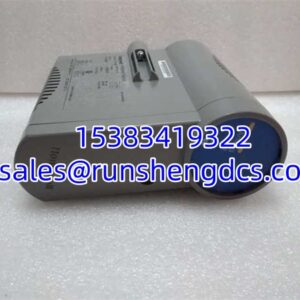
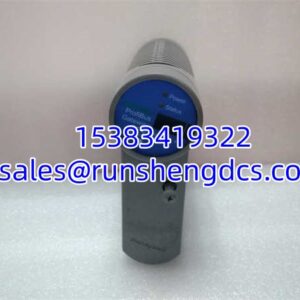
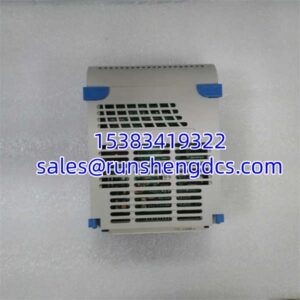
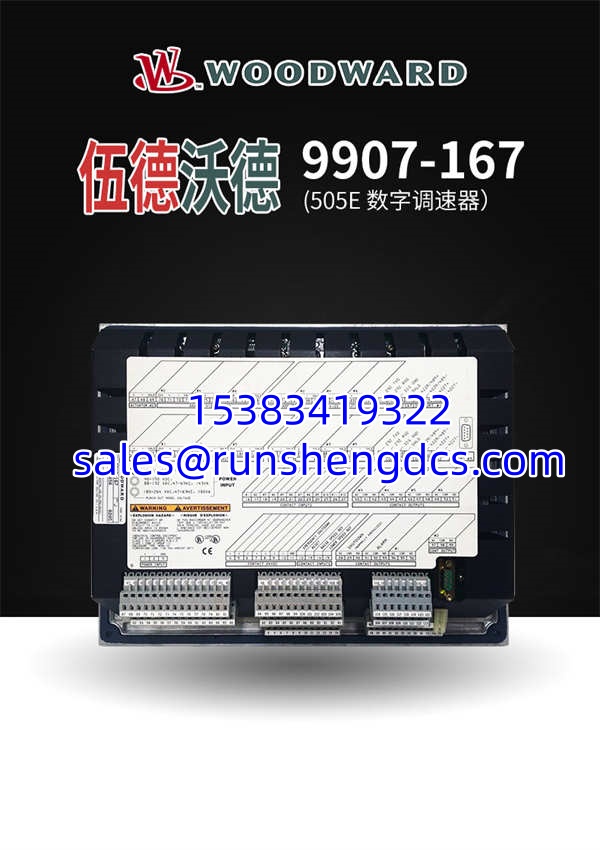
The Woodward 9907-167 is the digital control module designed to be the definitive interface for your discrete safety and control signals within the NetCon 5000 platform. It doesn’t just pass a contact closure; it validates and processes critical digital commands with deterministic timing.
This module is the primary I/O workhorse for discrete signals in a NetCon 5000 chassis. It provides 16 inputs and 12 outputs, all at 24 Vdc. That voltage level is a key detail. It matches the standard for industrial control circuits, meaning you can interface directly with most relays, pressure switches, and solenoid valves without needing intermediate conversion. In my experience, this direct compatibility is what simplifies panel design and reduces potential points of failure.
Key Technical Specifications
| Parameter | Value |
|---|---|
| Product Type | Digital Control Module |
| Series Compatibility | Woodward NetCon 5000 |
| Digital Inputs | 16 Channels |
| Input Voltage | 24 Vdc (Nominal) |
| Digital Outputs | 12 Channels |
| Output Rating | 24 Vdc, 0.5 A per channel (resistive load) |
| Network Interface | 100 Base-T Ethernet (RJ-45) |
| Protocol | EtherNet/IP, Modbus TCP |
| Configuration | Software (via NetCon Workbench) |
| Operating Temperature | 0 to 60 °C |
| Power Consumption | 15 W (max) |
| Agency Approvals | CE, UL |
Compatibility & Replacement Matrix
- Woodward 9907-167 → Woodward 9907-165 : Incompatible — The 9907-165 is an analog input module. The backplane connector and internal processing are entirely different. They occupy the same slot type but perform completely different functions.
- Woodward 9907-167 → Woodward 9907-167 (Rev B) : Direct — Hardware revisions (e.g., Rev A to Rev B) are typically backward compatible within the NetCon 5000 system. The firmware handles the differences. Always verify with your system’s firmware version.
- Woodward 9907-167 → NetCon 4000 I/O : Incompatible — The NetCon 4000 and 5000 platforms use different chassis backplanes and module architectures. A module from one series will not physically fit or function in the other.
Quality Inspection & SOP Transparency
We test these as critical control components, not just circuit boards.
- Incoming Inspection: We verify source traceability with the OEM packing list. Every unit gets a physical inspection for damage to the Ethernet port, terminal block connectors, and the Woodward label. We check the serial number for authenticity.
- Live Functional Test: We install the module in a live NetCon 5000 chassis. We verify the module is recognized by the NetCon Workbench software and comes online without errors. We then force all 16 digital inputs high and low, verifying the status changes in the logic solver. Next, we command all 12 digital outputs on and off, measuring the voltage at the terminals with a Fluke 115 multimeter to confirm the 24 Vdc output.
- Electrical Parameter Test: We measure the module’s power draw from the backplane to ensure it’s within the specified 15 W maximum. We also perform a continuity check on the ground terminal.
- Firmware Verification: We read the module’s firmware version and compare it against the compatibility matrix for the NetCon 5000 system it was tested in. We document the revision level.
- Final QC & Packaging: After a QC sign-off, the module is sealed in an anti-static bag, packed with foam protectors, and placed in a carton with a “QC Passed” label dated for that day.
WOODWARD 9907-167
Common Replacement Pitfalls
I’ve seen these mistakes turn a simple module swap into a days-long commissioning nightmare.
- ❗ Firmware Mismatch: This is the most common issue. A new 9907-167 might ship with a newer firmware version than your NetCon 5000 processor. The system will fault the module. You must use NetCon Workbench to downgrade the module’s firmware to match your system’s expected version.
- ❗ Ignoring the Network Configuration: This module is configured over Ethernet. If you replace it, the new module will have a default IP address. You’ll need to use the temporary serial connection or the “find device” utility in the Workbench software to locate it and assign it the correct IP address for your control network.
- ❗ Forgetting the Module Address: While the module is software-configured, its physical slot address in the chassis is critical. If you pull a module from slot 4 and put the new one in slot 5, your logic is now reading the wrong set of inputs. Double-check the slot number.
- ❗ Power Budget Shortfall: Each 9907-167 draws power from the chassis backplane. If you’re filling an empty chassis, you need to calculate the total power draw of all modules to ensure your power supplies are sufficient.
- ❗ ESD Damage: These are sensitive electronics. Always use a grounded wrist strap. I watched a contractor once install a module without one. It never came online.
FAQ
Can I just swap a Woodward 9907-167 in directly?
Physically, yes. Logically, maybe not. It will plug into the slot, but if its firmware revision doesn’t match what your NetCon 5000 processor expects, the module will show up as a fault. You’ll need a laptop with NetCon Workbench software to connect to the module and likely perform a firmware downgrade.
My system is NetCon 5000 v3.0. Is the 9907-167 compatible?
Yes. The 9907-167 is the standard digital I/O module for the NetCon 5000 platform. However, you should verify the specific firmware revision on the module itself. A module manufactured recently might have a newer firmware that requires you to update your entire NetCon system, which is a much bigger job.
What’s the difference between the 9907-167 and the 9907-165?
The 9907-167 is a digital I/O module, handling discrete on/off signals (24 Vdc). The 9907-165 is an analog input module, designed for continuous signals like 4-20mA or 0-10V from transmitters. They are not interchangeable.
Does this module come with terminal blocks?
No. The 9907-167 is just the module that plugs into the NetCon 5000 chassis backplane. The removable terminal blocks (RTBs) for your field wiring are typically included with the chassis or ordered separately.
What is the response time for the digital outputs?
The response time from a logic command to the output terminal energizing is typically less than 1 ms. This deterministic speed is critical for fast-acting trip circuits. Always verify this against the official Woodward 9907-167 datasheet for your specific project’s engineering requirements.