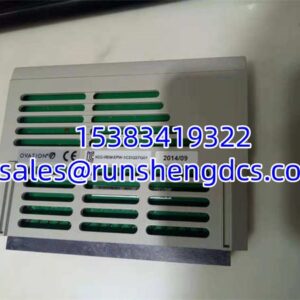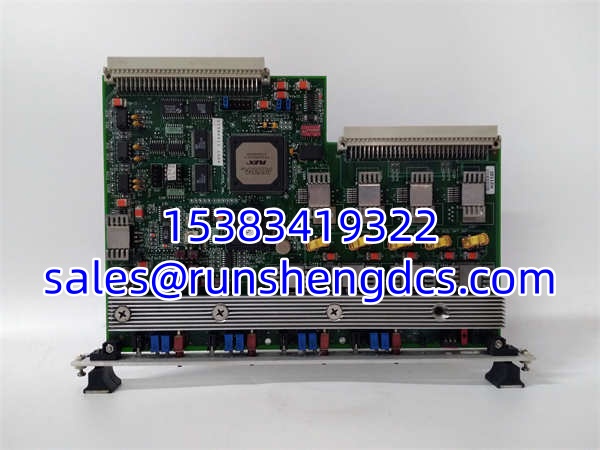
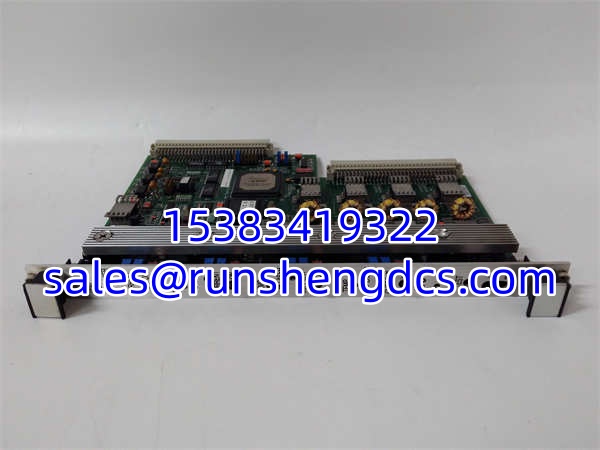

Description
Key Technical Specifications
| Parameter | Value |
|---|---|
| Product Model | VMIC ASSY-11994R13 |
| Manufacturer | VMIC / GE Fanuc |
| Product Type | VMEbus Single Board Computer (SBC) |
| Assembly Number | 11994R13 |
| Processor | Intel Pentium MMX @ 233 MHz |
| Memory | 64 MB SDRAM (Onboard) |
| Bus Interface | VME64 (A32/D32) |
| Flash Storage | 4 MB Boot Flash (Typical) |
| I/O Interfaces | 2x RS-232, 1x Ethernet, 2x PCMCIA |
| Operating Temp | 0°C to +60°C (verify with OEM manual) |
| Form Factor | 6U VME |
| Hot-Swap Support | No (VME hot-swap requires chassis support) |
Product Introduction
Your VME chassis is alive, but the brain is dead. The SBC in slot 1 just stopped talking to the backplane, and you’ve got a 20-year-old control system hanging in the balance.
The VMIC ASSY-11994R13 is a 6U VME Single Board Computer, typically configured as the VMIVME-7751. It runs a 233 MHz Pentium MMX processor with 64 MB of onboard SDRAM, serving as the system controller or high-level data aggregator in legacy GE Fanuc and Emerson ICS platforms. The R13 suffix is critical here — it defines the specific component population, flash size, and I/O population. This board bridges the gap between legacy VME I/O modules and modern Ethernet networks, often running VxWorks or LynxOS.
Why not just migrate to a new PAC? Because migration is a multi-year, multi-million dollar project. The ASSY-11994R13 buys you time. It’s a direct drop-in for existing VMIVME-7751 slots. The Pentium MMX is slow by modern standards, but it’s deterministic and proven. Bottom line — if your application ran on a 233 MHz CPU in 1998, it’ll run on this board today. Don’t over-engineer the replacement.
QA/QC Transparency SOP
Legacy SBCs like the ASSY-11994R13 are complex. Here’s how we validate them:
- Intake & Origin Verification: We verify the ASSY-11994R13 silkscreen, component layout, and VMIC/GE date codes. We check for unauthorized rework or replaced flash chips.
- Live Functional Testing (Comms, I/O, Load): The board is seated in a calibrated VME64 test chassis. We verify POST completion, VMEbus arbitration, and Ethernet/Serial I/O functionality. We run a memory stress test to check for SDRAM bit rot.
- Electrical Parameter Tests (Megger, Continuity): Using a Fluke 87V, we verify VMEbus signal integrity and check for degraded capacitors on the 5V/3.3V rails. We test isolation between VME P1/P2 connectors and signal I/O.
- Firmware/Config Verification (Readout & Backup): We read the boot flash checksum and compare against known-good ASSY-11994R13 signatures. We verify the VMEbus address map matches the R13 configuration. Corrupted flash is a common failure point.
- Final QC & Anti-Static Packaging: Visual inspection checks for cracked BGA solder joints or corroded VME fingers. The is sealed in an anti-static bag with desiccant, labeled with test date and VMEbus ID.
Field Engineer Gotchas
R13 vs R12 vs R14: The is not universally interchangeable with other VMIVME-7751 revisions. The R13 typically denotes a specific flash size and Ethernet PHY. Installing an R12 in an R13 slot can cause boot failures or missing I/O. Always match the exact suffix. We’ve seen plants buy three boards only to find the R13 was the only one with the correct Ethernet driver in their VxWorks image.
VMEbus Termination: The relies on proper VMEbus termination. If you’re replacing the system controller, verify the termination resistors on the backplane. Missing termination causes intermittent bus errors that look like bad SBCs. Pro tip: check the last slot in the chassis. We saved a $6,000 SBC replacement at a power plant just by adding a terminator.
CMOS Battery Failure: These boards use a CR2032 or similar to retain VMEbus address and RTC settings. After 15+ years, the battery dies. The board may boot but fail to initialize VMEbus correctly. Replace the battery before installation. Don’t assume a “new” surplus board has a fresh battery.
Thermal Throttling: The Pentium MMX runs hot. If the has a heatsink, check the thermal pad. Dried-out pads cause thermal throttling under load, leading to random VMEbus timeouts. Verify cabinet airflow. We’ve seen SBCs work fine on the bench but fail in a packed chassis due to heat soak.
VMEbus Address Conflicts: The must be configured with a unique VMEbus base address. If you’re replacing a failed board, verify the DIP switches or jumper settings match the original. Wrong address = bus hang. Pro tip: photograph the jumper settings before pulling the old board.
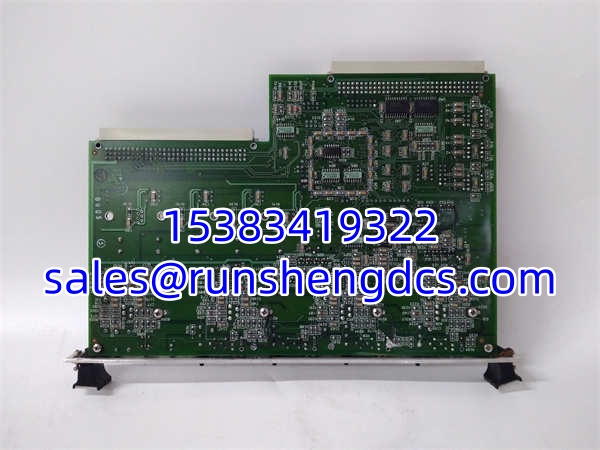
VMIC ASSY 11994R13
Application Scenarios
Legacy Power Plant DCS: Older GE Fanuc DCS systems use the as the system controller. When these boards fail, the entire unit protection logic is at risk. Replacing with a verified restores control without a full migration.
Data Acquisition Gateways: Research facilities and test labs use VMIVME-7751 boards to aggregate VME I/O data over Ethernet. The keeps legacy DAQ systems running while new systems are commissioned.
Military & Aerospace Test Stands: Legacy ATE systems rely on VME SBCs for test sequencing. The maintains test capability without recertifying new hardware.
Industrial Process Control: Chemical and petrochemical plants use these boards for batch control. A failed halts production. Sourcing a tested replacement minimizes downtime.
Case Study — Intermittent VME Hang: A research lab in California was getting random VMEbus hangs on their VMIVME-7751 system. They replaced the twice. Both times, the hang returned after 72 hours. Root cause: the VMEbus 5V rail had a failing capacitor in the power supply, causing voltage droop under load. The SBC was fine; the PSU was dying. Replaced the PSU. System stable for 18 months. Lesson: always check the power supply before blaming the SBC.
FAQ
- “ASSY” stands for Assembly. 11994 is the base part number for the VMIVME-7751 SBC family, and “R13” indicates the hardware revision. Revision levels matter because component populations (flash, Ethernet PHY, SDRAM) change between revisions. Always match the exact suffix.
- The is a VME64 (A32/D32) board. It is backward-compatible with VME64x chassis but will not utilize VME64x features like 64-bit data transfers. It will function correctly in VME64x slots as a standard VME64 device.
- No. The 64 MB SDRAM is soldered directly to the PCB. There are no SODIMM slots. If you need more memory, you must source a higher-capacity revision (e.g., R14 or R15) or migrate to a newer SBC platform.
- Check the silkscreen for the VMIC or GE Fanuc logo, the exact 11994R13 designation, and a date code. Verify the component layout matches known-good units. Counterfeit legacy boards exist — they often use incorrect revision suffixes or reprinted labels. Buy from a supplier with a documented VMEbus testing SOP.
- What is the typical lead time for this module?
Since the is obsolete, lead times depend entirely on surplus inventory. Reputable suppliers with tested stock can ship within days. OEM lead times are effectively infinite. Plan your spare parts strategy accordingly. - No. The does not support hot-swap. Removing the SBC while the VME chassis is powered can cause bus hangs or data corruption. Always schedule a controlled shutdown for replacement. Verify with your specific system manual.
- Can I substitute a different VMIC SBC?
Only if the OEM cross-reference documentation explicitly allows it. VMIC had dozens of VME SBCs with similar form factors but different bus interfaces and I/O. Substituting an with an unverified equivalent risks backplane damage or non-operation. Stick to the exact part number unless you have written OEM approval.