
Description
Product Introduction
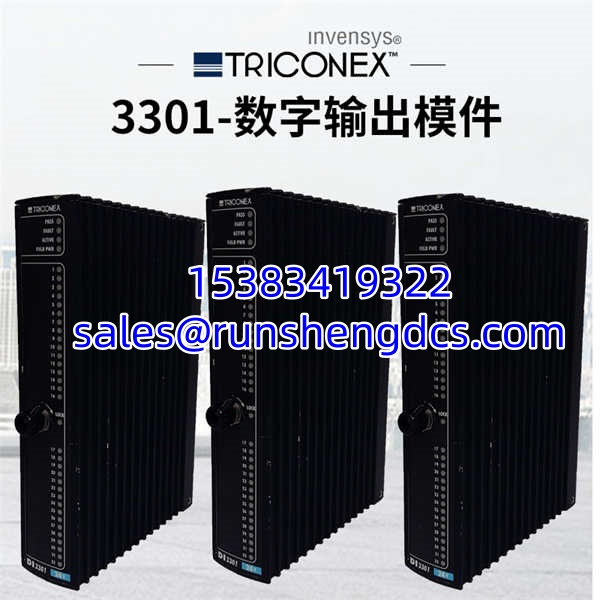
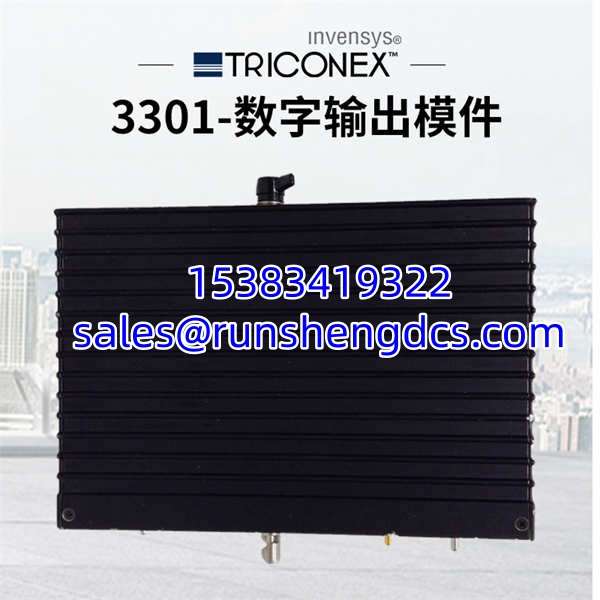
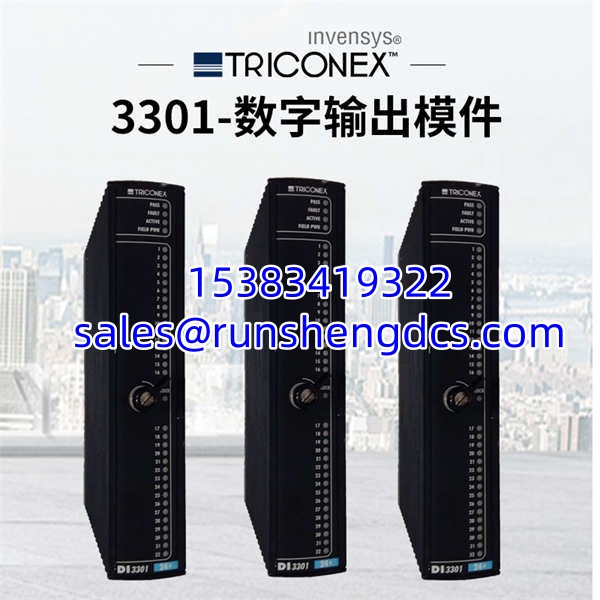
The Triconex 3301 is the brain of the Tricon v9/v10 safety system, the Main Processor Module (MP) that keeps critical processes running when other controllers would have tripped hours ago. You’ll find these modules at the heart of emergency shutdown (ESD) and fire & gas (F&G) systems in refineries and chemical plants where a spurious trip costs millions.
Its defining feature is the Triple Modular Redundancy (TMR) architecture. Instead of one processor, the 3301 contains three identical, isolated processor channels. They execute the control program in parallel and vote on the output at the hardware level. This means if one channel develops a fault, the other two outvote it, and the process continues without interruption. It’s a design that prioritizes both safety and availability, which is exactly why it’s been an industry standard for decades.
Key Technical Specifications
| Specification | Detail |
|---|---|
| Product Model | 3301 |
| Manufacturer | Triconex (Schneider Electric) |
| Product Series | Tricon v9/v10 |
| Module Type | Main Processor (MP) |
| Architecture | Triple Modular Redundancy (TMR) |
| Processor | 32-bit, triple-processor |
| Memory | 4 MB SRAM, 4 MB Flash |
| Communication Ports | 1 x TriBus (to I/O modules), 1 x RS-232 (for TriStation) |
| Ethernet Port | 1 x 10Base-T (for Modbus TCP, optional) |
| Execution Speed | ~0.3 ms per 1000 Boolean instructions |
| Diagnostic Coverage | >99% |
| Operating Temperature | 0 to 60 °C |
| Humidity | 5 to 95% non-condensing |
| Safety Integrity Level (SIL) | SIL 3 capable (as part of a Tricon system) |
Compatibility & Replacement Matrix
- 3301 → 3301 : Direct Replacement — A 3301 module is a direct replacement for another 3301. The firmware will be downloaded from the peer processors in the rack upon insertion.
- 3008 → 3301 : Incompatible — The 3008 is the processor for the older Tricon v8 system. While they look similar, the hardware architecture and firmware are not compatible. A 3301 will not function in a v8 chassis, and vice versa.
- 3301 → 3601E : Needs Adaptation — The 3601E is the processor for the newer Tricon CX (v11) platform. It is not backward compatible with a v9/v10 chassis. Upgrading from a 3301 to a 3601E requires a full system migration, including a new chassis, I/O modules, and a conversion of the TriStation project file.
Quality Inspection & SOP Transparency
A faulty processor in a safety system is not an option. Our inspection process for the Triconex 3301 is designed to verify its ability to participate in the TMR voting scheme before it ever reaches your site.
- Incoming Inspection: We verify the model number 3301 and the serial number against the certificate of conformity. Every module gets a thorough visual inspection for physical damage, paying close attention to the TriBus connectors on the backplane. We look for any signs of heat stress or corrosion.
- Live Functional Test: The 3301 is installed into a fully-configured Tricon v10 test rack with two other known-good 3301 processors to form a complete TMR triplet. We power up the rack and monitor the boot sequence via the TriStation 1131 software. We verify that the new module successfully synchronizes with its peers and that all three “OK” LEDs are solid green, indicating a healthy TMR state.
- Electrical Parameter Test: We use a multimeter to verify the module’s internal power supply rails are within the specified tolerance. We also perform a continuity check on the TriBus connections to ensure reliable communication with the I/O modules.
- Firmware Verification: We read the firmware version from the module and ensure it is compatible with the test rack’s system software version (e.g., v10.2). Mismatched firmware is a common cause of integration headaches, so we document this carefully.
- Final QC & Packaging: After passing all tests, the module is cleared by QC. We seal it in an anti-static bag, pack it with ample bubble wrap in a sturdy carton, and apply a “QC Passed” label with the test date and technician ID.
TRICONEX 3301
Common Replacement Pitfalls
Replacing a main processor in a live safety system is a high-stakes operation. These are the field-learned traps that can turn a simple swap into a multi-day outage.
- Ignoring Firmware Compatibility: This is the number one cause of failure. You can’t just drop a 3301 with any firmware version into a running system. ❗ The new module’s firmware must be compatible with the system software version of the existing processors. If it’s not, the module will fail to synchronize, and you’ll be stuck. Always check the firmware revision of the peer modules before ordering a replacement.
- Forcing a Replacement on a Non-Failed Module: The Tricon system is smart. Sometimes a module goes into a fault state due to a transient issue. ❗ Always check the Tricon Event Log in TriStation first. If the module isn’t listed as a hard failure, try resetting it from the software before you physically pull it. Unnecessary hot-swaps introduce risk.
- ESD Damage: It bears repeating. The components on the 3301 are incredibly sensitive. One touch without a grounded wrist strap can kill it. We’ve seen it happen. A technician in a hurry, no strap, grabs the module by the faceplate… and a $10,000 part becomes a very expensive paperweight. Don’t be that person.
- Not Having a Current Backup: Before you do anything, you need a current backup of the TriStation project file, including the
.iniand.tspfiles. If something goes wrong during the replacement, you need to be able to reload the configuration. Relying on the firmware in the processors is a gamble you don’t want to take. - Misinterpreting the LEDs: The LEDs on the 3301 tell a story. A solid green “OK” is good. A flashing red “FAULT” is bad. But a solid red “FAULT” means something else entirely. ❗ Don’t just guess. Have the Triconex LED troubleshooting guide open and know exactly what the light patterns mean before you start pulling modules based on a hunch.
FAQ
Can I just swap this in directly while the system is running?
Yes, the Triconex 3301 supports online module replacement (hot-swap). However, “can” and “should” are different questions. You must follow the correct procedure in the Triconex maintenance manual. This involves verifying the module is faulted, ensuring you have a good backup, and wearing an ESD strap. It’s a straightforward procedure if you’re prepared, but risky if you’re not.
My system is a Tricon v8. Will the 3301 work as a replacement for my 3008 processor?
No, it will not. The 3301 is for the Tricon v9/v10 systems, while the 3008 is for the older v8 platform. The hardware architecture and chassis backplane are different. They are not interchangeable. You would need to find a replacement 3008 or consider a full system upgrade to a v10 or CX platform.
How do I know if the firmware on this module will work with my system?
Honestly, you won’t know for sure until you check your existing system. The best practice is to connect to your running Tricon controller with TriStation 1131, go to the diagnostics, and check the firmware revision of the peer processors currently in the rack. The replacement module should have the same or a compatible firmware version. If it doesn’t, it will need to be upgraded or downgraded, which is a task for a qualified Triconex specialist.
Does this module come with the TriStation software?
No. The 3301 is just the hardware. The TriStation 1131 configuration and engineering software is a separate, licensed product from Schneider Electric. You will need a valid license and installation media to configure the processor or download a project to it.
What’s the difference between a “New Surplus” and a “Refurbished” 3301?
This unit is New Original (New Surplus). It’s a genuine Triconex module that was purchased as a spare part but never installed or powered on. It has been sitting on a shelf. A refurbished unit, on the other hand, is a used module that has been returned, repaired, tested, and resold. New surplus is generally preferred for critical spares as it has no operational history.