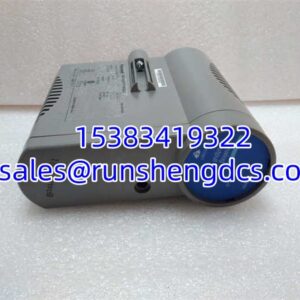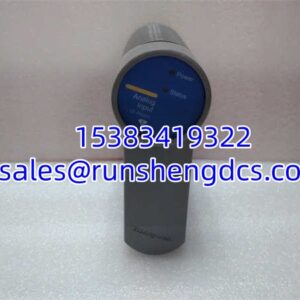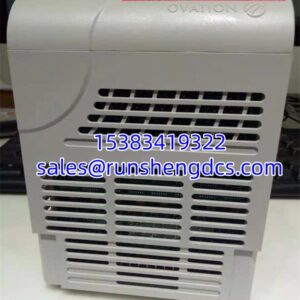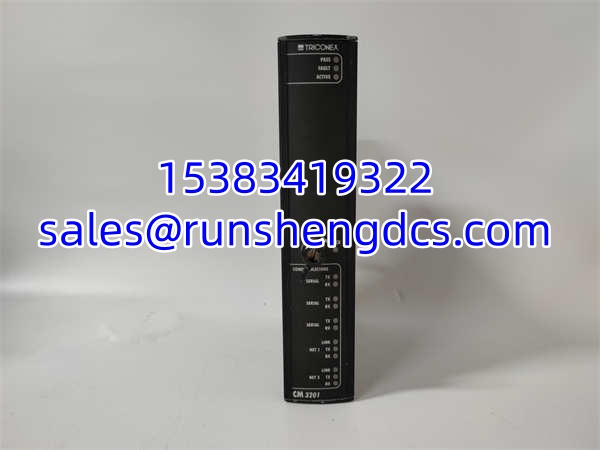

Description
Key Technical Specifications
- Product Type: Triconex safety I/O module
- Model Reference: TRICONEX 3201
- Common Function: Digital input module for Tricon systems
- Brand: Triconex / Schneider Electric
- Target System: Tricon / Triconex TMR safety controller
- Redundancy Architecture: TMR / triple modular redundant
- Safety Application Class: SIS / ESD / BMS / F&G / HIPPS-type applications
- Safety Integrity: Designed for SIL3 use when installed in a certified Tricon system
- Installation: Plug-in Tricon chassis I/O module
- Field Wiring: Through compatible Triconex FTAs and shielded field cables
- Power: Supplied from Tricon chassis backplane; no separate external module supply in typical installation
- Engineering Access: Via TriStation 1131 through the controller/communication path
- Operating Temperature: Typically 0°C to 60°C for Tricon I/O modules; confirm exact revision data sheet
- Replacement Rule: Do not substitute based on “3201” alone; confirm full part number and module function
Product Introduction
A Tricon cabinet is still running, but one channel group stops reading field status cleanly. That is where TRICONEX 3201 matters. It belongs to the Triconex Tricon TMR safety I/O family, not to ordinary PLC or DCS I/O hardware. Its job is to bring field digital signals — such as valve limit switches, permissives, trip feedback, pressure/temperature alarm contacts, or ESD pushbutton status — into a safety controller that depends on triple modular redundancy.
The real value is keeping a safety system aligned with its original certified design. Triconex systems are built around TMR fault tolerance, diagnostic coverage, hot replacement, and SIL3 application use. If the failed module is truly a TRICONEX 3201 digital input module and the replacement matches the same function, revision, FTA, and chassis role, it can restore field I/O without reworking the safety application. If the variant is wrong, the controller may reject the module, flag configuration faults, or prevent the safety system from returning to service.
Troubleshooting Quick Reference
| Fault | Likely Cause | Quick Check | Fix |
|---|---|---|---|
| Tricon reports I/O module fault | Wrong module, loose seating, failed module | Check Triconex diagnostics / event log | Reseat module; confirm exact 3201 variant |
| Field input reads bad or erratic | Wiring, terminal, sensor, or channel fault | Measure field signal at FTA/terminal | Check sensor, wiring, fuse, and termination |
| Module not recognized by chassis | Slot fault, backplane contact, wrong module type | Inspect chassis slot and module keying | Reseat; try verified compatible slot if allowed |
| Safety logic trips unexpectedly | Incorrect replacement, configuration mismatch | Compare old and new nameplates | Use exact matching Triconex module type |
| Intermittent faults | Vibration, loose connector, EMI, grounding | Check cabinet grounding and connectors | Tighten connections; improve shielding/grounding |
| Replacement module fails | Different revision or function code | Read full part number, not just “3201” | Source correct Triconex module and verify config |
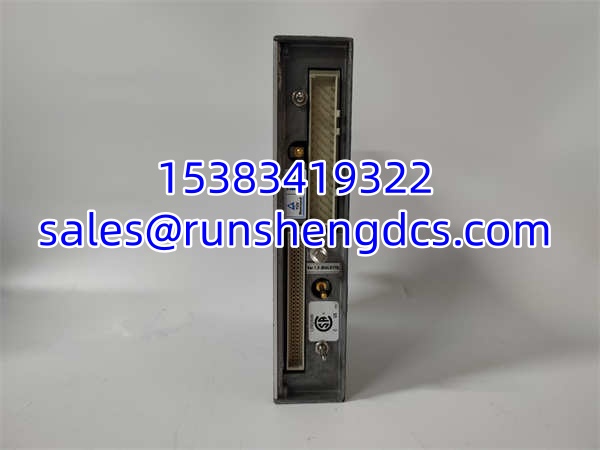
TRICONEX 3201
Application Scenarios & Pain Points
- Oil and gas ESD systems: A single I/O module fault can force a plant into safe shutdown. The real pain is usually procurement buying by short model number instead of full Triconex part number.
- Chemical / petrochemical SIS: Triconex modules often sit near harsh process areas. Intermittent faults are frequently wiring, termination, or grounding — not the CPU.
- Power generation turbine/compressor protection: Fast, reliable digital input status matters. A replacement module with the wrong revision can block startup even if it physically fits.
- Fire and gas / BMS applications: False alarms or missed alarms usually trace back to field devices, wiring, or I/O channel faults before the main controller.
- Spare-parts confusion: “TRICONEX 3201” is sometimes mislabeled online as an Ethernet module, communication module, or unrelated industrial card. That is a red flag.