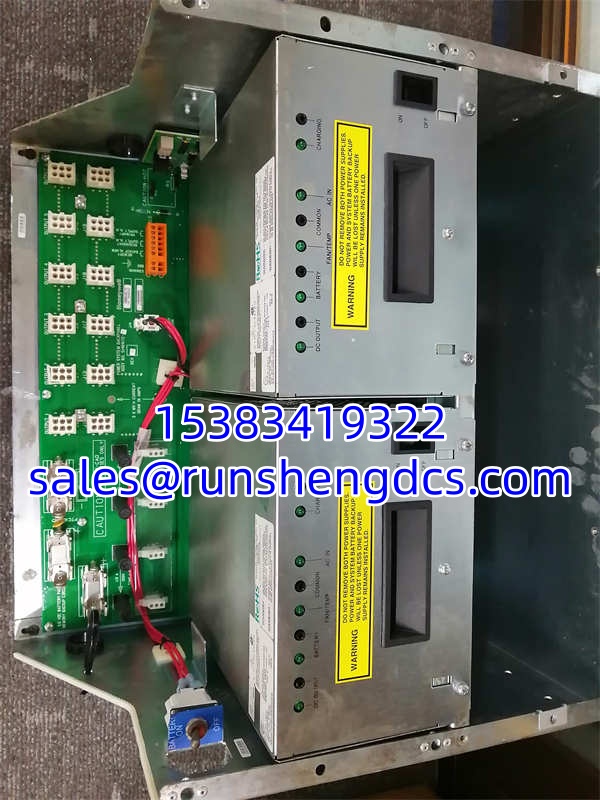

Description
Key Technical Specifications
| Parameter | Detail |
|---|---|
| Model | SPS5785 |
| Part Number | 142511-51198651-100 |
| Manufacturer | TDI (per supplier listings) |
| Product Type | Power Supply Module |
| Input Voltage | 220V (per supplier listing — verify on label) |
| Output Frequency | 100 MHz (per supplier listing — likely a catalog error; verify) |
| Processing Speed | 85 MHz (per supplier listing — likely a catalog error; verify) |
| Program/Data Capacity | 8 MB (per supplier listing — likely a catalog error; verify) |
| Protection | Overload protection |
| Weight | ~1.3 kg |
| Ambient Temp | 0°C to 35°C (per supplier listing) |
| Humidity | 85%, non-condensing |
| Certifications | CE (per supplier listing) |
| Mounting | Module / control panel installation |
Product Introduction
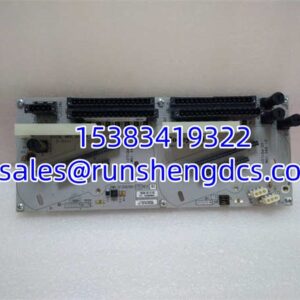
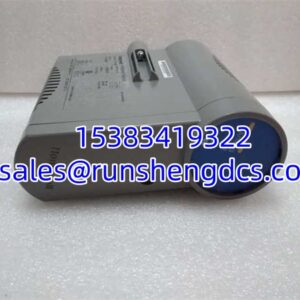
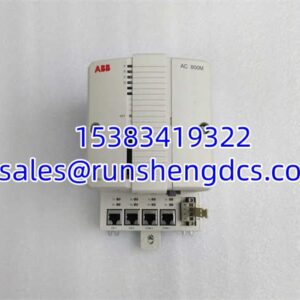
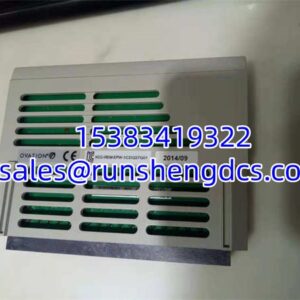
Power supply modules are the most overlooked component in a control cabinet — until one fails. When the SPS5785 goes down, everything it feeds goes dark. This module, identified by part number 142511-51198651-100, is a power supply unit manufactured by TDI (per third-party catalog listings) designed to deliver stable, regulated power to control system electronics. It accepts 220V input and provides overload protection to guard downstream modules against current spikes.
The SPS5785 is a compact, module-format power supply weighing approximately 1.3 kg, intended for panel or control-room mounting. Supplier listings describe it with overload protection, high efficiency, and a wide input voltage range — features that matter when you’re feeding sensitive I/O modules and processors in a plant environment. Third-party pricing has been listed around ¥6,990–¥9,800 per unit depending on the distributor and stock condition. Bottom line — it’s a replacement power brick for a control system, and the critical question is whether it matches your existing system’s voltage rails and physical footprint.
QA/QC Transparency SOP
For surplus TDI SPS5785 units entering the supply chain:
- Intake & Origin Verification — Photograph the full module label. Confirm the model reads “SPS5785” and the part number reads “142511-51198651-100.” Record the revision code, date code, and serial number. Inspect the enclosure for physical damage, corrosion, or evidence of overheating (discolored casing, melted connectors).
- Live Functional Testing — Apply rated input voltage on a bench supply with current limiting. Monitor the output voltage with a calibrated multimeter (Fluke 87V or equivalent). Verify the output settles to the expected DC rail voltage within the specified tolerance. Confirm the module holds regulation under a resistive load bank at 50% and 100% of rated current.
- Electrical Parameter Tests — Measure input current draw at rated load. Perform insulation resistance (megger) testing between input and output circuits and between either side and chassis ground. Check output ripple with an oscilloscope — excessive ripple indicates failing filter capacitors.
- Protection Verification — Intentionally overload the output and confirm the overload protection trips or current-limits as designed. Restore normal load and verify the module recovers without manual reset (if auto-recovery is a stated feature).
- Final QC & Packaging — Record all measured values (input voltage, output voltage, output current, ripple, insulation resistance) on a QC sheet. Label the module with test date, tester ID, and pass/fail status. Pack with connector protection caps and anti-static wrapping.
Field Engineer Gotchas
Gotcha #1: Catalog specs don’t match the physical module
- Risk: Supplier listings for the SPS5785 include parameters like “85 MHz processing speed” and “8 MB program capacity” — these are clearly PLC CPU specs that got copy-pasted into a power supply listing. If you spec this module based on those numbers, you’ll be chasing ghosts.
- Solution: Ignore the catalog specs that don’t belong on a power supply. Read the actual nameplate on the module for input/output voltage, current rating, and protection class. That’s your source of truth.
- Blunt warning: I’ve seen procurement teams reject perfectly good surplus power supplies because the “specs” didn’t match what they expected — when the real problem was that the listing itself was wrong.
Gotcha #2: Input voltage mismatch
- Risk: The supplier listing says “220V” input, but your cabinet runs 110VAC or 24VDC. Installing a 220V-only supply on a 110V rail gives you undervoltage and brownout conditions.
- Solution: Check the nameplate input range before installation. If the module supports a wide input range (e.g., 85–264VAC), you’re fine. If it’s fixed at 220VAC, it won’t work on a 110V system.
Gotcha #3: Physical mounting incompatibility
- Risk: The module form factor doesn’t match the DIN rail slot, backplane connector, or chassis bay in your existing cabinet. It powers up on the bench but won’t seat properly in the rack.
- Solution: Before ordering, photograph your existing power module’s mounting footprint, connector type, and rail position. Compare against the replacement unit’s physical dimensions.
Gotcha #4: Output voltage rail mismatch
- Risk: Your system expects a 24VDC rail, but the replacement outputs 5VDC or 48VDC. Connecting the wrong voltage to downstream modules can destroy them instantly.
- Solution: Measure the output voltage on the bench before connecting to any live system. Confirm it matches the required rail voltage exactly.
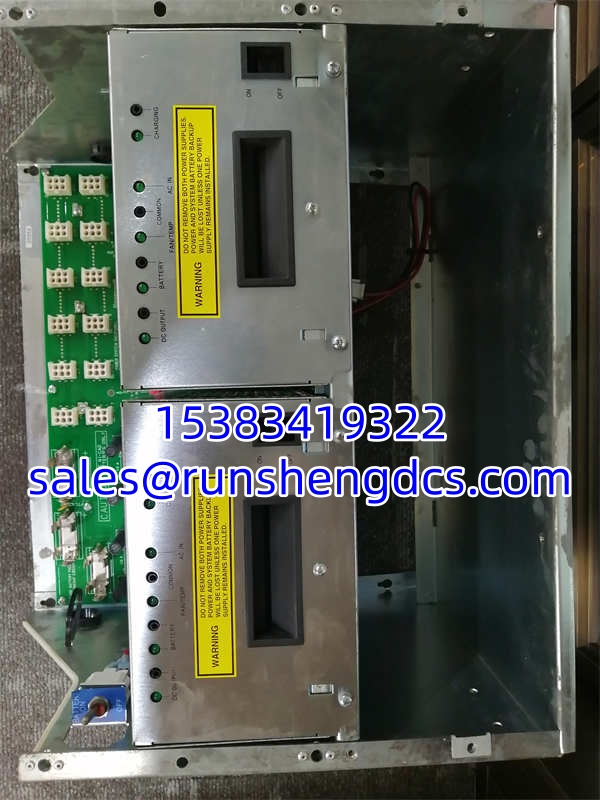
TDI 142511-51198651-100 SPS5785
Application Scenarios
- DCS cabinet power replacement: A legacy distributed control system loses its original power supply module. The is sourced as a surplus replacement to restore the 24VDC rail feeding the controller chassis and I/O backplane, avoiding a full cabinet rebuild.
- PLC panel power redundancy: A manufacturing cell’s PLC panel runs a primary and standby power supply. The standby unit fails, and the is installed as the replacement to restore redundancy before the next production shift.
- Brownfield control system maintenance: A chemical processing plant maintains aging TDI-branded control cabinets. When a power module fails after years of service, the is pulled from surplus stock to minimize downtime while the OEM lead time for a factory-new unit is evaluated.
Case Study (Anonymized): A process plant’s control cabinet experienced an intermittent power fault — the 24VDC rail would drop out for 200–500ms at random intervals, causing the PLC to fault and the HMI to lose communication. The maintenance team initially suspected a failing PLC CPU. After scoping the power rail with an oscilloscope, they found the voltage sagged below 18VDC during motor starts on an adjacent VFD circuit. The root cause was a degraded power supply module (original unit, 12 years in service) that could no longer hold regulation under transient load. The was sourced from surplus stock, bench-tested at 24.1VDC under full load, and installed as a replacement. The intermittent faults stopped immediately. Total downtime: 4 hours. Lesson: always scope the power rail before blaming the CPU.
FAQ
Yes. Based on third-party catalog listings, these two identifiers refer to the same power supply module. “” is the model designation, and “142511-51198651-100” is the part/order number.
Q: What voltage does this power supply output?
The supplier listings do not clearly state the output voltage. One listing references “220V” which appears to be the input voltage. You must verify the output voltage from the physical module nameplate before connecting it to any system. Do not assume the output voltage based on catalog data alone.
Q: Is “TDI” the actual manufacturer?
Third-party catalogs list the brand as “TDI.” However, no official manufacturer website or OEM documentation for a company called “TDI” producing this specific power module was found during this research. Verify the manufacturer name from the module’s own label and any documentation that came with your existing system.
Q: Can I use this as a drop-in replacement for my existing power module?
Only if the physical form factor, connector type, input voltage, output voltage, and current rating all match. Measure your existing module’s specs and compare them against the replacement before installation.
Q: Why do some listings show “85 MHz processing speed” for a power supply?
That’s almost certainly a catalog error. Processing speed and program capacity are CPU/PLC parameters, not power supply parameters. The listing likely pulled data from a neighboring product entry. Ignore those fields.
Q: What’s the typical surplus price for this module?
Third-party listings have shown prices ranging from approximately ¥6,990 to ¥9,800 per unit. Pricing varies by distributor, stock condition, and quantity. Get multiple quotes and verify the unit’s test status before purchasing.
Q: Where can I find the official datasheet?
No official OEM datasheet was located during this research. Your best path is to check any documentation that came with your existing control system, contact the system integrator who originally commissioned the cabinet, or reach out to the surplus distributor who may have scanned copies of the original documentation.