
Description
Key Technical Specifications
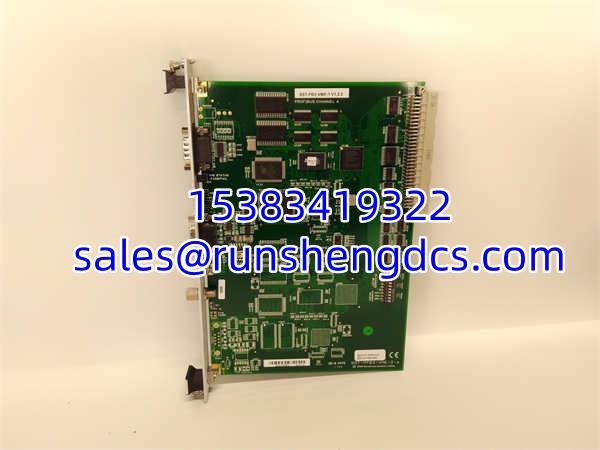
- Model Number: SST-PFB3-VME
- Manufacturer: Molex LLC (SST)
- Series/System: SST PROFIBUS DP VME Interface
- Module Type: DP Master / DP Slave Communication Card
- Processor: High-Performance 32-bit CPU
- Baud Rate: 9.6 kbaud to 12 Mbaud (Optional Auto-Detection)
- Memory: Integrated Flash Memory
- Protocol Support: Simultaneous DP Master and DP Slave execution
- Bus Interface: VMEbus
- Software Support: DP Master Configuration Software, Custom Driver Development
Functional Role & Application Analysis
The SST-PFB3-VME acts as the critical translation layer between legacy VME-based computing platforms and modern PROFIBUS DP field networks. Integrating older VME motion controllers or programmable controllers into a distributed I/O architecture is notoriously difficult. This board solves that integration bottleneck. It features a 32-bit CPU and flash memory, allowing it to handle the heavy lifting of PROFIBUS token passing and cyclic data exchange independently of the host VME CPU.
Engineers deploy this interface card in highly specialized industrial environments:
- Legacy VME System Upgrades: Breathing new life into older VME motion controllers by giving them native, high-speed access to PROFIBUS DP field devices.
- Simultaneous Master/Slave Operations: Acting as a DP Master to poll field I/O, while simultaneously presenting itself as a DP Slave to a higher-level PLC or DCS.
- High-Speed Data Acquisition: Utilizing the full 12 Mbaud speed to rapidly scan large amounts of sensor data in high-speed manufacturing or test equipment.
- Custom Driver Integration: Utilizing the custom driver development software to write bespoke VME drivers when standard off-the-shelf drivers do not fit the application.
Our Quality Standard & Testing Process
VME boards are expensive and critical to the host system. A bad board can crash the entire VME chassis. We validate every SST-PFB3-VME to ensure it will not cause backplane faults or communication dropouts.
- Visual & Component Inspection: We inspect the VME P1/P2 connector pins for straightness and oxidation. We check the 32-bit CPU and flash memory chips for signs of thermal stress or physical damage.
- Live System Test: The card is seated in a verified VME test chassis and powered up. We run a continuous burn-in to verify that the board does not overheat or cause backplane voltage sag.
- Full-Function Diagnostics: We configure the board as both a DP Master and Slave, connecting it to a live PROFIBUS test network. We verify baud rate auto-detection, token passing, and cyclic I/O data mapping.
- Warranty Backing: Only modules that pass strict VME and PROFIBUS diagnostics ship with our 12-month warranty. Hardware that fails backplane timing tests is rejected.
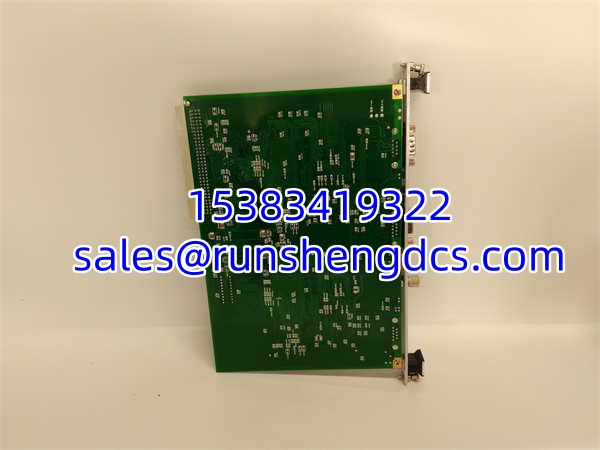
SST-PFB3-VME
Compatibility & Migration Paths
VME is an unforgiving backplane standard. Timing and addressing must be exact. Do not guess when deploying this card. Verify these points before installation:
- VME Backplane Compatibility: Confirm your VME chassis supports the specific VMEbus revision of the SST-PFB3-VME. Older A16/A24 backplanes may have timing conflicts with newer 32-bit cards.
- Software & Driver Matching: Ensure you have the correct DP Master Configuration software and the specific VME driver for your host OS (e.g., VxWorks, OS-9). The driver must match the hardware revision.
- Simultaneous Protocol Limits: While the card supports simultaneous Master and Slave protocols, verify your application’s data payload does not exceed the 32-bit CPU’s processing limits at 12 Mbaud.
- Configuration Files: You will need the correct GSD files for any DP Slaves you intend to connect. Ensure your configuration software is set up to generate the proper binary config file for the VME card.
- Get Expert Help: Unsure if your VME backplane will support this card’s timing requirements? Contact our technical team with your chassis manufacturer and model for a free compatibility check.