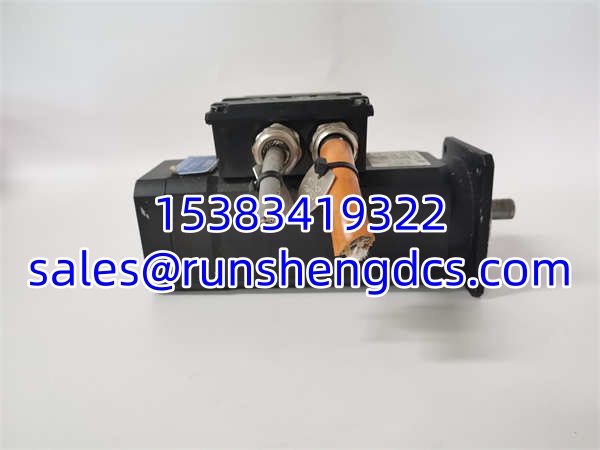
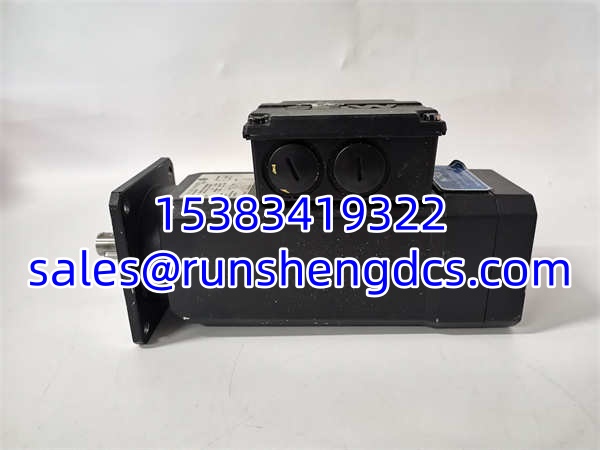

Description
Key Technical Specifications
- Product Model: DFS56L/TF/RH1M/KK
- Manufacturer: SEW Eurodrive
- Product Type: Synchronous Servo Motor
- Frame Size: 56 (L = Long Stack)
- Feedback Device: Resolver (TF Code)
- Cooling: Forced Ventilation Fan (KK Code)
- Brake: Spring-Applied Brake (RH1M Code)
- Winding: Standard SEW Winding
- Mounting: Flange & Foot Mount Options
- Protection Class: IP65 (Typical for this series)
- Insulation Class: Class F
Product Introduction
Legacy servo motors are the silent killers of production uptime, and finding an exact match for a failed SEW unit is a routine headache for maintenance teams. The SEW DFS56L/TF/RH1M/KK is built to solve this exact problem. As a core component of the SEW DFS synchronous servo series, this motor delivers the high torque density and dynamic response required for precise positioning. The “L” stack length provides higher torque than the standard “H” stack, while the integrated resolver and forced cooling fan ensure reliable operation in demanding cycles.
Engineers specify the SEW DFS56L/TF/RH1M/KK because it’s a direct, like-for-like replacement that preserves system behavior. The resolver feedback is inherently more resistant to electrical noise than optical encoders, making it ideal for harsh industrial environments. The forced cooling fan (KK) allows for continuous high-torque operation without thermal derating. Bottom line — it’s a workhorse that keeps legacy packaging lines and automated assembly cells running without requiring a full system redesign or re-tuning.
QA/QC Transparency SOP
- Intake & Origin Verification: We verify the DFS56L/TF/RH1M/KK nameplate against SEW’s production records. We inspect the shaft, flange, and fan assembly for mechanical wear, corrosion, or physical damage.
- Live Functional Testing: The motor is coupled to a test bench and driven through its operational RPM range. We monitor for abnormal bearing noise, vibration, and verify the resolver provides clean position feedback.
- Electrical Parameter Tests: Using a Fluke 115 and insulation tester, we verify winding resistance, phase balance, and dielectric strength. This ensures the motor won’t trip the drive on startup due to internal shorts or ground faults.
- Brake & Fan Verification: We test the holding brake for proper engagement and release torque. The forced cooling fan is verified to operate at the correct voltage and RPM.
- Final QC & Anti-Static Packaging: After passing all tests, the motor is sealed in protective packaging with a serialized QC tag. We don’t ship anything that hasn’t been physically tested under load.
Field Engineer Gotchas
- Resolver Wiring: The SEW DFS56L/TF/RH1M/KK uses a resolver, not an encoder. Wiring it to an encoder-only drive input will cause immediate faults. Verify the drive supports resolver feedback and use the correct SEW resolver cable. I’ve seen techs blame a bad motor when it was just a miswired feedback cable.
- Forced Cooling Fan: The “KK” suffix means this motor requires external 24VDC or 230VAC power for the fan. Don’t assume it’s self-cooled. If the fan isn’t powered, the motor will overheat and trip on thermal fault within minutes under load.
- Brake Control: The RH1M brake is spring-applied, electrically released. Verify the brake rectifier is correctly configured for the brake voltage. Applying full AC voltage directly to the brake coil will burn it out instantly.
- Mechanical Alignment: A 56-frame servo with high torque will destroy its bearings if misaligned. Verify shaft coupling and pulley alignment with a dial indicator before tightening. Forcing the shaft into place is a guaranteed way to void the warranty and cause premature failure.
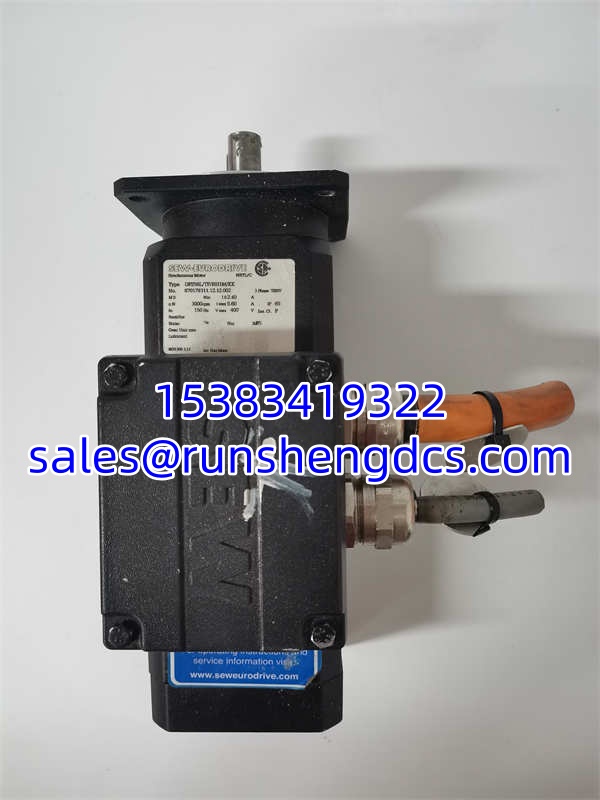
SEW DFS56L TF RH1M KK
Application Scenarios
- Packaging Machinery: High-speed filling, capping, and labeling lines require the rapid acceleration and precise positioning that the SEW DFS56L/TF//KK provides to maintain cycle times.
- Automated Assembly: Pick-and-place robots, indexing tables, and CNC feed axes rely on the high dynamic response of this motor to minimize cycle times and maximize throughput.
- Printing & Converting: Web tension control and registration printing demand smooth, ripple-free torque. The resolver feedback ensures print quality remains consistent at high speeds.
- Material Handling: Conveyor systems and transfer units use the for precise positioning and synchronized motion.
Real-World Case Study: A beverage bottling plant in Texas had a critical filler machine down. The original SEW servo motor had burned out, and the OEM lead time was 10 weeks. They sourced a verified from our stock. The technician installed it, verified the resolver wiring and fan power, and cleared the drive faults. The machine was back online in under two hours, saving the plant hundreds of thousands in lost production revenue.
FAQ
No. The “L” suffix indicates a longer stack length, which provides higher torque and inertia than the “H” stack. Substituting an H-stack for an L-stack will cause insufficient torque and potential drive overcurrent faults. Always match the full suffix.
Does this motor require a specific SEW drive?
Yes. The is designed for SEW MOVIDRIVE or MOVIFIT servo drives. While other drives may work, using a non-SEW drive requires manual tuning and may not achieve the same performance or protection. Stick to the OEM drive.
What is the warranty on this motor?
We provide a full 12-month warranty on the . If it fails under normal operating conditions, we replace it. No questions asked.
How do I know if my existing drive is compatible?
Check the drive’s motor selection table in the manual. If the is listed, it’s compatible. If you’re unsure, send us a photo of your drive’s nameplate and we’ll cross-reference it.
Does the resolver need to be zeroed after installation?
Yes. After mechanical installation, you must perform a resolver alignment procedure in the drive software. This ensures the motor’s electrical zero matches the mechanical zero. Skipping this step will cause poor performance or drive faults.
Can I use this motor without the forced cooling fan?
Technically yes, but only at significantly reduced torque and speed. The “KK” fan is required for continuous rated operation. Running without it will cause thermal overload and premature failure. Always power the fan.