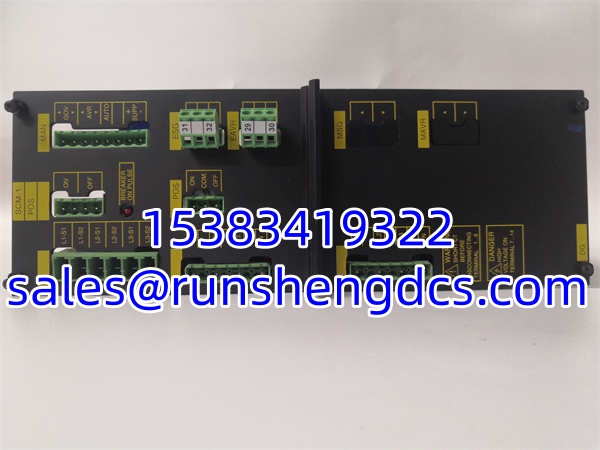
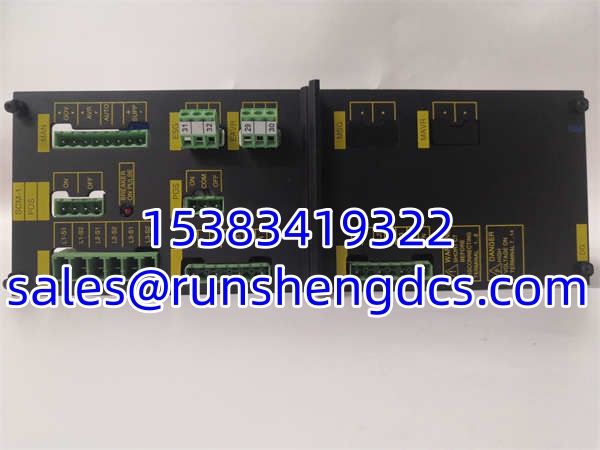
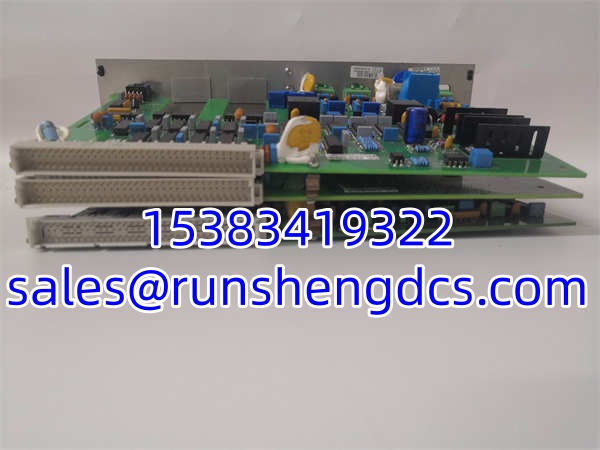

Description
Key Technical Specifications
- Product Model: SCM-1
- Manufacturer: DEIF
- Product Type: Synchronization Control Module
- Core Function: Automatic Genset-to-Bus Synchronizing
- Processing: Microprocessor-Based
- I/O Interfaces: Multiple integrated inputs and outputs for motor/sensor control
- Communication: Supports multiple protocols and remote PC integration
- Reliability: High precision and high stability
- Application Domain: Marine, Offshore, Industrial CHP, Standby Power
- Installation: Panel/Control Cabinet Mount
Product Introduction
Paralleling a generator to a live bus without the exact phase and frequency match is a fast track to destroying expensive switchgear. The DEIF SCM-1 was engineered specifically to prevent this. As a microprocessor-based synchronization control module, the DEIF SCM-1 acts as the brain for automatic genset-to-bus synchronizing, ensuring that voltage, frequency, and phase angle are perfectly aligned before closing the breaker. It integrates control and monitoring functions into a single board, eliminating the need for external relays and reducing wiring complexity.
Engineers specify the DEIF SCM-1 for critical marine and industrial power plants because it removes human error from the paralleling process. By continuously monitoring the generator and bus parameters, the DEIF SCM-1 calculates the precise closing angle to ensure a smooth, bumpless transfer of load. Bottom line — if your facility relies on safe, automated generator paralleling, this module provides the deterministic logic required to keep the lights on without catastrophic electrical faults.
QA/QC Transparency SOP
Synchronization modules dictate when high-voltage breakers close, so we don’t ship untested boards. Here is our verification process for the DEIF SCM-1:
- Intake & Origin Verification: We verify the hardware revision against DEIF documentation to ensure the internal relay logic and sensor input scaling match the target control panel.
- Live Functional Testing: The module is installed in a DEIF test rack. We simulate generator and bus signals to verify that the microprocessor accurately calculates slip frequency and triggers the sync output at the correct phase angle.
- Electrical Parameter Tests: Using precision multimeters, we verify the 24 VDC power regulation and check the output relay contacts for proper continuity and low resistance.
- Firmware/Config Verification: We read the onboard parameters to ensure the sync settings (deadband, closing time) match the factory baseline and back up the configuration.
- Final QC & Anti-Static Packaging: The board is cleaned, inspected for trace corrosion, and sealed in an ESD-safe bag to protect the microprocessor during transit.
Field Engineer Gotchas
- CT/PT Wiring Polarity: The DEIF relies on accurate voltage and current phasors to calculate synchronization. If the potential transformer (PT) or current transformer (CT) wiring is reversed, the module will see a 180-degree phase shift and will permanently block the sync output as a safety interlock. Always verify PT/CT polarity before troubleshooting the board.
- Breaker Closing Time Parameter: The module doesn’t close the breaker instantly; it calculates the exact moment to fire the output so the contacts touch at zero-crossing. If the “closing time” parameter in the DEIF doesn’t match the actual mechanical breaker closing time, the generator will slip out of phase right as the breaker shuts. Verify this parameter matches the breaker’s mechanical spec.
- ESD Sensitivity: The microprocessor and analog front-end are highly sensitive to electrostatic discharge. Always wear a grounded wrist strap when handling the DEIF . A static hit can permanently alter the analog input scaling.
- Ground Loops: Synchronization requires precise voltage measurements. If the control panel ground is floating or noisy, the DEIF will read false phase angles. Ensure the panel chassis is solidly bonded to the plant ground grid.
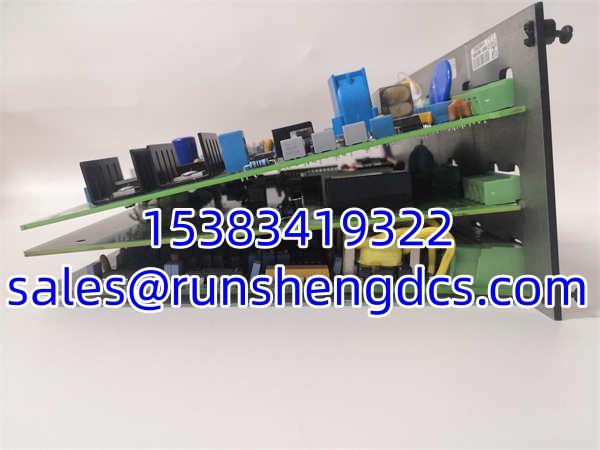
DEIF SCM-1
Application Scenarios
- Marine Power Management: The DEIF is deployed in shipboard switchboards to automatically synchronize multiple diesel generators to the main bus, ensuring seamless power transitions during maneuvering or port operations.
- Industrial Standby Power (AMF): In hospitals and data centers, this module monitors utility loss and automatically synchronizes the backup generator to the emergency bus within seconds, ensuring zero interruption to critical loads.
- Combined Heat and Power (CHP): Used in cogeneration plants to safely parallel gas engine generators to the facility microgrid, allowing the plant to export excess power or operate in island mode.
Real-World Case Study: A hospital standby power system failed to synchronize during a monthly drill because the original sync module’s analog inputs had drifted over 20 years. Swapping in a verified DEIF restored accurate phase-angle detection and allowed the generator to successfully close onto the emergency bus within the required 10-second window.
FAQ
No. It is a dedicated synchronization module that must be integrated into a larger DEIF control system or paired with external voltage/frequency sensing relays to function properly.
Can I use this module for bus-to-bus synchronization?
The DEIF is primarily designed for genset-to-bus synchronization. For bus-to-bus (tie-breaker) synchronization, verify with DEIF engineering, as the phase-matching requirements and safety interlocks differ.
What voltage does this module require?
The DEIF typically operates on a 24 VDC control supply derived from the main control system. Always verify the exact power requirements in the OEM manual before applying power.
Does this module support remote monitoring?
Yes. The DEIF supports communication protocols that allow it to interface with上位机 (PC/SCADA) software for remote status viewing, parameter adjustment, and alarm acknowledgment.
Will this drop into an older DEIF panel?
Mechanically, likely yes. However, you must verify that the existing wiring harness, PT/CT ratios, and system firmware are compatible with the DEIF before installation.
What is the operating temperature range?
The standard DEIF is rated for typical industrial control cabinet environments. Ensure the panel has adequate ventilation to limit heat, and avoid direct moisture or condensation near the front of the module.