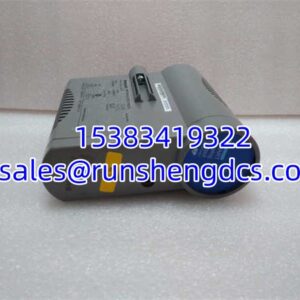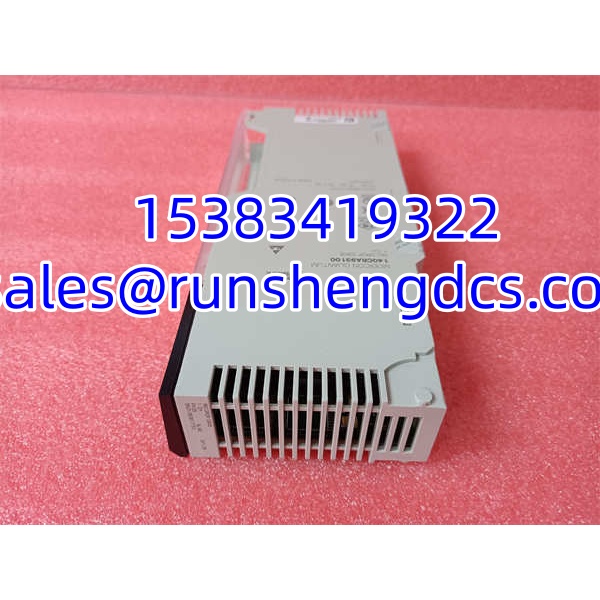

Description
Key Technical Specifications
| Parameter | Detail |
|---|---|
| Product Model | 140CRA93100 / 140CRA93100C |
| Manufacturer | Schneider Electric |
| Platform | Modicon Quantum 140 Series |
| Module Type | RIO Drop Adapter (S908) |
| Network Protocol | S908 Remote I/O |
| Cable Type | 75 Ω coaxial, single cable |
| Transmission Rate | 1.544 Mbps |
| Dynamic Range | 35 dB |
| Isolation Voltage | 500 V DC (coax center to ground) |
| Electrical Connection | 1 female F-type elbow connector |
| I/O Expansion | Up to 27 I/O modules per drop |
| Bus Current Requirement | 600 mA |
| Power Consumption | 3 W (per channel/drop) |
| Diagnostics | Checksum, power-on, RAM address/data |
| Operating Temperature | -25°C to 70°C (-13°F to 158°F) |
| Storage Temperature | -40°C to 85°C |
| Humidity | 95% non-condensing |
| Certifications | ATEX Zone 2/22, CE, FM, CSA C22.2 No. 142 |
| Weight | ~0.1–0.37 kg (varies by source) |
Product Introduction
When a remote I/O drop goes dark, the entire process segment loses visibility — and the 140CRA93100 is the module that keeps that link alive. The Schneider Electric 140CRA93100 is a RIO drop adapter module for the Modicon Quantum S908 Remote I/O network. It sits in a remote Quantum rack and communicates back to the head-end adapter (such as the 140CRP93100) over a single 75 Ω coaxial cable at 1.544 Mbps.
Each drop can host up to 27 Quantum I/O modules, making the 140CRA93100 a backbone component for distributed I/O architectures in power plants, water treatment facilities, and process industries. The single-cable design simplifies wiring compared to dual-cable variants, but it also means there is no redundant cable path — a coax break takes the entire drop offline.
The “C” suffix variant (140CRA93100C) is a common revision found in the surplus market. Always verify the exact label marking against the failed module and the existing Quantum I/O configuration before ordering. The 140CRA93100 is not an Ethernet module — it is an S908 coaxial RIO adapter. Listings describing it as an “Ethernet communication processor” are incorrect.
QA/QC Transparency SOP
Every 140CRA93100 unit goes through a structured pre-shipment check:
- Intake & Origin Verification — Confirm part number 140CRA93100 or 140CRA93100C. Inspect for physical damage, connector integrity, label authenticity, and correct Quantum form factor.
- Visual & Connector Inspection — Check the F-type coaxial connector for damage or corrosion. Verify the backplane connector edge for bent pins or burn marks. Inspect module LEDs for physical integrity.
- Bench Functional Test — Install the module in a compatible Modicon Quantum test rack with power applied. Verify the module passes power-on diagnostics (checksum, RAM address/data) and no fault LEDs are active.
- Communication Verification — Connect to an S908 RIO test network with a head-end adapter. Verify the drop is recognized, communication is established, and I/O data exchanges correctly across the coaxial link.
- Final QC & Anti-Static Packaging — Document test results, photograph labels and connectors, then pack in anti-static material with a protective cap on the F-type connector.
Field Engineer Gotchas
It is a drop adapter, not a head-end adapter.
The 140CRA93100 is a drop adapter (remote rack side). The head-end adapter on the CPU rack side is the 140CRP93100 (single cable) or 140CRP93200 (dual cable). Swapping the wrong module type will not establish communication.
Single cable means no redundancy.
The 140CRA93100 uses one coaxial cable. If that cable is damaged, the entire drop goes offline. For redundant cable topology, you need the 140CRA93200 (dual-cable drop adapter).
Coaxial cable termination matters.
S908 RIO networks require proper 75 Ω termination at the last drop on the segment. Missing or incorrect termination causes reflections, communication errors, and intermittent dropouts. Verify the terminating resistor is installed at the end of the coaxial trunk.
Node address conflicts cause fault LEDs.
The Fault B LED indicates an invalid node address. If two drops share the same node address, both will fault. Verify the rotary switch or configuration setting on each 140CRA module before powering up the network.
Bus current budget is tight.
Each drop draws 600 mA for the adapter itself, plus the current consumed by all I/O modules in the rack. If the drop power supply cannot support the total load, modules will brown out or fault. Calculate the full rack current budget before adding modules.
Surplus listings mislabel it as Ethernet.
Some third-party sellers incorrectly describe the 140CRA93100 as an “Ethernet communication processor” with RJ45 ports. It has neither. It is an coaxial RIO adapter with a single F-type connector. Always verify the physical label and connector type.
ATEX rating is a bonus, not a universal requirement.
The 140CRA93100 carries ATEX Zone 2/22 certification, making it suitable for hazardous-area installations. However, the certification applies to the module as installed — verify the enclosure and wiring practices also meet ATEX requirements.
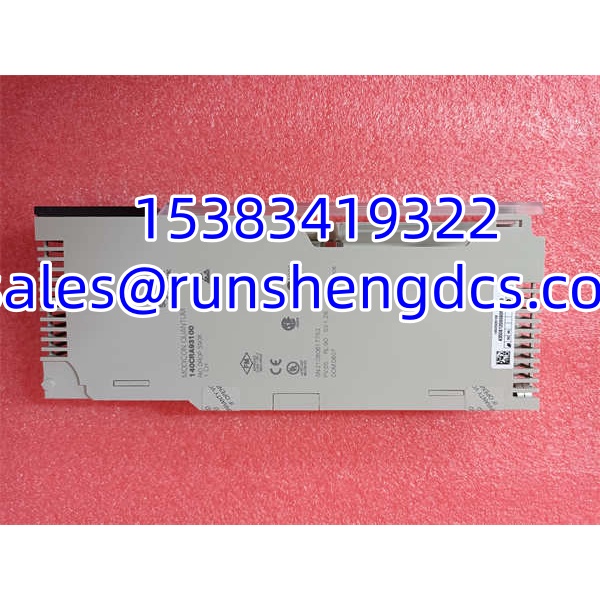
Schneider 140CRA93100
Application Scenarios
Distributed I/O in power generation.
The 140CRA93100 is commonly deployed in power plant auxiliary systems — cooling water, fuel handling, and emissions monitoring — where I/O points are spread across large facilities and a single CPU rack cannot accommodate all signals locally.
Water and wastewater treatment.
Municipal water plants use RIO drops to connect pump stations, clarifiers, and chemical dosing skids back to a central Quantum PLC. The 140CRA93100’s single-cable design reduces conduit runs between buildings.
Legacy system maintenance and migration planning.
Facilities still running Modicon Quantum RIO networks need replacement drop adapters when modules fail. The 140CRA93100 is a like-for-like replacement that avoids the cost and risk of migrating the entire RIO network to Ethernet-based I/O.
Case note: A chemical plant reported intermittent communication faults on a remote I/O drop using a 140CRA93100. The module tested fine on the bench. The root cause was a loose F-type connector on the coaxial cable — vibration from a nearby compressor had gradually loosened the connection, causing intermittent signal loss. Re-terminating the coaxial connector and adding strain relief resolved the issue. The module was not faulty; the cable connection was.
FAQ
Is 140CRA93100 the same as 140CRA93100C?
They are closely related revisions of the same RIO drop adapter. The “C” suffix typically indicates a manufacturing or firmware revision. Always verify the exact part number against the failed unit and the Quantum I/O configuration before ordering.
What is the difference between 140CRA93100 and 140CRP93100?
The 140CRA93100 is a drop adapter (remote rack side). The 140CRP93100 is a head-end adapter (CPU rack side). They are not interchangeable — each plays a different role in the RIO network.
Can I use it with dual-cable redundancy?
No. The 140CRA93100 is a single-cable adapter. For redundant coaxial cable topology, use the 140CRA93200 (dual-cable drop adapter) paired with the 140CRP93200 (dual-cable head-end adapter).
How many I/O modules can it support?
Up to 27 Quantum I/O modules per drop. However, you must verify the total bus current draw does not exceed the drop power supply capacity (600 mA for the adapter plus all I/O module current).
Does it support Ethernet?
No. The 140CRA93100 is an coaxial RIO adapter. It uses a 75 Ω coaxial cable with an F-type connector. It does not have Ethernet ports and does not support Modbus TCP or Ethernet/IP.
Is it still available new from Schneider Electric?
The Modicon Quantum 140 series is in legacy/spare-parts support mode. New stock from Schneider is unlikely; available units come from surplus inventory or refurbished channels.
What are common failure symptoms?
Fault LED active, Com Act LED not blinking, the drop not recognized by the head-end adapter, or all I/O points in the rack reading zero/fault. Always verify the coaxial cable, termination, and node address before condemning the module.