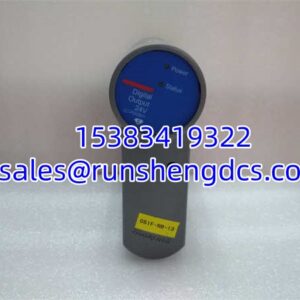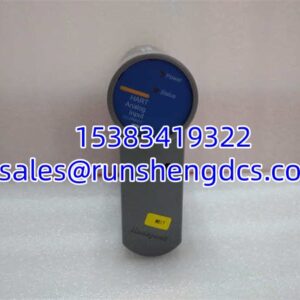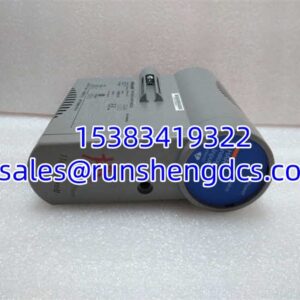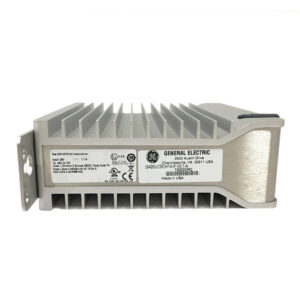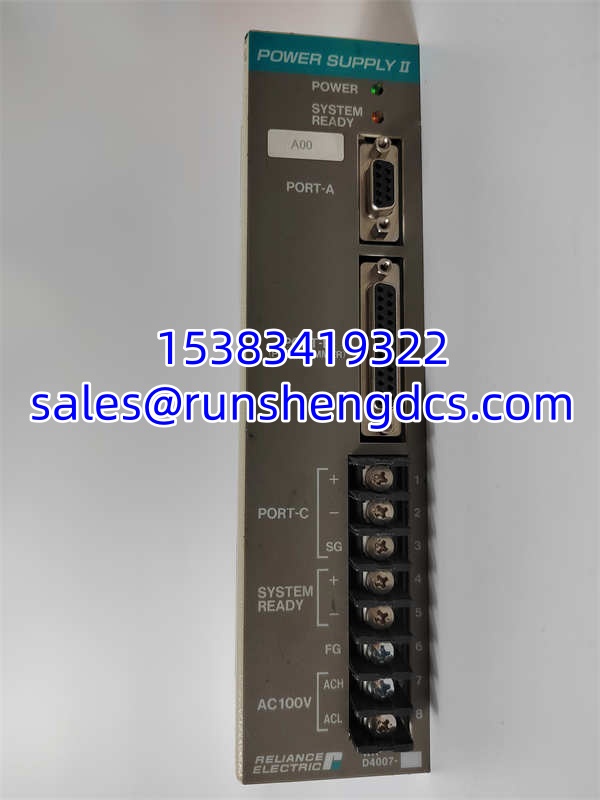
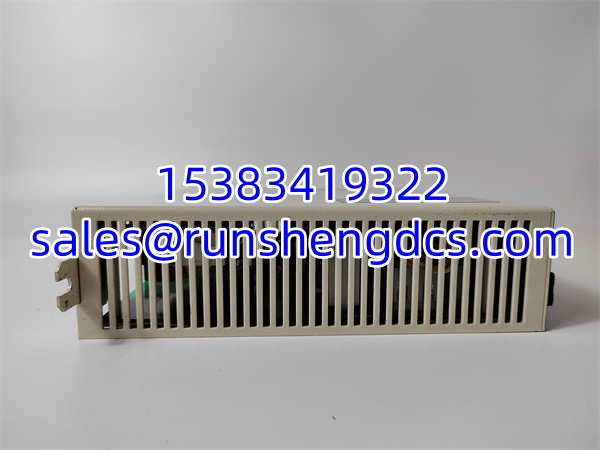

Description
Key Technical Specifications
- Operating Voltage: 24V DC
- Mounting: Standard DIN rail
- Operating Temperature: 0°C to +55°C
- Communication Interfaces: Ethernet, serial (protocol support varies by configuration)
- Input/Output: Discrete signal acquisition (switches, sensors); relay outputs for solenoids, contactors, indicator lights
- Protection Functions: Overcurrent, overvoltage, undervoltage protection
- Design: Shock-resistant, moisture-resistant enclosure
- Module Type: Multi-purpose — classified as controller module, relay module, or drive power II card depending on application context
- Power Output: High power output (specific wattage not published in available documentation)
- Configuration: Programmable; user-configurable control functions
Product Introduction
The WR-D4007 is one of those Reliance Electric modules where the documentation is frustratingly vague. Different distributors list it as a controller module, a relay output module, a DCS/PLC controller card, and a drive power supply II card — sometimes all in the same product listing. What is consistent across every source: 24VDC operation, DIN rail mounting, and a role inside Reliance’s broader industrial automation and drive system ecosystem. Reliance Electric was absorbed into Baldor, which was then acquired by ABB — so this module lives in that legacy product lineage.
The practical value here is straightforward. If you have an existing Reliance-controlled system — whether it is a DCS installation in a process plant or a drive-based automation line — and this card has failed, you need an exact-match replacement. The 24VDC standard makes it compatible with typical industrial control power supplies. The DIN rail form factor means it slots into existing panel layouts without mechanical rework. The protection functions (overcurrent, overvoltage, undervoltage) add a layer of fault tolerance that matters when a single card failure can take down an entire process segment.
Troubleshooting Quick Reference
| Fault | Likely Cause | Probability | Quick Check | Fix |
|---|---|---|---|---|
| Module not powering up | 24VDC supply absent or wiring fault | 80% | Measure voltage at module input terminals with multimeter | Verify upstream 24VDC power supply is active; check fuse and wiring connections |
| Relay outputs not switching | Coil drive signal missing or load fault | 70% | Check control signal at input; measure relay coil voltage | Verify ladder logic or controller is asserting the output bit; check for shorted load |
| Intermittent communication loss | Loose serial/Ethernet connection or cable damage | 60% | Reseat communication cables; check for physical damage | Replace cable; verify termination and protocol settings match system configuration |
| Overvoltage/overcurrent trip | Downstream short or load exceeding rating | 75% | Disconnect load; measure resistance across output terminals | Isolate short in load or wiring; verify load does not exceed relay contact rating |
| Module recognized but no control response | Configuration mismatch or firmware issue | 50% | Verify module configuration matches system parameters | Reload configuration; check if module requires specific firmware revision for your controller |
| Excessive heat at module | Poor ventilation or overloaded outputs | 45% | Feel module case temperature; check ambient near enclosure | Improve airflow around DIN rail; reduce output loading if near thermal limits |
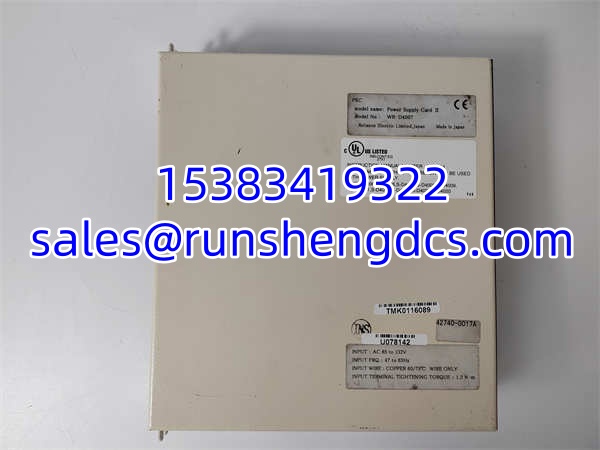
RELIANCE WR-D4007
Application Scenarios & Pain Points
Legacy DCS installations in process plants:
Reliance DCS systems were common in chemical processing, pulp and paper, and water treatment facilities through the 1990s and early 2000s. When a WR-D4007 card fails in one of these aging systems, the plant faces a painful choice — replace the single card from surplus inventory, or justify a full DCS migration project. Most plants opt for the card swap because the migration budget never materializes.
Drive system power supply failures:
If the WR-D4007 is functioning as a drive power II card in a Reliance drive system, its failure means the associated drive loses its power control interface. Motors stop. Production stops. The pain point is that Reliance drive documentation from this era is difficult to find, and confirming whether a specific WR-D4007 unit matches your drive model requires cross-referencing old installation manuals that may not exist in digital form.
Automation line retrofits:
Plants that inherited Reliance-controlled equipment through acquisitions often lack internal expertise on the platform. The WR-D4007 sits in a panel somewhere, doing its job quietly — until it fails. Then the maintenance team has to identify the module, find a replacement, and figure out the configuration without OEM support.