
Description
Product Introduction
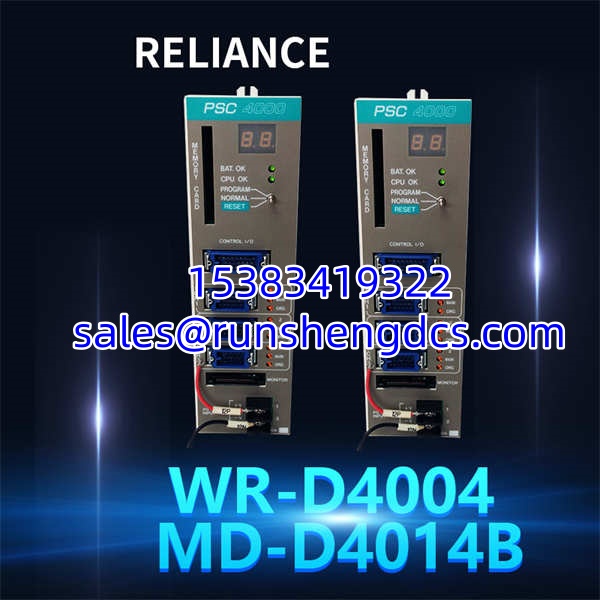
In complex industrial environments, the failure of a central processing unit can bring an entire manufacturing line to a standstill. The RELIANCE WR-D4004-MD-D4014B is the engineered brain designed to solve this challenge, providing high-speed, deterministic logic execution for critical automation tasks. Operating as a hard PLC, it ensures that mechanical movements, limit switches, and safety interlocks are processed with absolute reliability and zero ambiguity.
In our field experience, the RELIANCE WR-D4004-MD-D4014B stands out because of its robust architecture and advanced fault-detection capabilities. With a 1.6GHz processor and 4GB of program capacity, it handles complex logic with ease. More importantly, it features built-in abnormal logic detection. For example, if two sequential limit switches are triggered simultaneously—indicating a mechanical jam or sensor failure—the controller instantly recognizes the fault and initiates a safe shutdown. For facilities maintaining mature Reliance systems, securing a verified RELIANCE WR-D4004-MD-D4014B is essential for preserving process safety and uptime.
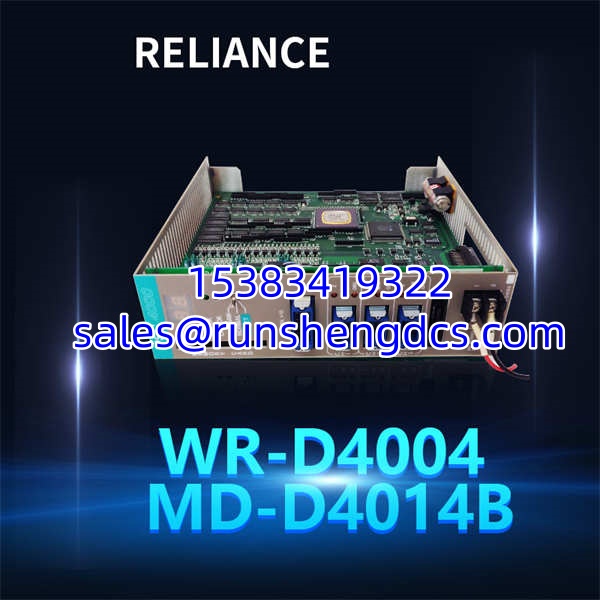
RELIANCE WR-D4004-MD-D4014B
Key Technical Specifications
- Product Model: WR-D4004-MD-D4014B
- Manufacturer: RELIANCE ELECTRIC / Emerson
- Product Type: Industrial System Controller / Hard PLC
- Processing Speed: 1.6 GHz
- Program Capacity: 4 GB
- Data Capacity: 1 GB
- Operating Voltage: 24 VDC (Power Group)
- Operating Temperature: -40°C to +70°C
- Environmental Humidity: 5% to 95% RH
- Installation: Control Room / Module Rack Mount
Application Scenarios & Pain Points
The RELIANCE WR-D4004-MD-D4014B typically becomes the focal point when an aging controller can no longer handle the processing demands of an expanded system, or when a legacy CPU fails catastrophically. We’ve seen cases where a failing processor missed a microsecond timing window, causing a mechanical collision. This module acts as the reliable central coordinator, continuously cross-referencing input/output signals against expected logical states to prevent equipment damage.
- Automated Material Handling: Coordinating complex conveyor sequences and robotic pick-and-place operations. The RELIANCE WR-D4004-MD-D4014B’s high-speed processing ensures precise synchronization between mechanical actuators.
- Heavy Machinery Control: Managing stamping presses or injection molding machines. Its built-in safety logic actively monitors limit switches, preventing dual-activation faults that could destroy expensive tooling.
- Power & Utility Systems: Serving as the core logic solver for pump stations and turbine control skids. The wide operating temperature range (-40°C to 70°C) makes it ideal for unheated outdoor enclosures or harsh industrial environments.
- Legacy System Maintenance: Extending the lifecycle of existing Reliance/Emerson automation infrastructure. This controller provides a direct, drop-in replacement path for obsolete CPUs, avoiding the massive capital expenditure of a full system rip-and-replace.
Quality Control Process
We know that a controller with a degraded processor or failing memory can introduce silent logic errors that take weeks to diagnose. That’s why our QC for the goes far beyond a visual check. We treat every unit as the single most critical component in your control rack, and our testing reflects that level of scrutiny.
- Visual & Mechanical Inspection: We inspect the for bent backplane pins, damaged module housings, and verify the integrity of the internal heat dissipation components. We also check for any signs of thermal stress on the CPU and memory chips.
- Power & POST Verification: We install the module into a live test rack and apply 24VDC. We monitor the power-on self-test sequence to ensure the processor initializes correctly and reports no internal memory or hardware faults.
- Logic & Fault Simulation: We load a test program and deliberately inject abnormal logic states (such as simulating two conflicting limit switches activating simultaneously). We verify that the controller correctly identifies the fault condition and executes the programmed safety response.
- Stress & Thermal Test: The module is run under continuous processing load for an extended period while monitored for thermal stability, ensuring the 1.6GHz processor does not throttle or fail under sustained operational stress.
- Final Certification: Only units passing all electrical, logic, and environmental tests receive our QC label. We provide a test report detailing the successful POST and fault-detection verification for your maintenance records.
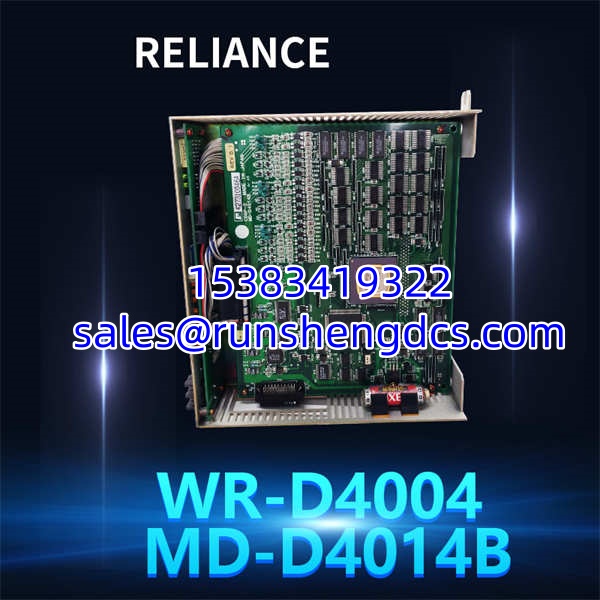
RELIANCE WR-D4004-MD-D4014B
Installation Pitfalls Guide
I’ve seen a perfectly good blamed for a system crash because of a power supply issue or a misconfigured safety routine. Don’t let a simple installation error cost you days of downtime. Here are the traps we see most often:
- Power Supply Sizing: This controller requires a stable 24VDC power group. If your power supply is aging or undersized, voltage sag during startup can cause the controller to enter a boot loop. Always verify your 24VDC supply can handle the inrush current of the entire rack.
- Fault Logic Programming: The controller’s abnormal logic detection is a powerful safety feature, but it must be programmed correctly. Ensure your ladder logic accurately defines mutually exclusive signals. If your mechanical design allows for a legitimate overlap, you must account for it in the code, or the controller will fault unnecessarily.
- Environmental Limits: While rated for -40°C to 70°C, extreme cold can cause condensation when the unit powers up and heats. Ensure your enclosure is properly sealed and includes appropriate desiccants or heaters if operating in freezing environments.
- Backplane Seating: The high-speed bus requires a perfect connection. Do not force the module into the rack. If it doesn’t seat smoothly, inspect the backplane connector for debris or bent pins. A marginal connection will cause intermittent processor faults.
- Firmware/Program Compatibility: Before installing the replacement , verify that your existing program and firmware revisions are compatible. Restoring a backup from the old CPU is highly recommended to ensure all custom fault-detection routines are intact.