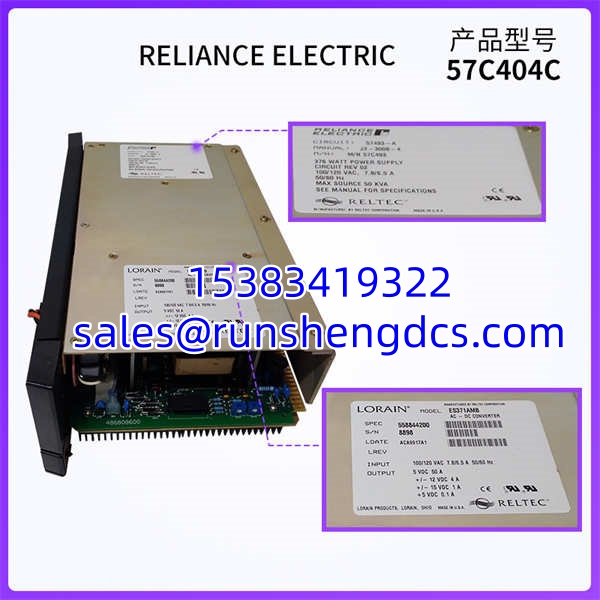
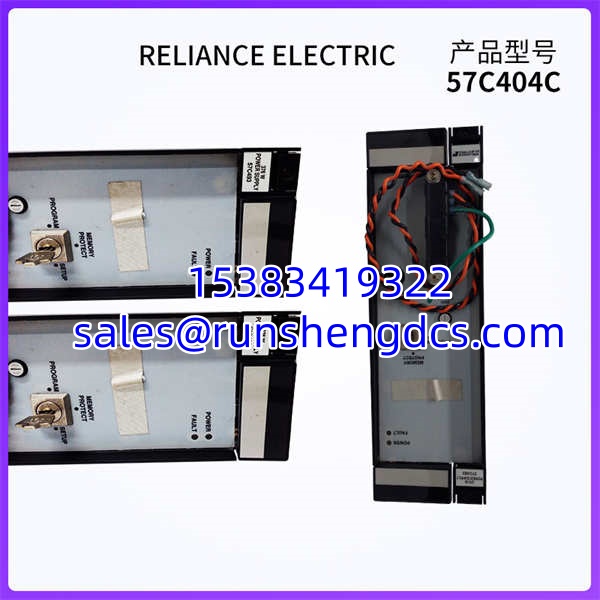

Description
Product Introduction
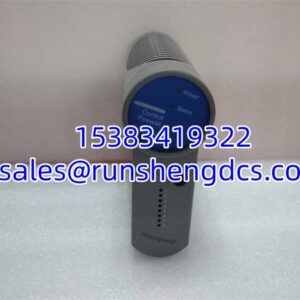
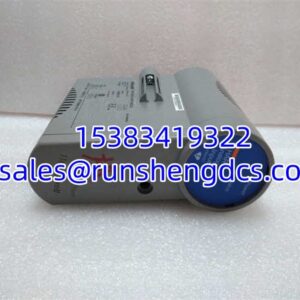
In continuous process control, a drifting or noisy analog signal can lead to off-spec product, inefficient energy use, or even safety incidents. The RELIANCE 57C493 is the engineered interface designed to solve this challenge, providing high-fidelity signal conditioning and conversion for the Reliance Electric AutoMax platform. It is not just an input card; it is a precision measurement device that ensures your control logic makes decisions based on accurate, stable, and noise-free process data.
In our field experience, the RELIANCE 57C493 is a workhorse in environments where signal integrity is paramount. Its robust design includes internal filtering and isolation to reject the electromagnetic interference common near large motors and VFDs in steel mills and power plants. For facilities maintaining mature AutoMax architectures, a verified RELIANCE 57C493 is the key to preserving the accuracy of critical control loops for temperature, pressure, and flow, ensuring your legacy system continues to perform with modern precision.
Key Technical Specifications
- Product Model: 57C493
- Manufacturer: RELIANCE ELECTRIC
- Product Type: Analog Input Module
- System Compatibility: Reliance AutoMax / PLC Architecture
- Input Signals: 4-20 mA, 0-10 VDC (Typical, Configurable)
- Operating Voltage: 5 VDC (Supplied via backplane)
- Operating Temperature: 0℃ to +60℃
- Storage Temperature: -40℃ to +85℃
- Form Factor: Standard Plug-in Card (Rack Mount)
- Typical Application: Process Variable Acquisition, Signal Conditioning
Application Scenarios & Pain Points
The RELIANCE 57C493 typically becomes the focal point when a control loop exhibits erratic behavior, unexplained trips, or fails to reach setpoint despite correct valve positioning. We’ve seen cases where a failed input module introduced noise that the controller interpreted as a real process swing, causing unnecessary and costly production adjustments. This module acts as the reliable sensor interface, restoring clean and accurate data to your control strategy.
- Power Generation: Monitoring boiler drum level and steam pressure. The RELIANCE 57C493’s high-resolution conversion ensures that safety-critical permissives are based on true process conditions, preventing both dangerous under-levels and nuisance trips.
- Chemical Processing: Controlling reactor temperature and feed rates. The module’s stable signal conditioning prevents oscillations in PID loops, ensuring consistent product quality and yield in batch and continuous processes.
- Metallurgy & Rolling Mills: Acquiring position and tension feedback. The RELIANCE 57C493’s noise immunity is critical in high-EMI environments, ensuring that drive controls receive clean feedback to maintain precise web tension and gauge.
- Legacy System Maintenance: Extending the life of 1990s-era DCS. For plants running Reliance AutoMax, this module provides the essential spare part to replace failed analog inputs without the capital expense of a full system migration.
Quality Control Process
We know that an analog input module with a degraded internal reference can introduce a fatal offset into your entire control loop. That’s why our QC for the RELIANCE 57C493 is built on active signal verification, not just a visual check. We treat every unit as a critical measurement device, and our testing reflects that level of precision.
- Visual & Mechanical Inspection: We inspect the RELIANCE 57C493 for bent backplane pins, damaged terminal blocks, and verify the integrity of the AutoMax bus connectors. We also check for any signs of thermal stress or capacitor aging on the internal analog circuitry.
- Backplane Power Verification: We install the module into a live AutoMax test rack and verify that it correctly draws and regulates its 5 VDC supply. We monitor the power-on self-test sequence to ensure the module initializes without drawing excessive current.
- Signal Accuracy Test: Using a calibrated process calibrator, we inject precise 4-20mA and 0-10V signals across the full range. We verify that the module’s digital representation in the controller matches our reference standard within the original manufacturer’s accuracy specification.
- Noise Immunity Check: We introduce controlled electrical noise into the test environment to verify the module’s internal filtering and isolation. We confirm that the reported signal remains stable and does not exhibit spurious jumps or drift.
- Final Certification: Only units passing all electrical, accuracy, and environmental tests receive our QC label. We provide a test report detailing the input/output linearity and accuracy for your maintenance records.
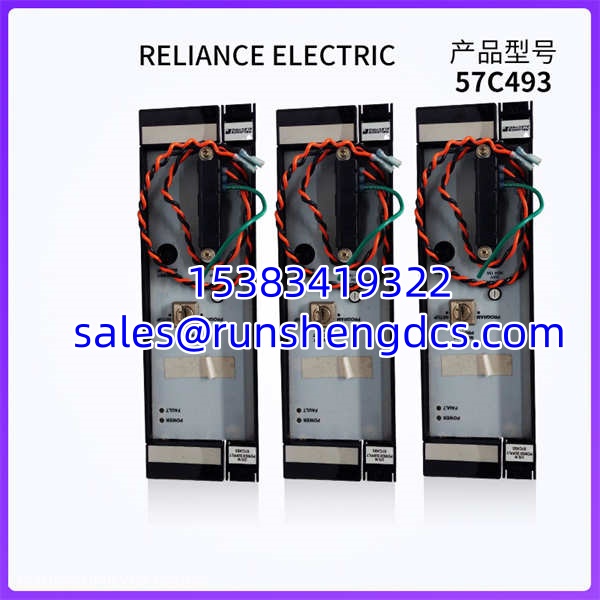
RELIANCE 57C493
Installation Pitfalls Guide
I’ve seen a perfectly good RELIANCE 57C493 blamed for a control loop failure because of a wiring error or a missing configuration. Don’t let a simple installation mistake cost you days of troubleshooting. Here are the traps we see most often:
- Signal Type Mismatch: The RELIANCE 57C493 typically supports multiple signal types. Verify the hardware jumpers or software configuration matches your field device. Applying a 4-20mA signal to a voltage-configured channel can damage the module or provide completely incorrect readings.
- Shield Grounding: For analog signals, proper shielding is non-negotiable. Shield the cable at the RELIANCE 57C493 module end only (single-point ground). Grounding at both ends creates a ground loop, which is the #1 cause of noisy and unstable analog readings in industrial panels.
- Backplane Seating: The analog circuitry is sensitive to poor backplane connections. Do not force the card. If it doesn’t seat smoothly, check for bent pins. A marginal connection can cause intermittent signal loss that is nearly impossible to diagnose.
- Power Budget: While this module draws power from the backplane, adding multiple analog cards can overload the 5VDC supply. Always calculate your total backplane load before installation to prevent brownouts during system startup.
- Configuration Software: Ensure your AutoMax configuration software is set up to recognize the RELIANCE 57C493 in the correct slot. A mismatched slot number in the software will cause the controller to read data from the wrong module or generate a configuration fault.